The I-70 Floyd Hill Project is one of Colorado’s largest active transportation infrastructure projects. It is rebuilding a critical eight-mile section of the I-70 Mountain Corridor between Evergreen and Idaho Springs, a major route connecting the Denver metropolitan area with mountain communities, recreation destinations, and interstate freight corridors across the western United States.
For decades, Floyd Hill has been known as one of the most challenging sections of Interstate 70. The roadway, built in the 1960s, features tight curves and limited sight distances. There is also a westbound bottleneck where three lanes narrow to two. These conditions cause congestion, delays, and safety concerns, specifically during peak periods such as ski weekends and holidays.
To resolve these challenges, the Colorado Department of Transportation (CDOT) launched the I-70 Floyd Hill Project, an extensive reconstruction of Interstate 70 at Floyd Hill designed to improve safety, increase highway capacity, and modernize aging roadway and bridge infrastructure. Construction began in July 2023 and is expected to continue through 2029 as crews reconstruct the corridor in phases. Westbound I-70 will shift to its new route (alignment) by the end of 2027, followed by the eastbound lanes in 2028.
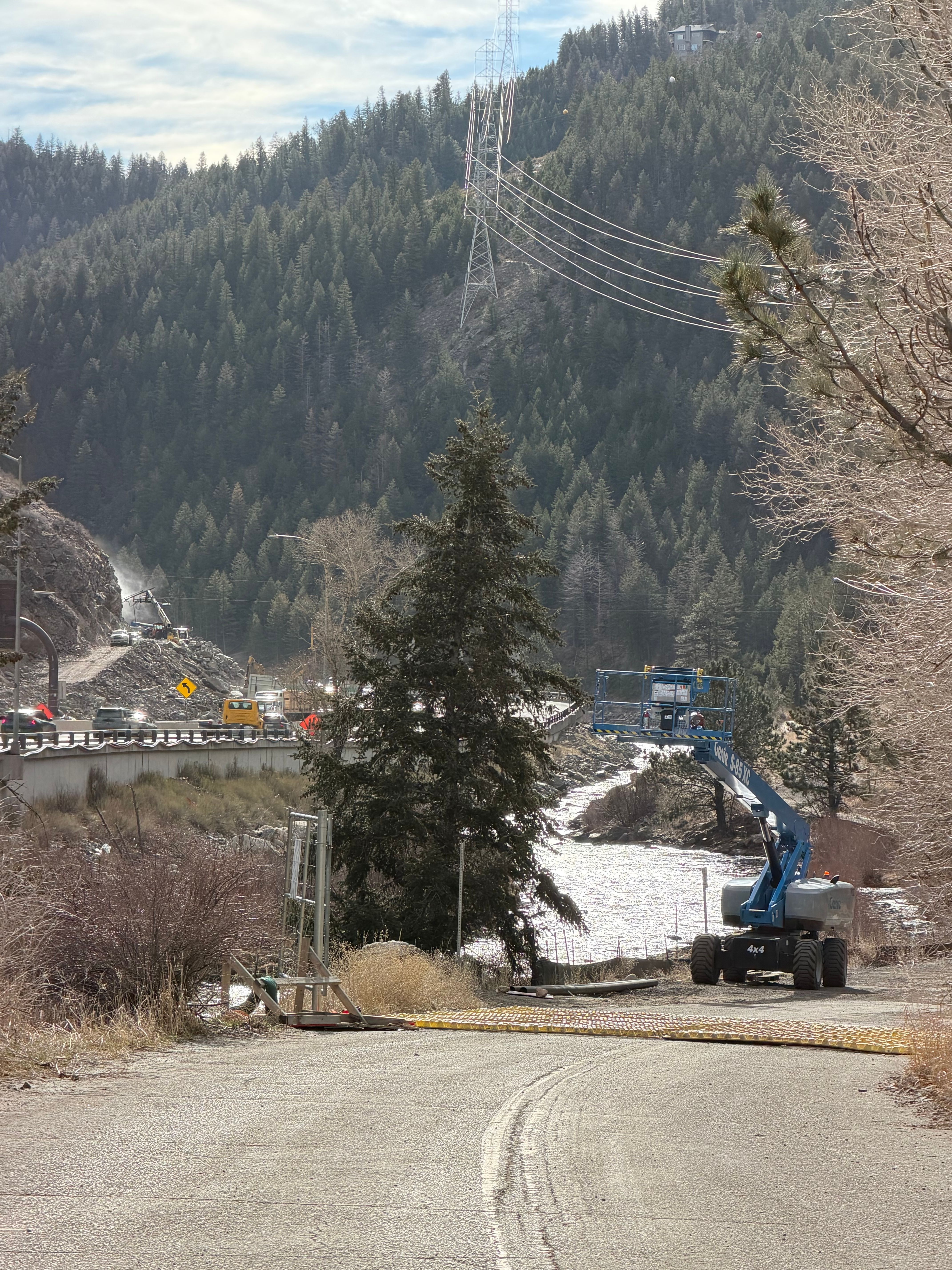
The project spans about eight miles, from Exit 248 near County Road 65 to Exit 241 near Idaho Springs in Clear Creek County. Kraemer North America is the primary contractor. They lead a large team of subcontractors, engineers, and transportation specialists on this complex reconstruction of a mountain highway. Costing approximately $905 million, the Floyd Hill Project is among Colorado's largest current transportation investments. The work includes widening the highway, reconstructing bridges, and making improvements designed to increase long-term reliability along the corridor.
One of the primary goals of the Floyd Hill Project is to eliminate the westbound bottleneck at the top of Floyd Hill. Currently, three westbound lanes approaching the area merge into two lanes, creating frequent slowdowns and unpredictable travel times. To address this issue, the project will add a third westbound travel lane that will operate as a full-time Express Lane between Homestead Road (Exit 247) and Colorado Boulevard in Idaho Springs (Exit 241). The project will also shift portions of the highway alignment, straighten curves, and improve sight distances to support safer travel speeds.
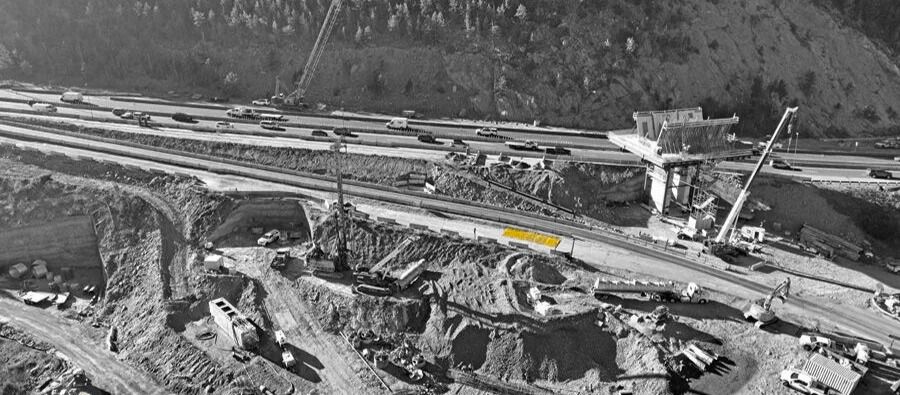
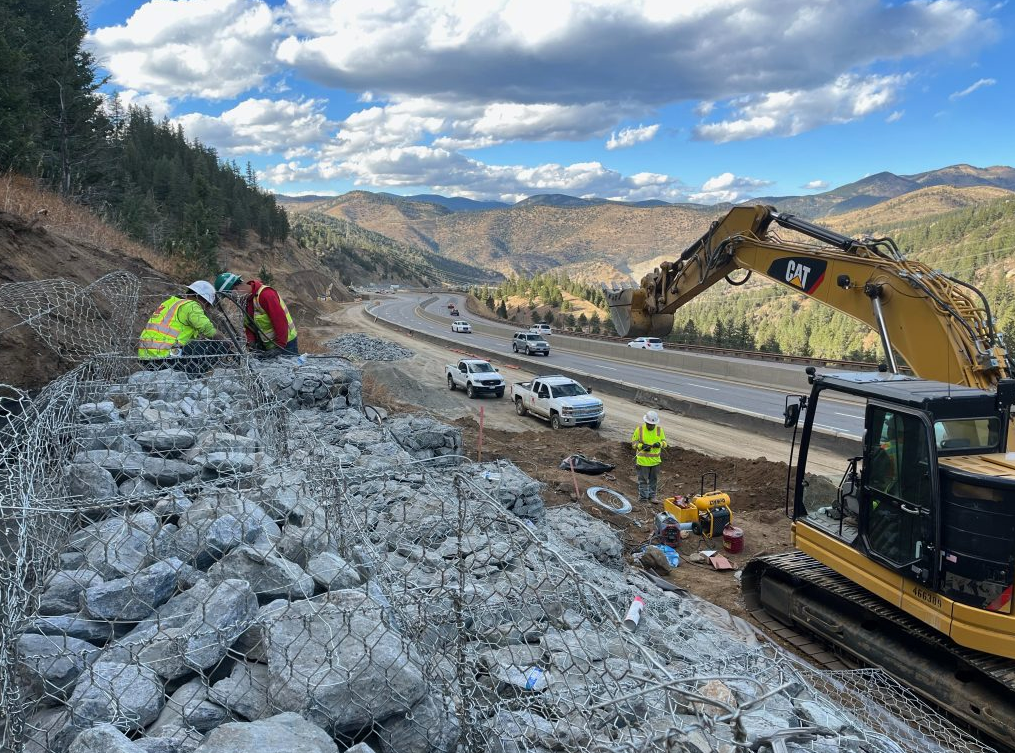
Major structural improvements are also underway. Crews are constructing new bridges to replace aging structures that have endured decades of heavy use, weathering, and high traffic volumes. Some of these bridges will reach heights of more than 100 feet as the roadway is realigned along the canyon hillside above Clear Creek. Alongside these efforts, the project includes a two-mile frontage road. It connects U.S. Highway 6 with the Hidden Valley and Central City Parkway interchange. This new connection will improve corridor resiliency. It will provide an alternate route for emergency response and detours if Interstate 70 is temporarily closed.
Traffic flow improvements at interchanges are another key component of the project. New roundabouts, extended merge lanes, and redesigned ramps will help vehicles move more efficiently through the corridor while improving overall safety. Beyond roadway improvements, the project also incorporates environmental and community enhancements. Specifically, these enhancements include wildlife fencing and habitat connectivity improvements, air quality monitoring systems, and upgrades to the Clear Creek Greenway trail. In addition, environmental protections and stormwater management practices are implemented throughout the corridor as part of the project’s Stormwater Pollution Prevention Plan (SWPPP) and erosion control plan. These initiatives help ensure construction activities meet state environmental and sediment control requirements.
Executing a project of this scale along an active interstate corridor presents significant logistical challenges. Interstate 70 is one of Colorado’s most important transportation routes, carrying commuters, freight traffic, and millions of tourists traveling to the Rocky Mountains each year. Because of the highway’s importance, construction crews must perform much of the work while traffic continues to move through the corridor. Much of the new roadway and bridge infrastructure is being built alongside or above the existing highway alignment, keeping travel lanes open during construction.
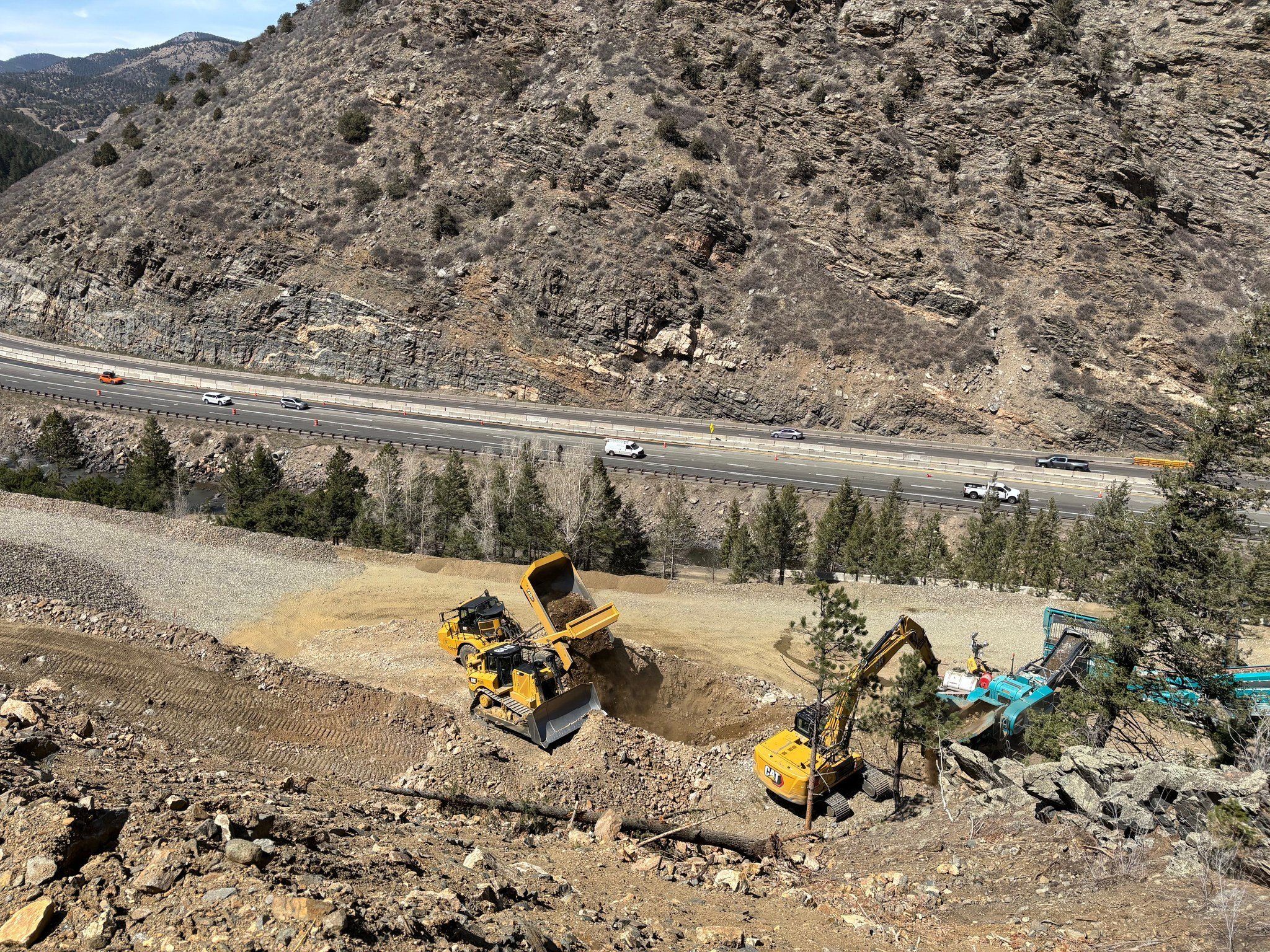
The project's scope requires extensive excavation, rock blasting, and structural construction in a narrow mountain canyon. Crews have already removed hundreds of thousands of tons of rock as they carve new alignments into the hillside and prepare foundations for new bridges and roadway structures. Throughout the project, maintaining safe work zones and protecting motorists traveling through the corridor remain top priorities. With construction access points located near live traffic lanes and interchange areas, managing jobsite entrances and exits is an important part of maintaining roadway safety and operational efficiency.
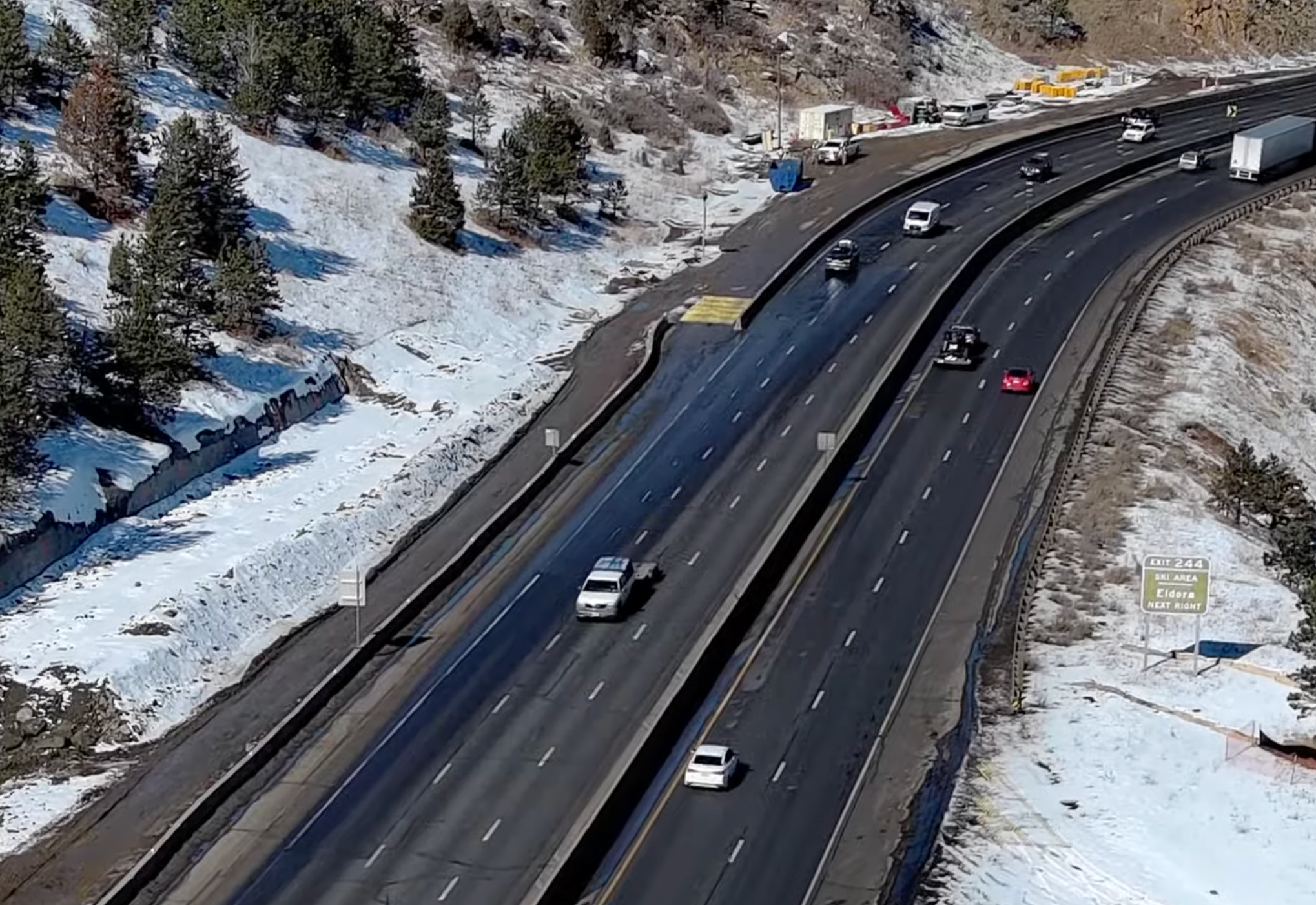
Highway construction projects often involve significant vehicle movement as contractor traffic enters and exits the jobsite throughout the day. When construction sites connect directly to public roadways, mud and sediment carried off the site by vehicle tires, commonly referred to as construction trackout, can quickly accumulate on pavement, posing a potential hazard to motorists. On the I-70 Floyd Hill project, trackout control is especially important. Many access points are near active interstate lanes and busy roads. Keeping pavement clean is critical for safety and for meeting stormwater compliance under the project’s SWPPP and erosion control plan.
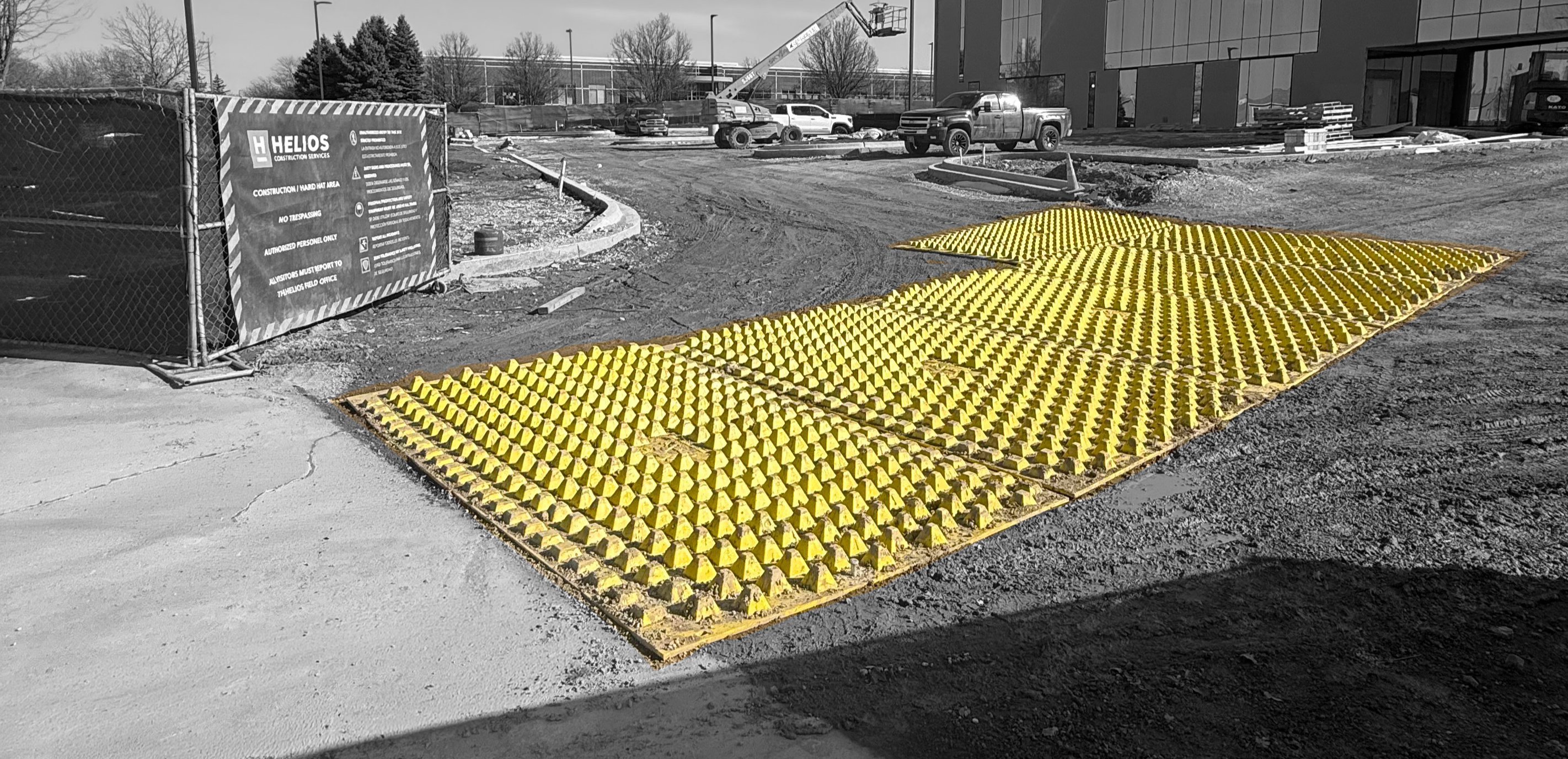
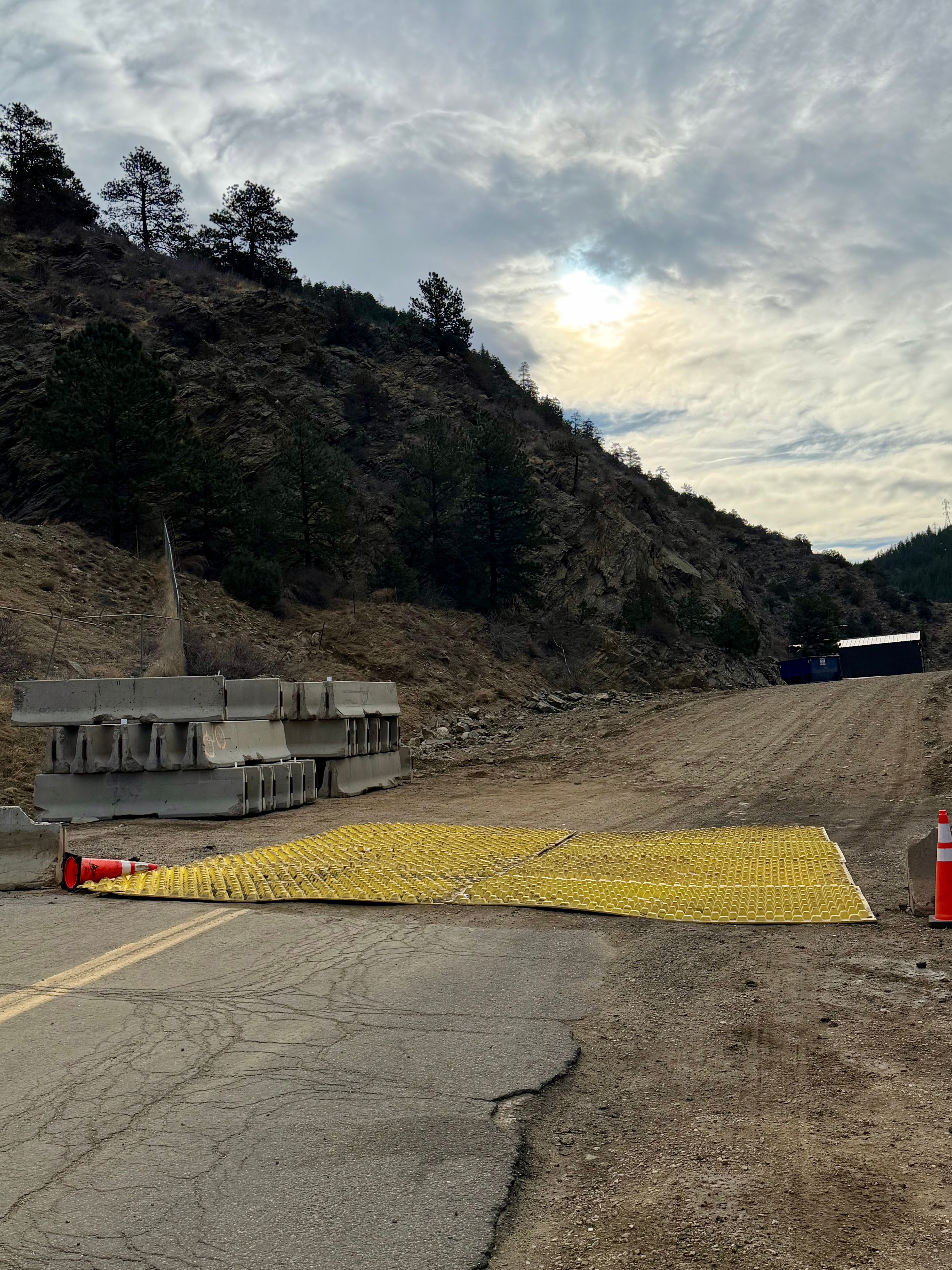
To help manage sediment and debris leaving the site, FODS Trackout Control Mats, specialized mats designed to remove mud and sediment from construction vehicle tires, have been installed at multiple construction exits throughout the project area.
These mats serve as a reusable construction entrance and provide an alternative to traditional rock-based Stabilized Construction Entrance systems. As trucks exit the jobsite, the mats flex the tires, helping remove mud, soil, and sediment before the vehicles reach the surrounding roadways. The mats feature an engineered pyramid surface that removes debris from tire treads and maintains a stable surface for vehicles. This system controls trackout, helping to keep surrounding roads cleaner. It also reduces the need for sweeping and ongoing road maintenance.
By preventing sediment from leaving the jobsite, the mats support stormwater compliance requirements outlined in the project’s SWPPP so contractors maintain environmentally responsible operations along the active corridor. Being modular and reusable, the mats can be repositioned as construction access points shift, allowing consistent construction trackout prevention as work advances along the corridor. As construction continues on the I-70 Floyd Hill Project, crews will spend the next several years reshaping the mountain corridor, building new bridges, and shifting the highway into its new alignment.
As a high-profile infrastructure project taking place directly alongside an active interstate, the I-70 Floyd Hill Project demands the use of best management practices at every stage of construction. With access points feeding directly into live highway traffic, contractors must prioritize solutions that minimize risk to both workers and motorists. Traditional rock-based construction entrances can pose challenges in this environment, as loose aggregate can be easily displaced and tracked onto the roadway, creating potential hazards for high-speed traffic on I-70.
FODS Trackout Control Mats are particularly well-suited for this type of application. The project is being completed in multiple phases, with access points continuously shifting as construction progresses along the corridor. The modular, relocatable design of the mats allows crews to move them as needed, maintaining effective trackout control throughout each phase of work. With construction already underway for several years and continuing into the future, the durability and reusability of the system provide long-term value, allowing the same mats to remain in use across evolving jobsite conditions while supporting consistent performance over the life of the project.
FODS Trackout Control Mats are approved for use by the Colorado Department of Transportation (CDOT), supporting contractors working on state-regulated infrastructure projects such as the I-70 Floyd Hill corridor. Approval by CDOT reflects the system’s ability to meet performance expectations for trackout control, roadway safety, and stormwater compliance on active transportation projects.
For contractors operating under DOT specifications and Stormwater Pollution Prevention Plans (SWPPP), using an approved solution is critical. FODS provides a reliable alternative to traditional methods, helping teams maintain compliance while improving jobsite efficiency and reducing the risks associated with sediment and debris leaving the construction site.
Ultimately, when complete, the project will deliver improved travel time reliability, safer roadway geometry, and a more resilient transportation corridor connecting Denver with Colorado’s mountain communities. Large transportation projects like Floyd Hill require coordination between engineering, construction, and environmental teams operating under complex conditions. Maintaining clean construction site exits and safe roadway conditions is one part of that effort.
Trackout control systems, such as FODS Trackout Control Mats, help contractors reduce sediment leaving the jobsite, support SWPPP requirements, protect surrounding pavement, and maintain safer roadway conditions along active highway construction corridors.