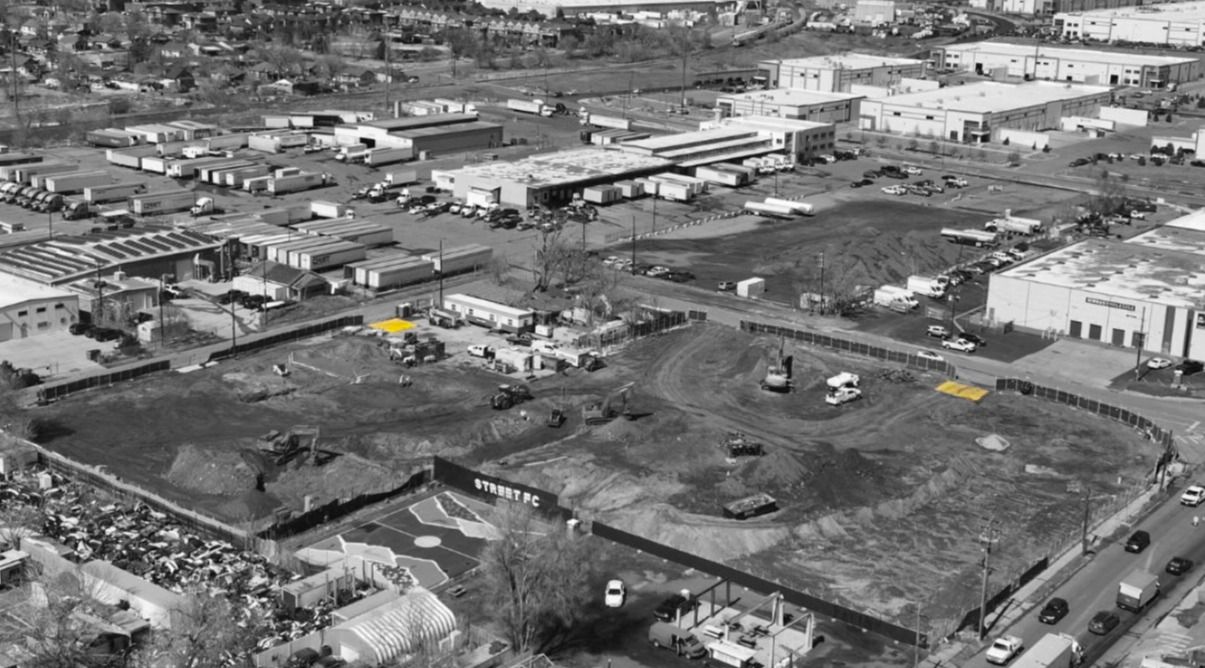
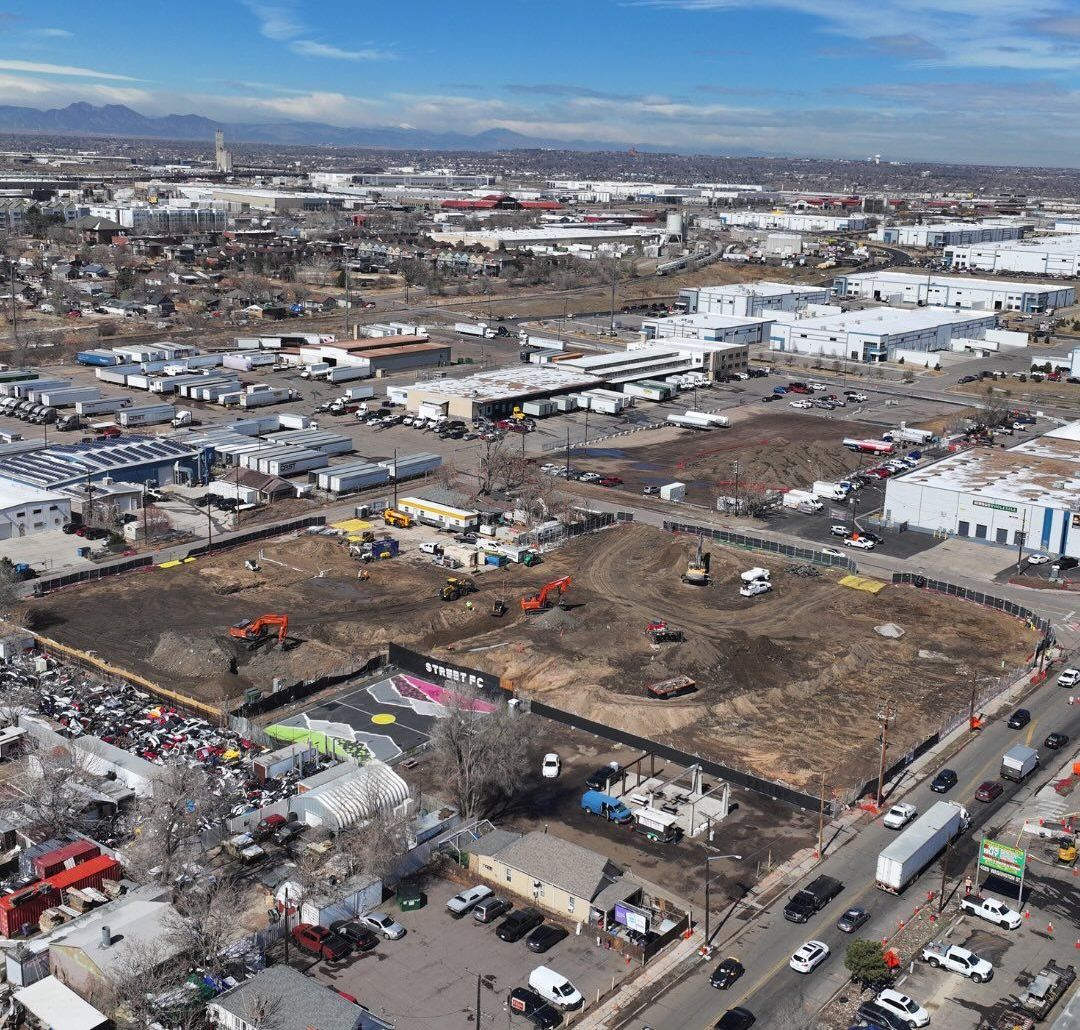
Construction is officially underway at 4965 N Washington Street in Denver's Globeville neighborhood, where one of Colorado's most significant mixed-use affordable housing developments is moving from vision to reality. The $132 million project will deliver 170 income-restricted apartments alongside Globeville's first-ever permanent Denver Public Library branch, a combination of housing, education, and community space that the neighborhood has been organizing around for nearly a decade.
The development sits on a 2.7-acre site that was previously occupied by a used-car dealership. The City and County of Denver assembled the parcel through a series of land acquisitions between 2019 and 2023, spending approximately $8.2 million before transferring the site to Globeville Redevelopment Partners on a 99-year ground lease. The developer team, a collaboration between Evergreen Real Estate Group, Rocky Mountain Communities, and the Globeville Elyria Swansea (GES) Coalition, was selected by Denver's Department of Housing Stability (HOST) through a competitive RFP process in 2024.
The five-story, 250,000-square-foot building is being designed by John Ronan Architects and EJ Architecture. General construction is led by a joint venture between Milender White and Gilmore Construction, both well-established Colorado-based contractors. Groundbreaking was celebrated on October 23, 2025, and completion is targeted for fall 2027.
The 170 apartments are reserved for households earning between 30% and 80% of the area median income (AMI). Unlike most affordable housing developments, which tend to favor studios and one-bedroom units, this project prioritizes family-sized homes. Approximately half of the units are three- and four-bedroom apartments. Resident amenities include a fitness center, community room, reading room, EV-ready parking, and more than 50,000 square feet of outdoor gathering space distributed across landscaped courtyard areas between the two residential wings.
Anchoring the ground floor is Globeville's first permanent Denver Public Library branch, funded in part through $12 million from Denver's voter-approved 2021 RISE Denver General Obligation Bond. Alongside the library is Tierra Colectiva, a community-owned café operated by the Globeville, Elyria, and Swansea Community Land Trust of the same name. Securing community ownership of the commercial space inside a publicly subsidized building was a deliberate anti-displacement strategy, supported in part by the Colorado Health Foundation.
From a construction standpoint, the building is among the most technically ambitious affordable housing projects in the country. It is among the first housing developments in Colorado to use prefabricated cross-laminated timber (CLT) and mass timber as primary structural elements, and one of only a handful nationally. The all-electric building features exposed wood interiors, a steel-frame facade, glass curtainwall systems, and two residential wings surrounding shared green courtyards. Mass timber construction offers meaningful environmental advantages over conventional concrete and steel, including lower embodied carbon, faster build timelines, and healthier indoor environments. It also introduces logistical complexity, particularly the wide-load specialty deliveries required to move CLT panels and glulam beams to an urban infill site on an active arterial corridor.
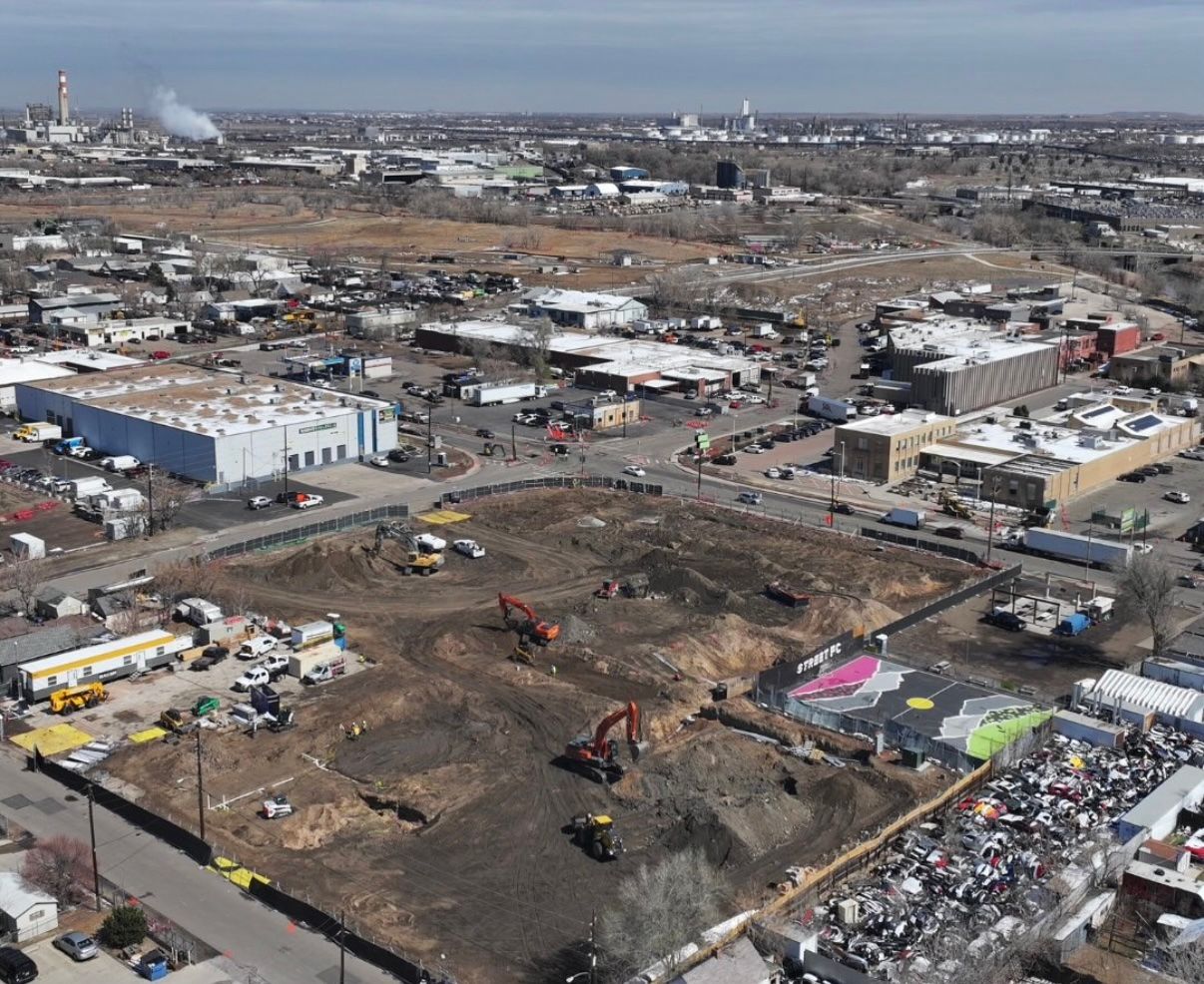
The $132 million financing stack reflects the multi-layered public-private partnership required to make deep-affordability urban infill projects work in a high-cost market like Denver. Major sources include $85 million in revenue bonds issued by the Denver Housing Authority (DHA), the $12 million RISE Denver GO Bond contribution, the city's land contribution via the ground lease, Low-Income Housing Tax Credit (LIHTC) equity through National Equity Fund, and community investment through the Colorado Health Foundation. The project is a direct expression of how HOST can use land acquisition, patient public capital, and mission-aligned developer partnerships to produce lasting affordability outcomes in neighborhoods at the greatest risk of displacement.
Urban infill construction in an active, dense neighborhood like Globeville creates stormwater and sediment control challenges that go beyond what most suburban or greenfield projects face. Every vehicle entering or exiting the job site passes through a neighborhood where pedestrians, RTD bus riders, cyclists, and local residents are present daily. The primary construction entrance at 4965 Washington Street opens directly onto N Washington Street, a major arterial corridor with active transit service, making trackout control not just a regulatory requirement but a matter of daily community accountability.
Projects at this scale and complexity, high-frequency heavy truck traffic, wide-load mass timber deliveries, foundation concrete work, multi-trade daily access, and phased construction over a 24-month timeline, generate significant mud, debris, and sediment at the tire-to-pavement interface. Without an effective stabilized construction entrance solution, that material ends up on public streets, in storm drains, and in violation of Colorado's NPDES permit requirements and MS4 stormwater management standards. On a project with this level of public visibility and community oversight, SWPPP compliance is not optional.
The FODS Trackout Control System is a reusable, high-performance construction entrance mat engineered specifically for high-traffic job sites where traditional rock-stabilized construction entrances fall short. Manufactured in Rockledge, FL, FODS uses rows of staggered HDPE pyramids designed to flex open vehicle tire lugs and dislodge trapped mud and debris before it reaches the public roadway. Unlike aggregate entrance pads, FODS mats do not deteriorate with use, do not require ongoing rock replenishment, and do not create the secondary problem of gravel tracking and road damage that traditional SCAs produce at high-volume entrances.
FODS was deployed at the primary construction entrance at 4965 N Washington Street to intercept sediment from all outbound construction vehicles throughout the build, from early earthwork and foundation concrete through structural framing, mass timber panel placement, envelope installation, and finish trades. The system's relocatability is particularly valuable on a phased mixed-use project like this one. As the site evolves and entrance and exit points shift between construction phases, the FODS mat system moves with the project without the cost and disruption of installing new aggregate pads at each phase change.
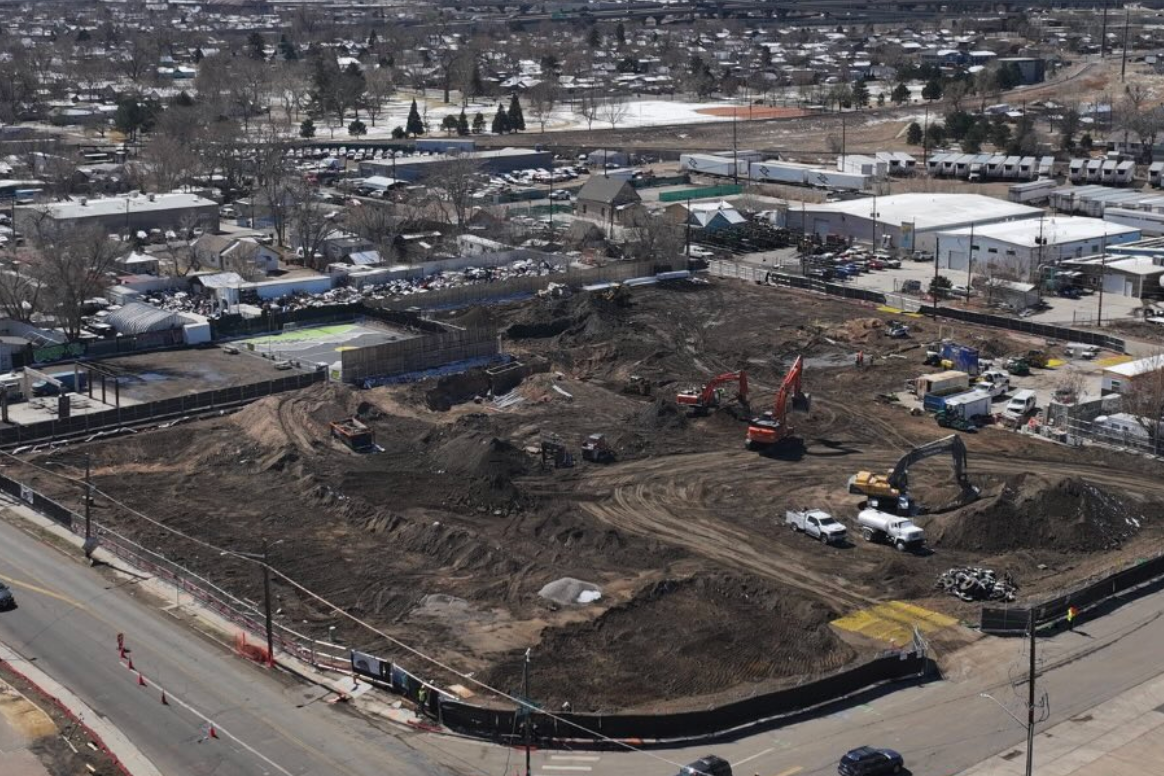
The FODS system requires no excavation. Mats can be installed directly over existing asphalt, concrete, or compacted soil using concrete screws or 18-inch pins, making it an ideal solution for urban infill sites where disturbing surrounding pavement or infrastructure is not an option. The mats are durable for 10 or more years and reusable across multiple projects, which means the per-project cost is consistently lower than the combined material, delivery, maintenance, and cleanup costs associated with conventional aggregate entrances.
The Globeville Library and Affordable Housing Hub is a complex urban infill project combining affordable housing, public infrastructure, and mass timber construction. It brings together multiple stakeholders, tight site constraints, and phased construction in an active neighborhood, making execution and site management critical throughout the build. On projects of this scale, controlling runoff, sediment, and trackout from day one through completion is critical. FODS provides consistent trackout control across every phase of construction without adding operational burden.