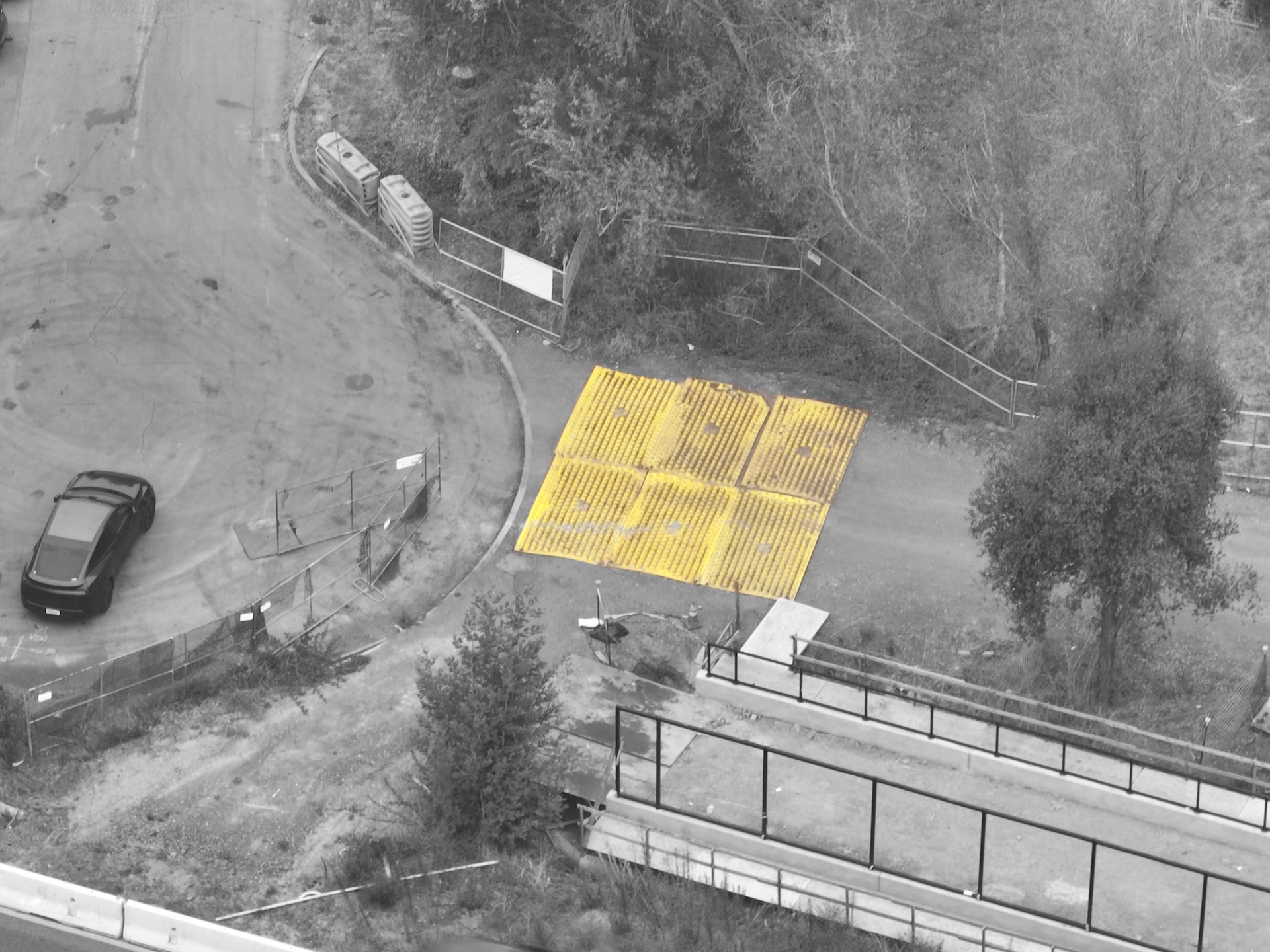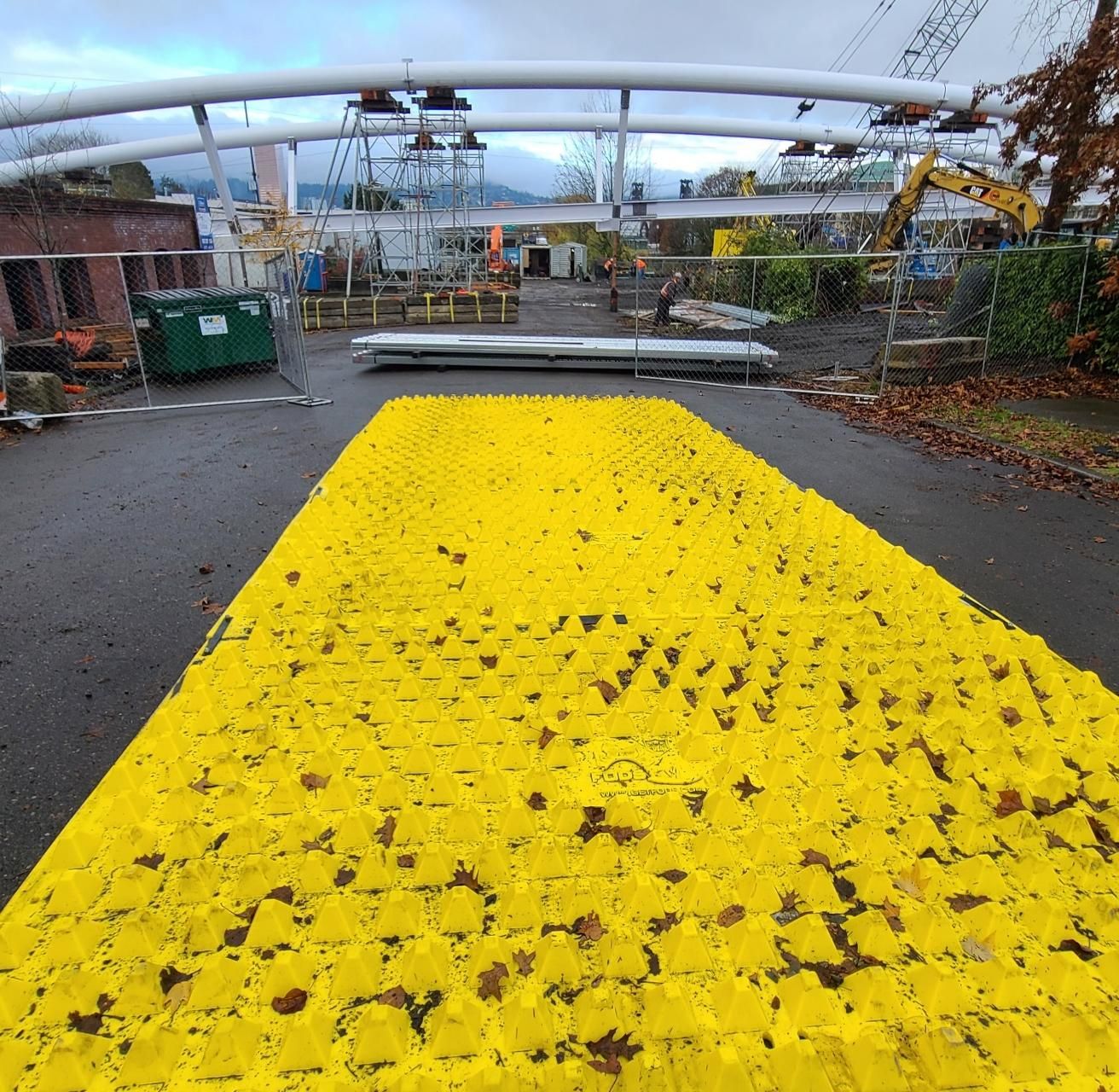

Oregon Gravel Construction Entrance BMP Detail
With nearly 400 miles of rugged coastline on the Pacific Ocean, Oregon is home to stunning landscapes and breathtaking ocean views. The clear, cool water is enjoyed by thousands of residents and visitors each year, creating a vast habitat for an array of wildlife. The Columbia River is North America’s most significant flow of fresh water into the Pacific Ocean and has been the cultural and economic center of the region for generations. It is essential to maintain the health of the water that flows through Oregon, and it is the responsibility of residents, visitors, businesses, and government to work to improve the quality of drainage throughout the state.
Oregon NPDES Water Quality Permits
To protect the rivers, lakes, and coastline throughout the state, Oregon’s Department of Environmental Quality (ODEQ) administers the National Pollutant Discharge Elimination System (NPDES) permit program established by the Clean Water Act. The NPDES permit program is designed to establish and enforce sediment containment strategies on industrial, construction, and municipal operations. The permit program requires operators to obtain permit coverage before discharging stormwater associated with construction activities to surface waters or storm drainage systems that flow to them. Regulatory permits require control measures to minimize, treat, or contain stormwater runoff from construction sites that enter surface waters.
Applications for NPDES stormwater permits are reviewed by the Oregon Department of Environmental Quality (ODEQ); however, permits for operations on tribal or federal ground are deferred to the federal EPA. State-issued permits are required for any construction site affecting one or more acres, and most eligible construction projects will apply for the 1200-C Construction Stormwater General Permit. When applying for a permit, contractors and engineers must create an Erosion and Sediment Control Plan (ESCP), also known as a Stormwater Management Plan (SWMP), to submit with their permit application. ODEQ creates a handbook and publishes resources to aid in the development of the ESCP.
An ESCP identifies potential sources of pollution and sedimentation that will exist on the job site. The plan also explains each technique or Best Management Practice (BMP) that will be used to mitigate pollution and prevent contaminants from entering storm drains or surface waters. Often, the first BMP installed is a Construction Entrance BMP, which is used to prevent vehicle sediment from tracking onto paved roadways at egress and ingress points.
Gravel Construction Entrance - ODEQ E&S Manual
The Construction Stormwater Best Management Practices Manual, issued by the ODEQ, includes standard BMP technique instructions on the setup and maintenance of egress/ingress at a construction site. It describes a traditional gravel pad as well as prefabricated Rumble Tracks and wheel wash systems as options for sediment trapping.
Gravel entrances consist of a driveway structure composed of aggregate over a geotextile fabric. The handbook recommends that gravel entrances be installed with minimum dimensions of 50’ in length, 20’ in width, and 10” in depth. The entrance should also include a wide turning radius, and larger vehicles should also be taken into consideration when designing the turning zones of the construction entrance. Geotextiles must be used to separate the rock from the native soil, to stabilize and prevent aggregate from sinking into the soil. The aggregate should be 4–6-inch diameter quarry spalls. Regular maintenance is necessary to keep the effectiveness of the rock pad and prevent sediment from tracking into the roadway. When sediment does track onto the roadway, contractors must clean the road using dry methods such as vacuum sweeping.
As the job progresses, the stone may become laden with sediment and mud. When the entrance is no longer effectively preventing tracking, the entrance must be top dressed with additional rock, or an additional BMP must be installed.
Wheel Wash
When the gravel construction entrance is not sufficient to mitigate track out, a wheel wash may be installed. Wheel washes are simple pressure washers placed at ingress/egress points and used to release large sediment clinging to the vehicles exiting the site. The discharge water from the wash zone must be treated to prevent pollutants from entering the stormwater system. The ODOT manual further outlines the advantages and disadvantages of this system in section 3.4.2 of the Erosion Control Manual. One of the most notable advantages includes the ability of the water pressure to remove and therefore neutralize the spread of noxious weed seed from the site. Disadvantages to this method include the need for a water supply and the labor required to use the washing system.
Shaker Rack or Rumble Track
Another method that is mentioned in the handbook is the use of a rumble track. These are prefabricated steel structures designed to reduce the tracking of harmful material out of the construction area. These steel structures use rows of angle iron or steel bars to shake vehicle tires and dislodge debris. Various types of shaker racks can be installed with an optional sediment pit below the system to catch loose mud. These systems are often installed over paved areas and can be reused multiple times.
Rumble Tracks used in areas with excessive sediment tracking will require regular cleaning. Depending on the design, cleaning may involve moving the structure with equipment and cleaning out the sediment trap, or removing debris from the surface of the structure.
FODS Vehicle Trackout Control Mats
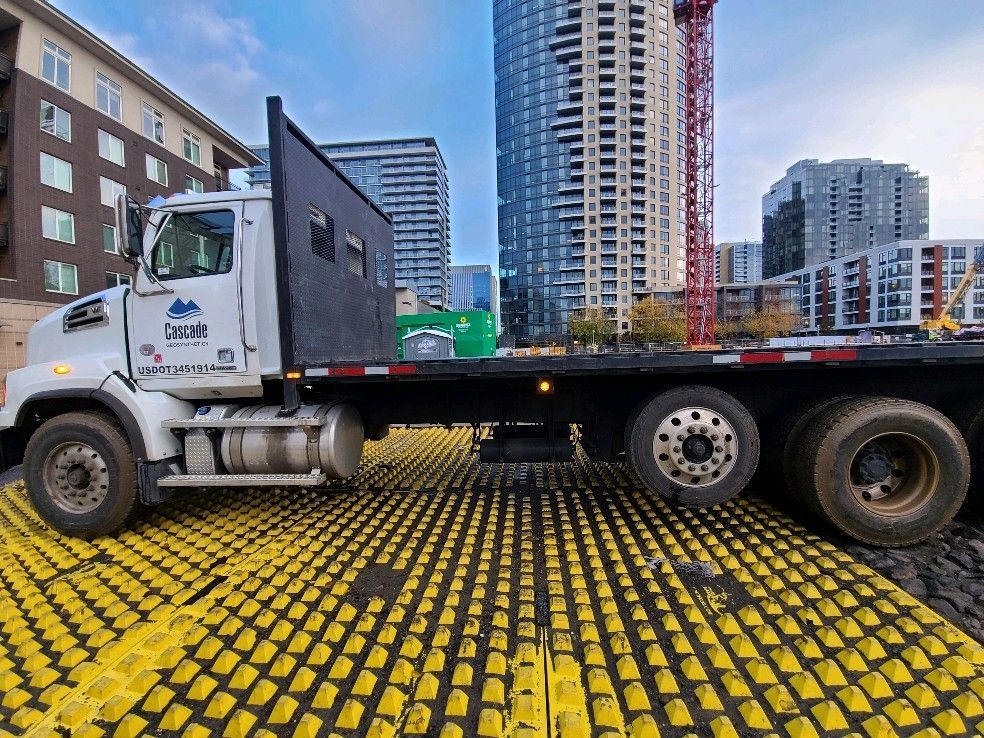
The FODS Trackout Control Mat System features a unique design that effectively removes mud and other debris from vehicle tires. Compared to steel shaker racks, FODS utilizes pointed, pyramid-shaped structures to deform and flex vehicle tires in multiple directions. This unique design enables maximum performance on all vehicle tire sizes.
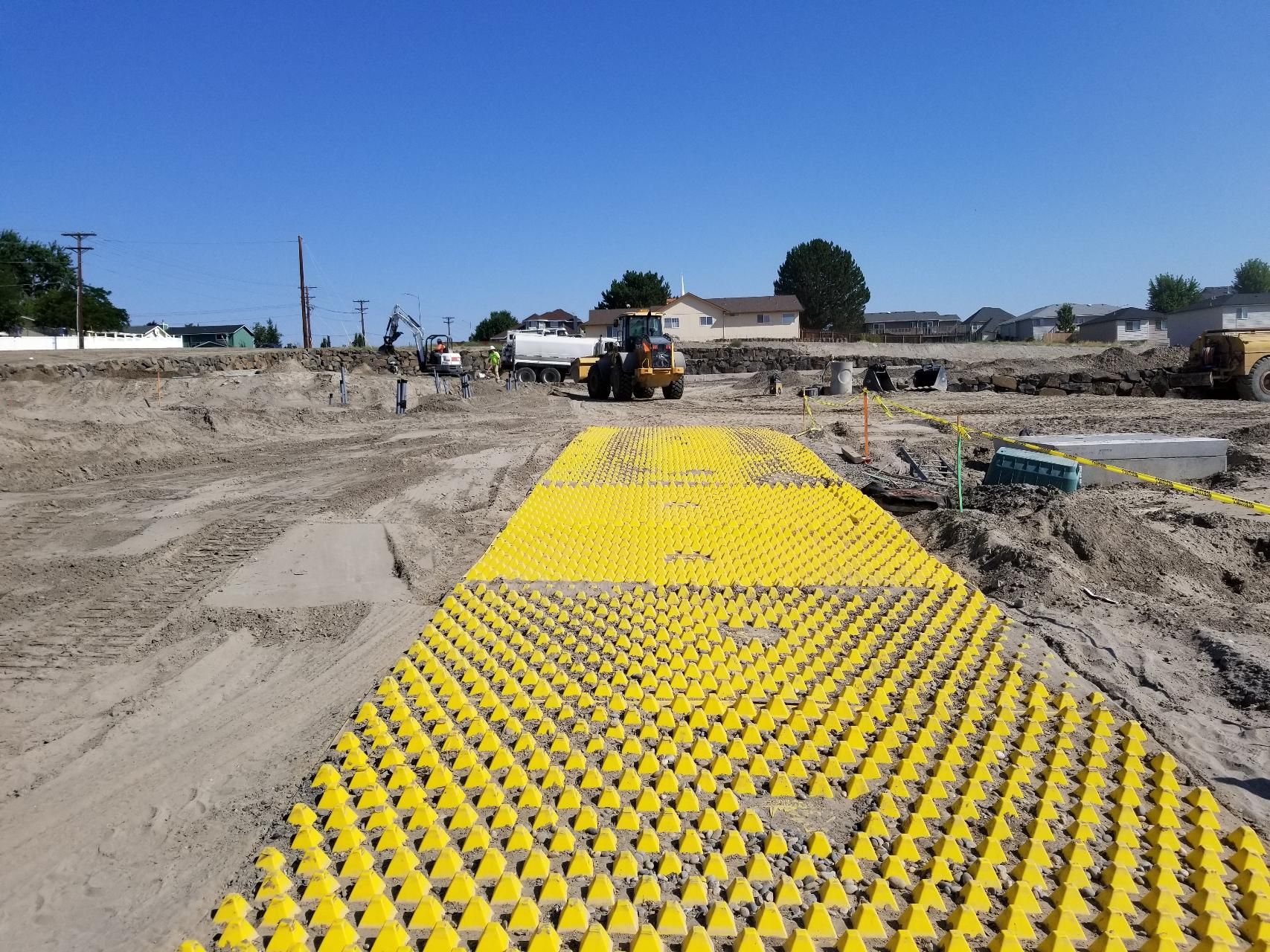
These durable mats are environmentally friendly, reusable, and 100% recyclable after a service life of 10 years or more. The FODS Trackout Control Mat system is designed to be installed over dirt, asphalt, or concrete, and does not require excavation prior to installation. FODS can be set up in under 30 minutes and can be easily relocated for each phase of the project.
Installation, removal, and maintenance can be completed without the use of heavy equipment. Maintenance is often completed using a skid steer with a broom attachment or manually using a FODS shovel.
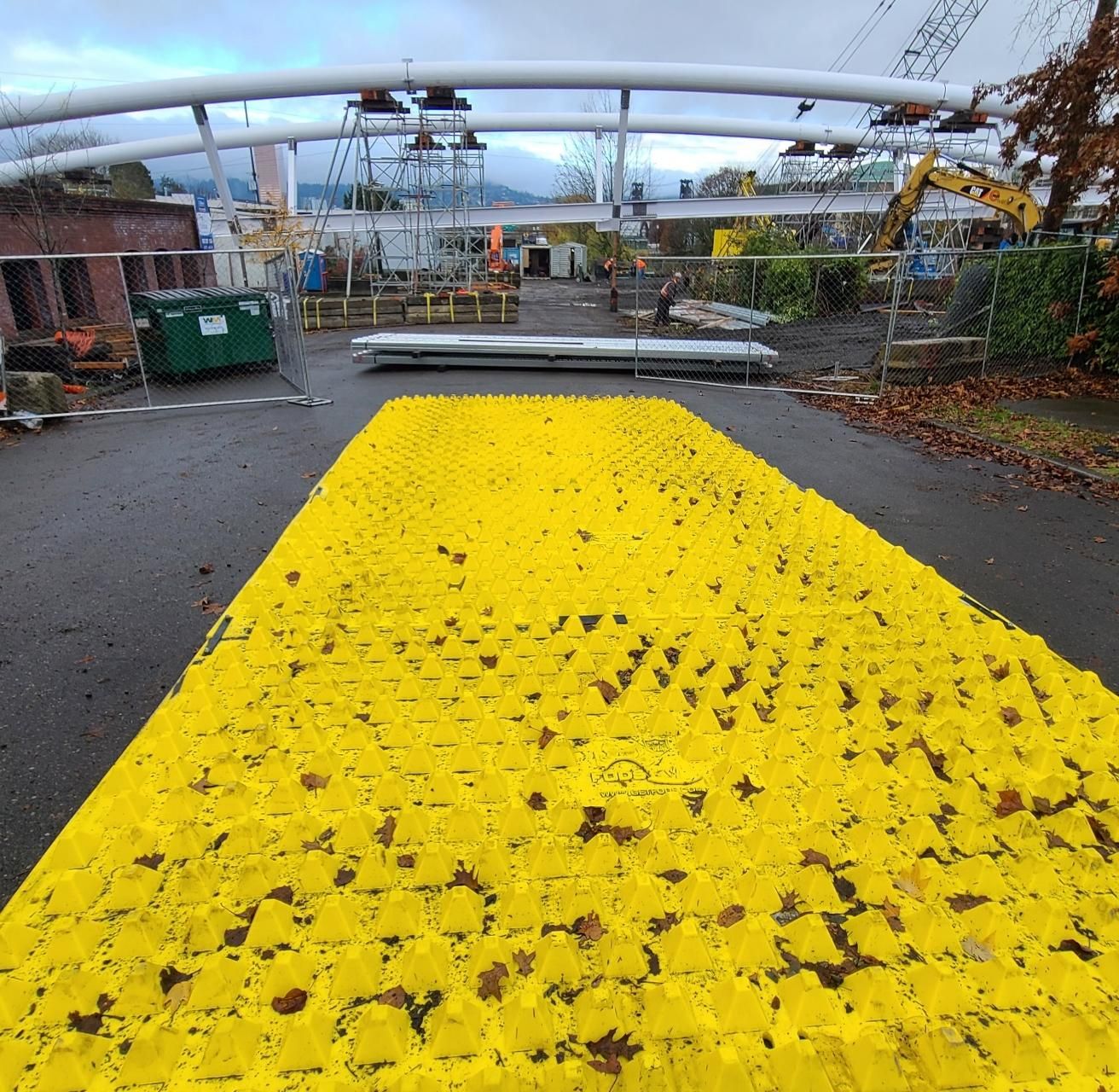
FODS Approved By Oregon DOT
The Oregon DOT has approved the FODS Trackout Control Mat System for use on projects across the state. The modular FODS mat systems enabled contractors to relocate the entrance during each phase of the project, reducing the cost with each deployment.
Because the FODS system does not use rock, this effective BMP can also help to reduce the risk of rock entering the active lanes of travel during construction.
FODS fulfills the requirements listed in the Oregon DOT 2018 Boilerplate Special Provisions Section 00280 Erosion and Sediment Control. Section 00280.16(a) Construction Entrances adds a provision for Prefabricated Construction Entrances, stating that reusable prefabricated construction entrance mats (track-out mats) must provide an irregular driving surface created by ridges, knobs, or pyramidal extensions at least 2 1/2 inches in height, designed to collect dislodged material from equipment tires and the surface below the protrusions. The mats must be modular, capable of being fixed together to achieve the required width and length, and anchored in place. They must also feature high-visibility coloration, be resistant to chemicals and UV exposure, and have a crush strength of at least 20,000 pounds.
Contact us for more information about using FODS in the state of Oregon.
Additional Resources:
Oregon DEQ Stormwater Permit Application Forms and Permit Fees
Construction Stormwater Best Management Practices Manual
ODOT Erosion Control Field Manual
2018 Boilerplate Special Provisions
2018 Boilerplate Special Provisions - Section 00280 - Erosion and Sediment Control