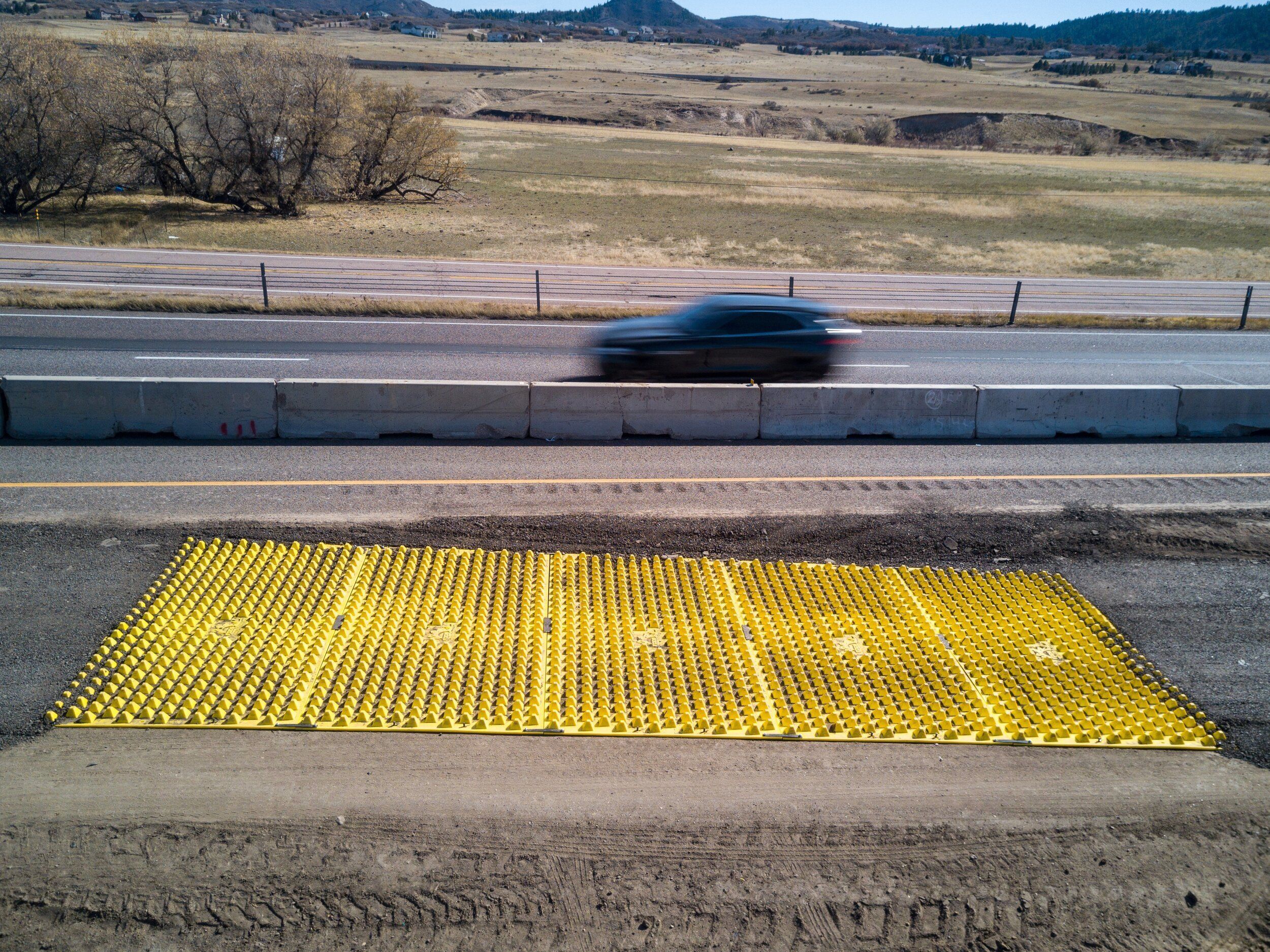

Delaware Stabilized Construction Entrance BMP
Delaware may be the nation's second-smallest state, but it carries an outsized environmental responsibility. From the Delaware River and Delaware Bay along its eastern edge to the Christina River, Brandywine Creek, and the tidal marshes of the Chesapeake and Delaware Canal watershed, the state's waterways are closely tied to its economy, recreation, and quality of life. Inland, farmland and suburban development push stormwater into streams that drain toward coastal areas like Rehoboth Beach, Lewes, and the Delaware Seashore. Keeping sediment out of those waterways starts at the construction site entrance.
Economically, Delaware grew into a major hub for manufacturing, pharmaceuticals, and finance after World War II. As environmental regulations developed alongside that growth, construction managers and site operators adopted best practices to protect water quality. Today, DNREC, local approval agencies, and the construction industry work together to keep the state's water resources clean through a combination of permitting, planning, and on-the-ground BMP implementation.
Delaware Department of Natural Resources and Environmental Control (DNREC) NPDES Permits
The Clean Water Act of 1972 established a national framework for controlling pollutants entering the nation's waterways. Under the Act, the National Pollutant Discharge Elimination System (NPDES) program requires operators of construction, industrial, and municipal sites to obtain permit coverage and implement Best Management Practices (BMPs) before disturbing land or discharging stormwater.
In Delaware, the Department of Natural Resources and Environmental Control (DNREC) administers the NPDES program through its Division of Watershed Stewardship, Sediment and Stormwater Program. Any construction activity that disturbs one acre or more, or that disturbs less than one acre but is part of a larger common plan of development ultimately exceeding one acre, must obtain stormwater permit coverage before beginning work. Most projects obtain coverage under the Construction General Permit (CGP) by submitting an electronic Notice of Intent (eNOI) along with an approved Sediment and Stormwater Management Plan, which serves as the project's Stormwater Pollution Prevention Plan (SWPPP).
2026 NPDES Construction General Permit
DNREC reauthorizes the Delaware NPDES Construction General Permit on a five-year cycle. The 2026 CGP became effective on March 11, 2026 and expires March 10, 2031 (State Permit No. WPCC 3082/20 / NPDES Permit No. DE 0051268). The previous standalone CGP had been in place since March 2021, when DNREC first moved from permitting by regulation to a standalone general permit structure. Owners and operators with approved NOIs under the 2021 permit must reauthorize under the 2026 CGP by June 15, 2026 to maintain uninterrupted coverage.
The 2026 CGP includes several targeted updates. DNREC clarified that NOI submission alone does not constitute authorization to discharge; the NOI must be accepted and assigned a permit number before work begins. All NOIs, Notices of Shared Operational Control, and Notices of Termination are now submitted exclusively through DNREC's electronic portal. Inlet protection requirements were expanded to cover all inlets receiving runoff from disturbed areas, not just those carrying flow directly off-site, bringing the permit into alignment with the Delaware Sediment and Stormwater Regulations (DSSR). Dust control now applies site-wide, including areas where dust is generated by tracking, stockpiling, and equipment operations. Dumpster emptying was adjusted from a fixed twice-weekly schedule to a threshold-based requirement, with dumpsters emptied when they reach 80% capacity. The 2026 CGP also gives DNREC new authority to deny additional permit coverage to operators who have failed to comply with existing CGP conditions.
The SWPPP and BMP Requirements
The Sediment and Stormwater Management Plan is the Delaware equivalent of the federal SWPPP. It identifies all potential pollution sources on the job site and specifies which BMPs will be used to control them. Plans must be designed by a Delaware-licensed professional, approved by the appropriate plan approval agency, and maintained on-site at all times during active construction. Electronic access via QR code is acceptable under the 2026 CGP.
DNREC publishes the Delaware Erosion and Sediment Control (ESC) Handbook to guide engineers and contractors through BMP selection, specification, and installation. The handbook was updated effective January 2026, and any stormwater management plan submitted for approval on or after January 1, 2026 must reference standard details bearing the "Effective January 2026" notation. The updated handbook aligns BMP requirements with the 2026 CGP and the 2022 federal NPDES standards.
Responsible Personnel with completed DNREC Contractor Training must be on-site at least daily. Construction site reviews are required at minimum once every seven calendar days and within 24 hours of any storm event of 0.25 inches or greater. All inspection records must be retained for a minimum of three years following DNREC acceptance of the Notice of Termination.
Stabilized Construction Entrance (SCE) BMP - DE-ESC-3.4.7
A Stabilized Construction Entrance is typically among the first BMPs installed before other construction activities begin. It stabilizes heavily trafficked entry and exit points and is designed to minimize sediment tracking by vehicles and equipment leaving the site onto public roadways. An SCE must be installed at every access point used by construction vehicles and equipment, and it works alongside complementary BMPs including street sweeping, sediment basins, and inlet protection to capture runoff before it reaches storm drains.
Delaware's ESC Handbook defines the standard SCE specification under Detail No. DE-ESC-3.4.7 (Effective January 2026). The standard design calls for DE #3 crushed stone with a minimum length of 50 feet (30 feet on a single-residence lot), a minimum depth of 6 inches, and a minimum width of 10 feet extended across the full width of any ingress or egress point. Type GS-I geotextile fabric is placed over the entire area beneath the stone. Surface water flowing toward the entrance must be piped across or managed with a mountable berm using 5:1 slopes, and any vehicle washing must drain to an approved sediment trapping device. Inspection is required after each rain event. The construction notes in DE-ESC-3.4.7 specify that traffic bearing grates, timber mats, or other approved equivalents may be substituted for the standard aggregate design.
FODS Reusable Construction Entrance
The FODS Stabilized Construction Entrance System is a modular, reusable trackout control BMP that qualifies as an approved equivalent under Delaware's SCE specification. The system uses durable 12-foot by 7-foot mats formed into pyramids. The pyramid shape creates an aggressive surface that causes tire treads to spread open and release trapped debris as vehicles exit the site.
Compared to aggregate-based entrances, FODS offers several practical advantages for Delaware contractors. On performance, the FODS system does not degrade or compact over time and is up to 59% more effective than aggregate-based systems. Because the system uses no rock, there is no risk of stones entering public roadways or being expelled from dual-tire vehicles, a particular consideration for job sites in dense areas like Wilmington, Newark, or Dover where street cleanliness is closely monitored. On flexibility, FODS can be installed on any substrate and requires no power or water to operate. A 1x5T configuration (35 feet extended) is commonly used to replace a 70-foot aggregate entrance while providing a wide turning radius for vehicles exiting the site. On efficiency, the system deploys in as little as 30 minutes and mats can be relocated and reused across multiple projects and access points as site needs change. On cost, mats are designed to last 10 or more years, eliminating the recurring material, delivery, and disposal costs associated with aggregate entrances.
For Delaware projects near sensitive waterways like the Christina River, Brandywine Creek, or tidal areas feeding the Delaware Bay, the elimination of loose aggregate also reduces the risk of stone becoming a secondary sediment source on adjacent public roads.