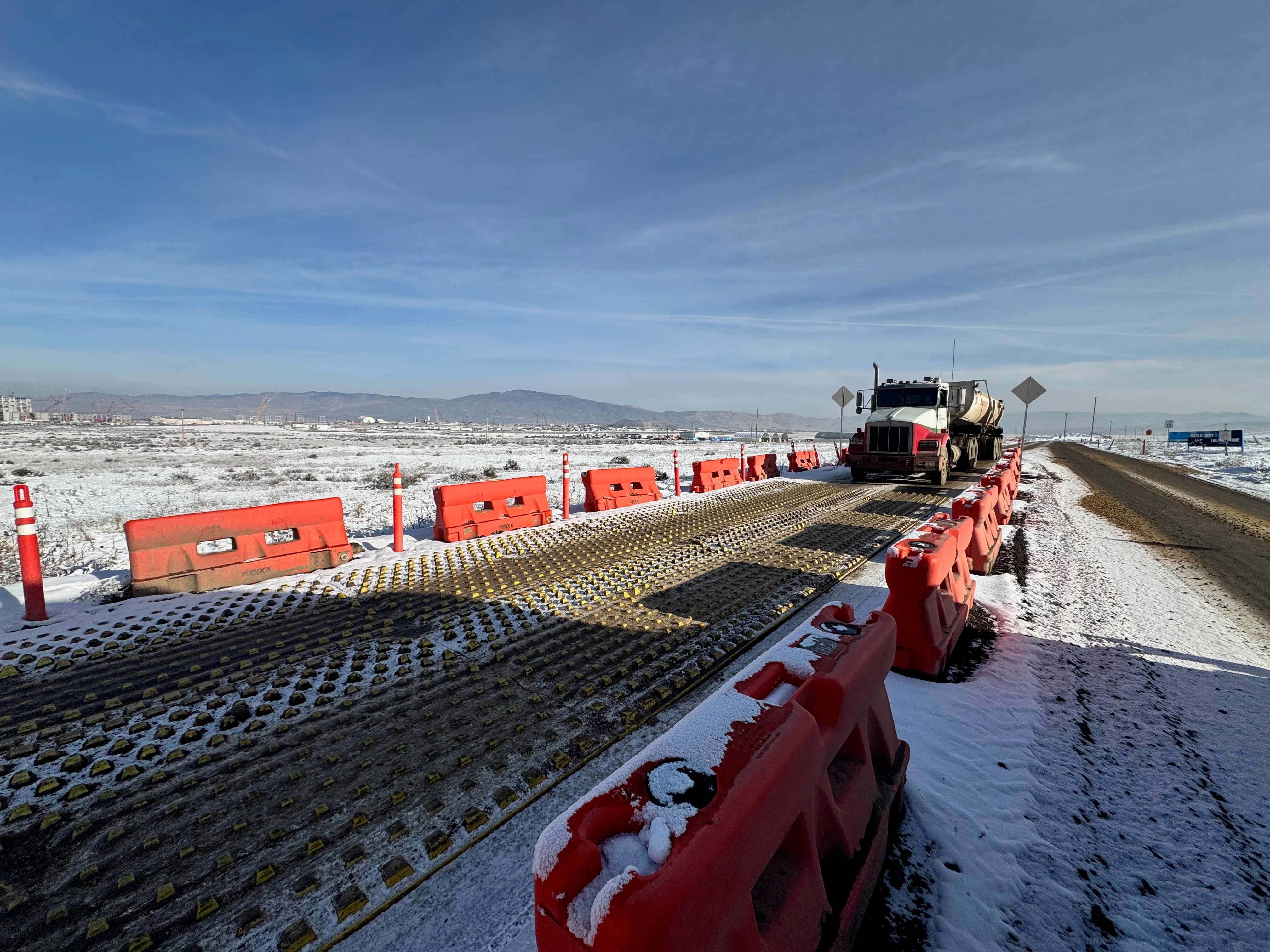

Wyoming Stabilized Construction Entrances and Trackout Control
WYPDES Large and Small Construction General Permits and BMP Compliance
Wyoming is the least populated state but one of the busiest for earthmoving, because its economy is built on energy and its landscape is vast and rugged. The Powder River Basin leads the nation in coal, the Green River Basin holds major oil, natural gas, and the world's largest trona deposits, and Wyoming's high plains now host some of the largest wind projects in the country. That work unfolds across the North Platte, Green, and Snake river drainages, under the shadow of the Wind River Range, the Bighorns, and the Tetons, in a climate defined by high elevation, relentless wind, and hard winters. On this ground, keeping sediment on the job site and off public roads is a core compliance duty, and a stabilized construction entrance is one of the first controls installed and inspected.
Wyoming DEQ Construction Stormwater Permits
The Wyoming Department of Environmental Quality (WDEQ), through its Water Quality Division, administers the state's delegated National Pollutant Discharge Elimination System (NPDES) program as the Wyoming Pollutant Discharge Elimination System (WYPDES). Wyoming scales construction coverage by size. Sites that disturb at least one acre but less than five acres, or are part of a larger common plan of that size, are covered under the Small Construction General Permit. Sites that disturb five or more acres, or are part of a larger common plan of that size, are covered under the Large Construction General Permit.
Both permits require a Stormwater Pollution Prevention Plan (SWPPP), and in Wyoming a complete SWPPP must be submitted before the Notice of Intent will be processed. WDEQ reissues these general permits on a five-year cycle, so operators should confirm the current permit version and its effective and expiration dates on the WDEQ Storm Water Permitting page when preparing an application. The SWPPP identifies the site's potential sources of sediment and pollution and the best management practices (BMPs) that will control them, including the controls that keep construction traffic from tracking sediment onto public roads.
The Aggregate Construction Entrance and Its Limits
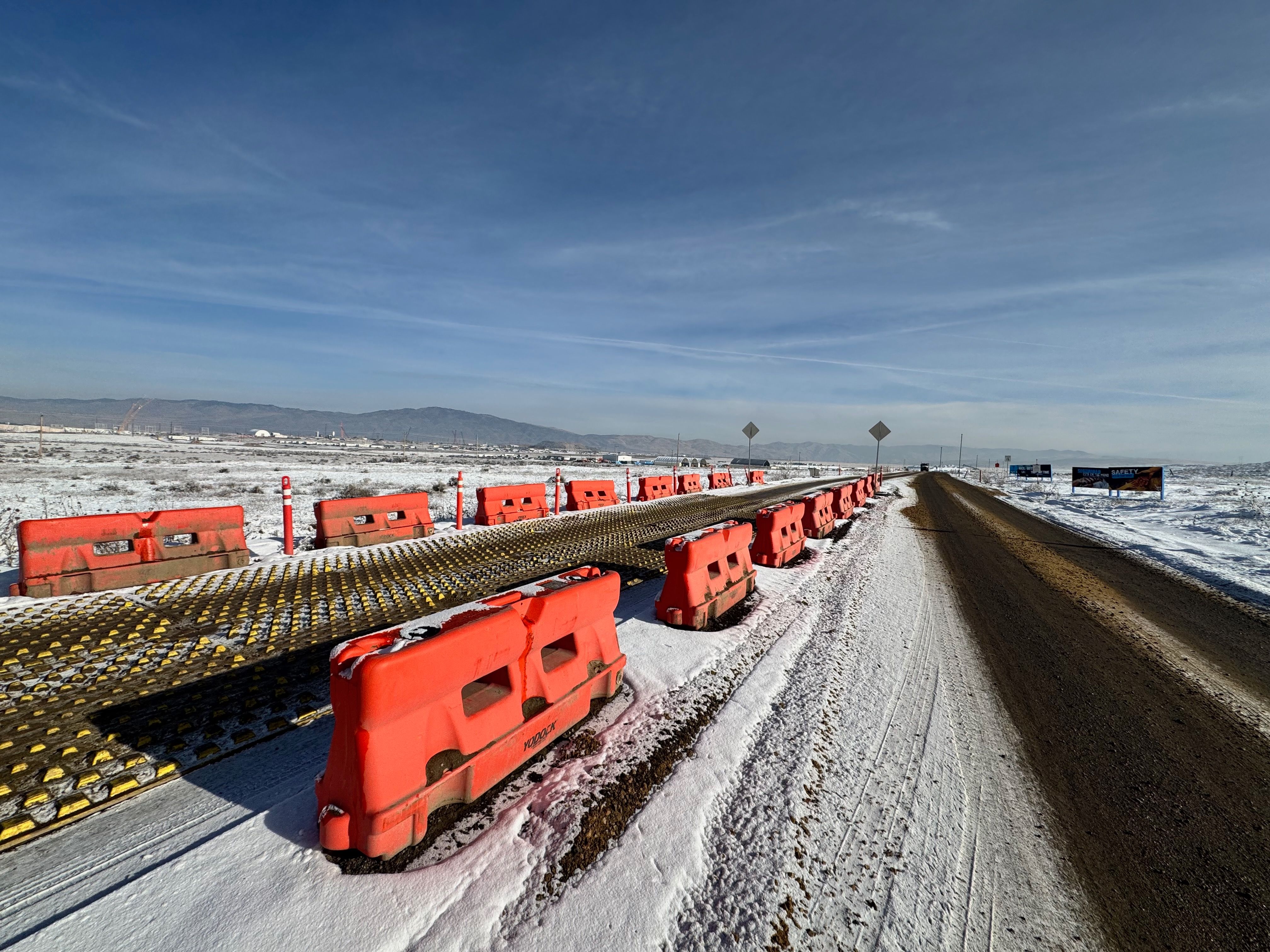
Wyoming's construction entrance design follows the WYDOT Standard Specifications and erosion control guidance used on state and local work. The traditional entrance is a pad of coarse aggregate placed over a geotextile fabric at every point where vehicles leave the site, built long and thick enough to knock sediment loose from tires, with runoff directed to a sediment control.
The weakness of the aggregate pad is maintenance. As the stone compacts and fills with the fine, dusty soils common across Wyoming, it stops cleaning tires and must be top dressed with fresh rock, and any material tracked onto the road has to be removed promptly. When the stone pad alone is not enough, crews add a wheel wash that sprays tires with pressurized water, a real burden in an arid, remote state where water has to be hauled to many sites, and one that can leave ice on the road in Wyoming's long winters. Each traditional option carries a recurring cost and a maintenance cycle that a durable manufactured entrance can avoid.
FODS as a Compliant Construction Entrance in Wyoming
Wyoming does not maintain a brand-name product approval list for construction exits. WDEQ judges a construction entrance on whether it performs the required function, removing sediment from tires before vehicles reach the road, and the operator specifies the chosen practice in the SWPPP. FODS Trackout Control Mats can be named directly in the SWPPP as the site's stabilized construction entrance, satisfying the same purpose as the aggregate pad while removing the loose rock and the heavy maintenance the traditional design depends on.
FODS Trackout Control System
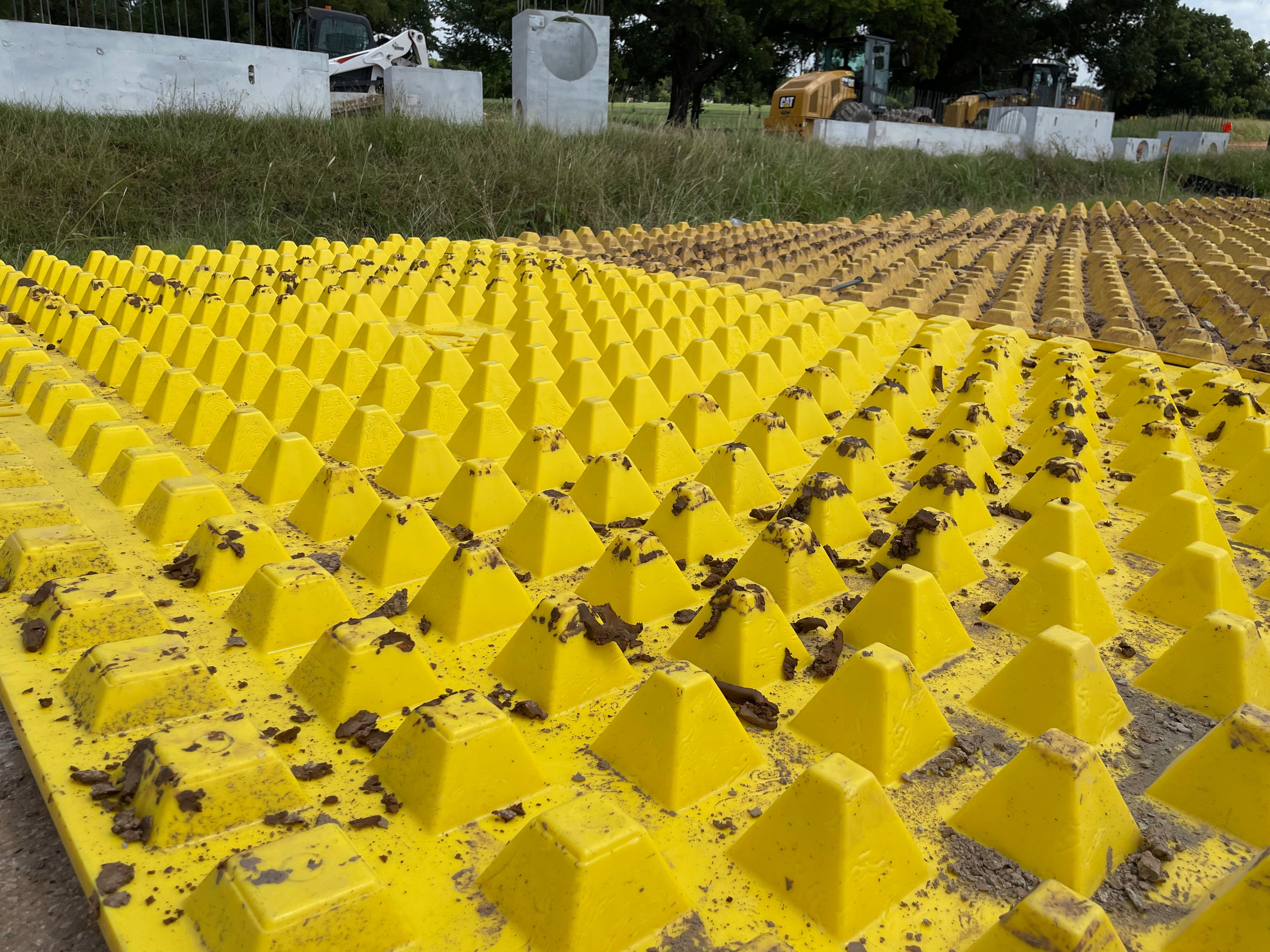
The FODS Trackout Control System is a modular, reusable construction entrance made of high-density polyethylene mats with a pyramid-shaped surface. As vehicles pass over the mats, the pyramids flex the tires so mud and debris release from the tread and drop between the pyramids, clear of the tires. The mats install over dirt, concrete, or asphalt without excavation or heavy equipment, and a configuration can be deployed or relocated in short order, with a standard 1x5T layout providing about 35 feet of travel and a wide turning radius as an alternative to a longer rock pad.
FODS is well matched to Wyoming's conditions. Because it uses no water, there is no wheel-wash supply to haul to remote sites and no ice risk in winter, and because it uses no rock, there is no loose aggregate to be tracked onto the road, thrown from dual tires, or to shed dust in the wind. The system is water-free and all-weather, so it keeps working through freeze-thaw and the cold that defines much of the Wyoming construction season. Its portability is a strong fit for the state's linear and phased energy work, from oil and gas well pads and pipelines to wind turbine pads, access roads, and transmission projects, where entrances move as the job advances. Maintenance is a quick pass with a skid steer broom or a FODS shovel, and with a service life of ten years or more the same mats can be reused across projects, which shifts the cost of a construction entrance from a recurring expense to a one-time investment.
Risks of Vehicle Trackout on Roadways
Safety is a primary concern wherever construction traffic meets a public road. Aggregate exits deposit rock and debris onto pavement, creating hazards for drivers and workers, and loose stone can lodge between dual tires and be thrown at speed. Wheel washes add the burden of supplying and containing water in an arid state and, in cold weather, the risk of dripping vehicles building ice on the road. FODS uses a rockless, water-free technique to clean tires and does not carry the same risk of injury or liability as aggregate entrances. The mats are durable and reusable across many projects, which reduces the dust, the water use, and the environmental impact tied to aggregate production, hauling, and disposal. On Wyoming sites that drain to the North Platte, the Green, the Snake, or the Powder River, keeping rock and sediment off the road also helps keep dust out of the air and sediment out of the water.
Additional Resources
WDEQ Large and Small Construction General Permit
WYDOT Standard Specifications for Road and Bridge Construction