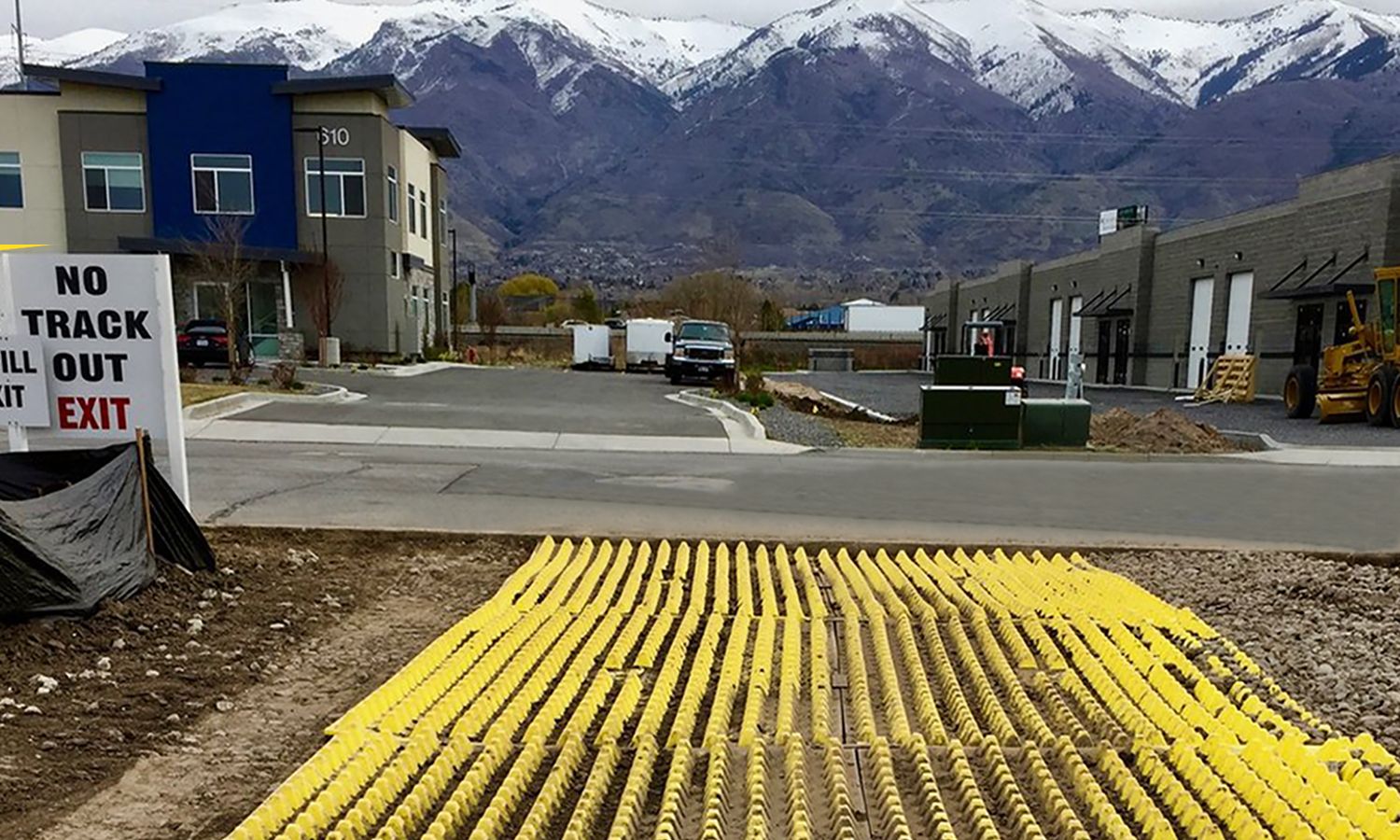

Utah Stabilized Construction Entrances and Trackout Control
UPDES Construction General Permit UTRC00000 and Fugitive Dust Compliance
Utah pairs a dry, high-desert climate with fast-growing cities and heavy mountain snowfall, a combination that makes both water and air quality sensitive to construction. The Great Salt Lake, Utah Lake, and the Jordan River anchor the Wasatch Front, where most of the state's population and building activity concentrate from Ogden through Salt Lake City to Provo and the Silicon Slopes tech corridor. To the south and east, the Colorado and Green rivers cut through the red-rock country around Zion, Arches, and Canyonlands. On job sites across this range, from desert valleys to the snowy Wasatch and Uinta ranges, keeping sediment on the site and off public roads is a core compliance duty, and a stabilized construction entrance is one of the first controls installed and inspected.
Utah is unusual in that a construction entrance often has to satisfy two programs at once, one for water and one for air. Understanding both is the key to specifying the right control.
Utah UPDES Construction Stormwater Permit

The Utah Department of Environmental Quality, through its Division of Water Quality, administers the state's delegated National Pollutant Discharge Elimination System (NPDES) program as the Utah Pollutant Discharge Elimination System (UPDES). Construction that disturbs one acre or more, or that is part of a larger common plan of development of that size, requires coverage under the UPDES Construction General Permit, UTRC00000.
Utah reissued the current permit effective February 1, 2026, and it runs through January 31, 2031. Coverage is obtained by developing a Stormwater Pollution Prevention Plan (SWPPP) and filing a Notice of Intent with the Division of Water Quality. The SWPPP identifies the site's potential pollutant sources and the best management practices (BMPs) that will control sediment and runoff, and in Utah it must be signed and certified by both the owner and the general contractor and kept available at the site, or online with posted signage showing where to find it. Small single-lot residential work under an acre is handled through a separate Common Plan Permit.
Utah Fugitive Dust and Track-Out Requirements
In Utah's PM10 and PM2.5 nonattainment areas, chiefly the Wasatch Front counties, a second program applies. The Utah Division of Air Quality enforces the Fugitive Dust Rule, R307-309, which requires a fugitive dust control plan for construction and other dust-generating activity on sites of a quarter acre or more. The rule sets opacity limits, no more than 20 percent on site and 10 percent at the property boundary, and it addresses track-out directly: anyone who deposits material that can create fugitive dust on a paved public or private road must clean the road promptly.
For a contractor on the Wasatch Front, that means the construction entrance is doing double duty, keeping sediment out of the storm drains to satisfy the UPDES permit and keeping mud and dust off the road to satisfy the fugitive dust plan. A control that actually stops track-out at the exit reduces the risk on both fronts at once.
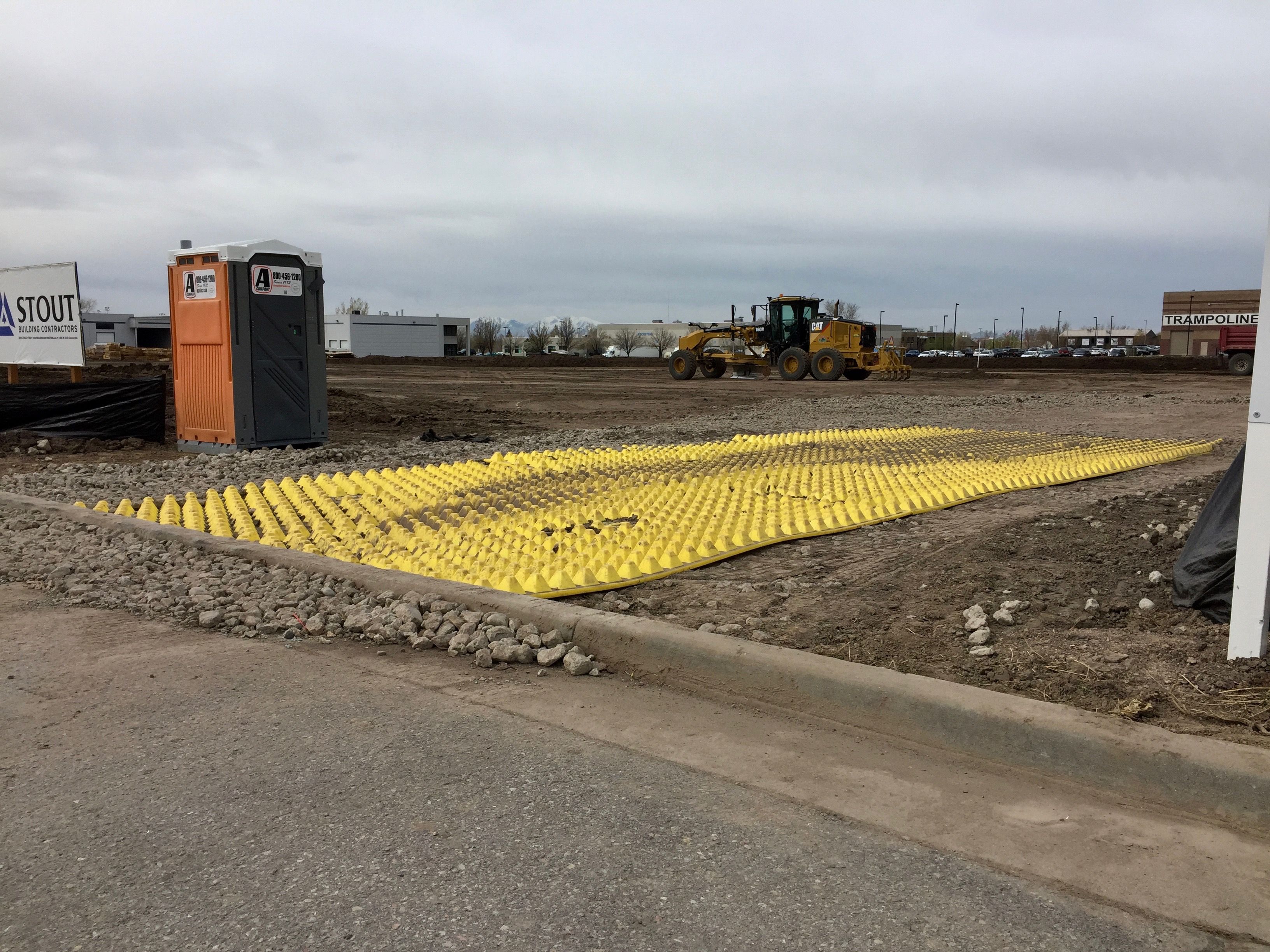
The Aggregate Construction Entrance and Its Limits
Utah's construction entrance design follows the UDOT Standard Drawings and the APWA Manual of Standard Specifications and Plans used across the state's cities and counties. The traditional entrance is a pad of coarse aggregate placed over a geotextile fabric, long and thick enough to knock sediment loose from tires and sited so runoff drains to a sediment control.
The weakness of the aggregate pad is maintenance. As the stone compacts and fills with the fine, dusty soils common in Utah, it stops cleaning tires and must be top dressed with fresh rock, and any material tracked onto the road has to be swept up promptly. When the stone pad is not enough, crews add a wheel wash, which sprays tires with pressurized water, a real burden in a state where water is scarce, or in winter can leave ice on the road as vehicles drip. Each traditional option carries a recurring cost and a maintenance cycle that a durable manufactured entrance can avoid.
FODS as a Compliant Construction Entrance in Utah
Utah does not maintain a brand-name product approval list for construction exits. The Division of Water Quality and local reviewers judge a construction entrance on whether it performs the required function, removing sediment from tires before vehicles reach the road, and the operator specifies the chosen control in the SWPPP and, where applicable, the fugitive dust control plan. FODS Trackout Control Mats can be named directly in both plans as the site's stabilized construction entrance, satisfying the same purpose as the aggregate pad while removing the loose rock and the heavy maintenance the traditional options depend on. FODS is already active in Utah through the distributor ACF West, serving projects across the Wasatch Front and beyond.
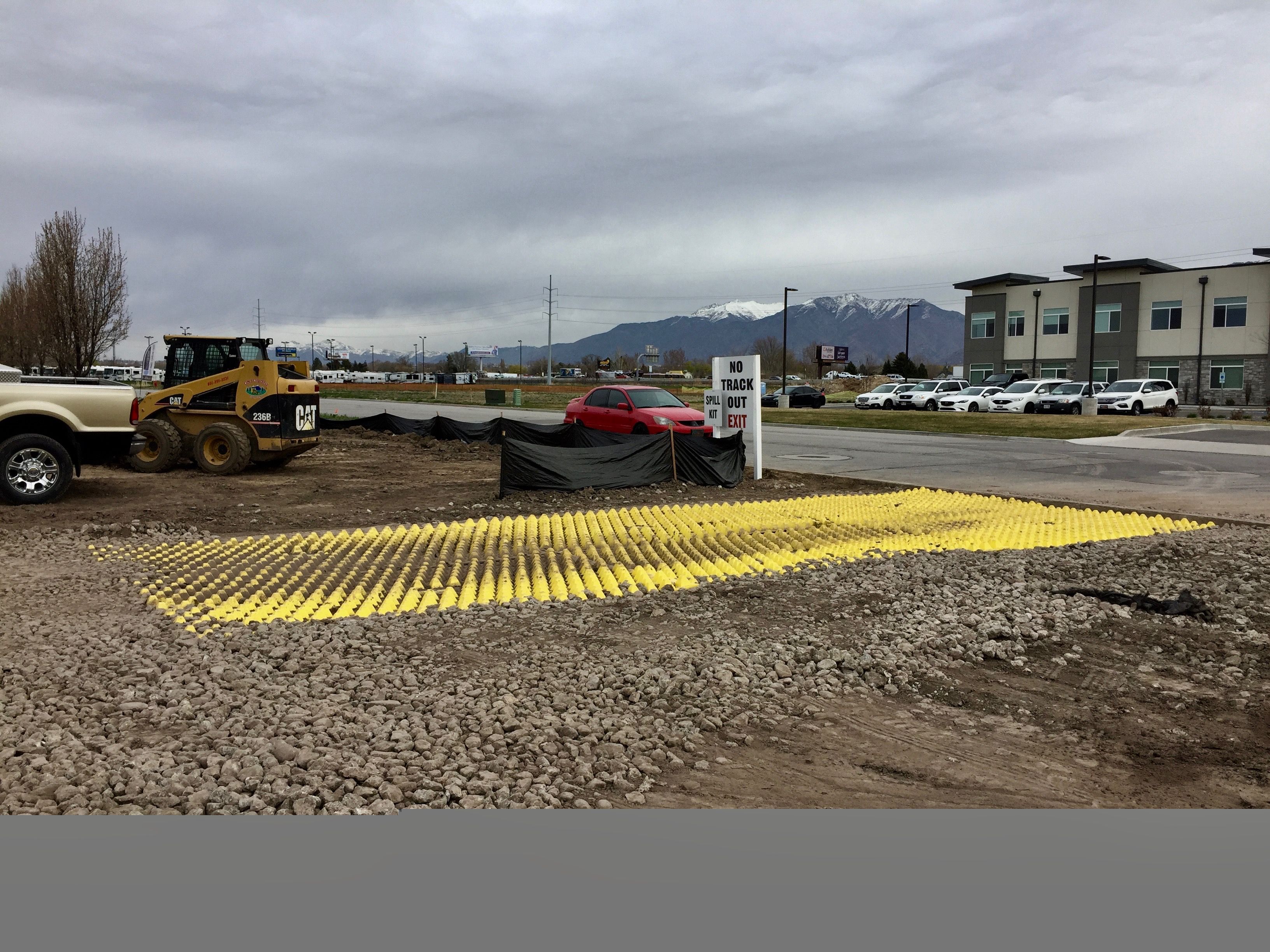
FODS Trackout Control System
The FODS Trackout Control System is a modular, reusable construction entrance made of high-density polyethylene mats with a pyramid-shaped surface. As vehicles pass over the mats, the pyramids flex the tires and open the tread so sediment and mud release and collect in the voids between the pyramids, where the tires do not touch them. The mats install over dirt, concrete, or asphalt without excavation, and a standard 1x5T layout provides about 35 feet of travel with a wide turning radius as an alternative to a longer rock pad.
Because FODS uses neither water nor rock, it is well matched to Utah's conditions. There is no wheel-wash water to supply in a dry climate, no aggregate to shed dust into nonattainment air, and no loose stone to be tracked onto the road or thrown from dual tires. Maintenance is a quick pass with a street sweeper or a FODS shovel, and the system keeps working through freeze-thaw and the heavy snow of the Wasatch and Uinta ranges. The mats are portable and reusable across phases and projects, with a service life of ten years or more, which shifts the cost of a construction entrance from a recurring expense to a one-time investment.
Risks of Vehicle Trackout on Roadways
Safety is a primary concern wherever construction traffic meets a public road. Aggregate exits deposit rock and debris onto pavement, creating hazards for drivers and workers, and loose stone can lodge between dual tires and be thrown at speed. Wheel washes add the burden of supplying and containing water in an arid state and, in cold weather, the risk of dripping vehicles building ice on the road. FODS uses a rockless, water-free technique to clean tires and does not carry the same risk of injury or liability as aggregate entrances. The mats are durable and reusable across many projects, which reduces the dust, the water use, and the environmental impact tied to aggregate production, hauling, and disposal. On Utah sites that drain toward the Great Salt Lake, Utah Lake, or the Colorado and Green rivers, keeping rock and sediment off the road also helps keep dust out of the air and sediment out of the water.
Additional Resources
Utah DEQ Construction Storm Water Permit (UPDES)
Utah DEQ Storm Water Permits (UPDES)
Utah DAQ Fugitive Dust Control Requirements for Non-Attainment Areas
Utah Administrative Code R307-309 (Fugitive Dust)