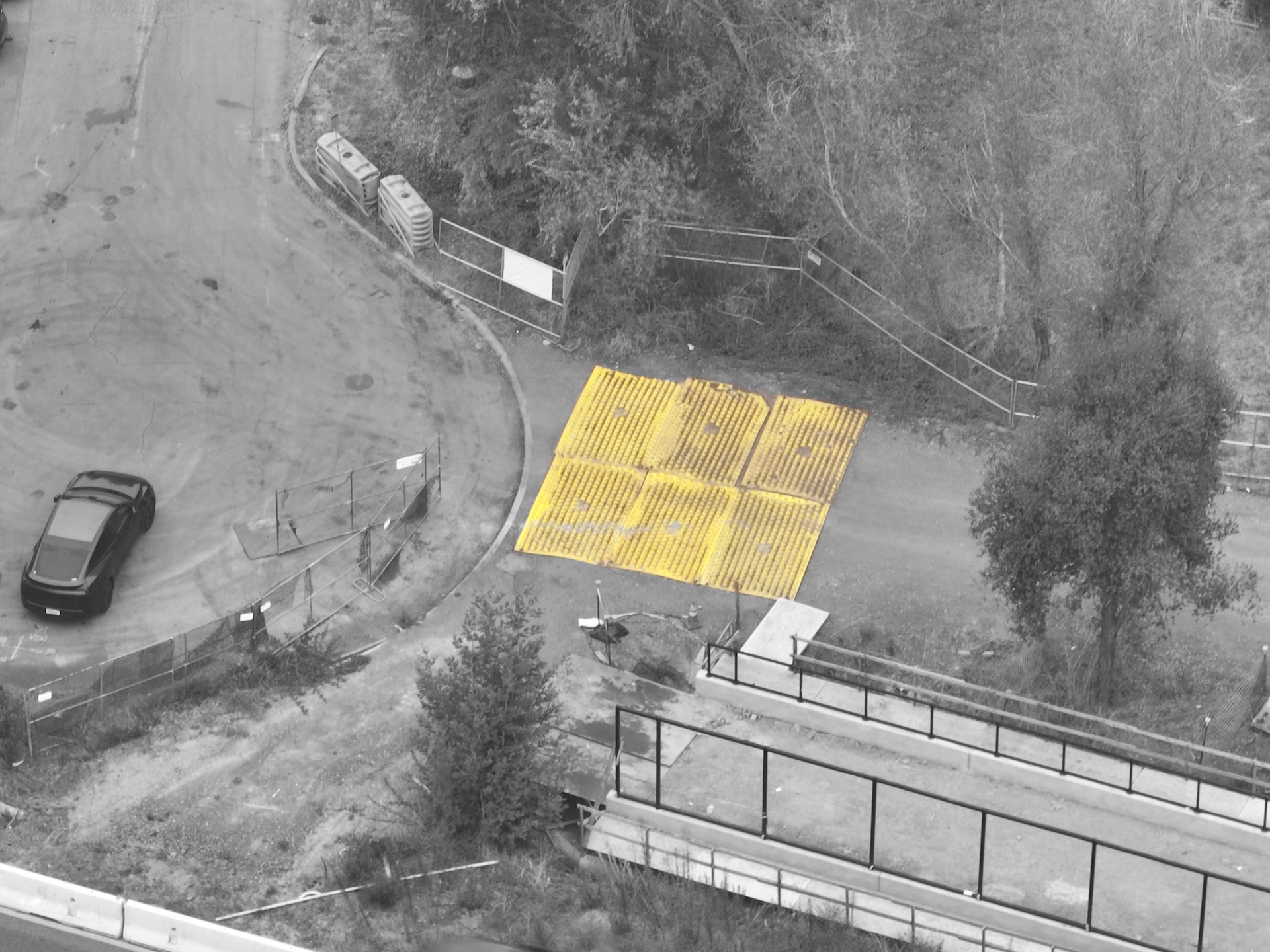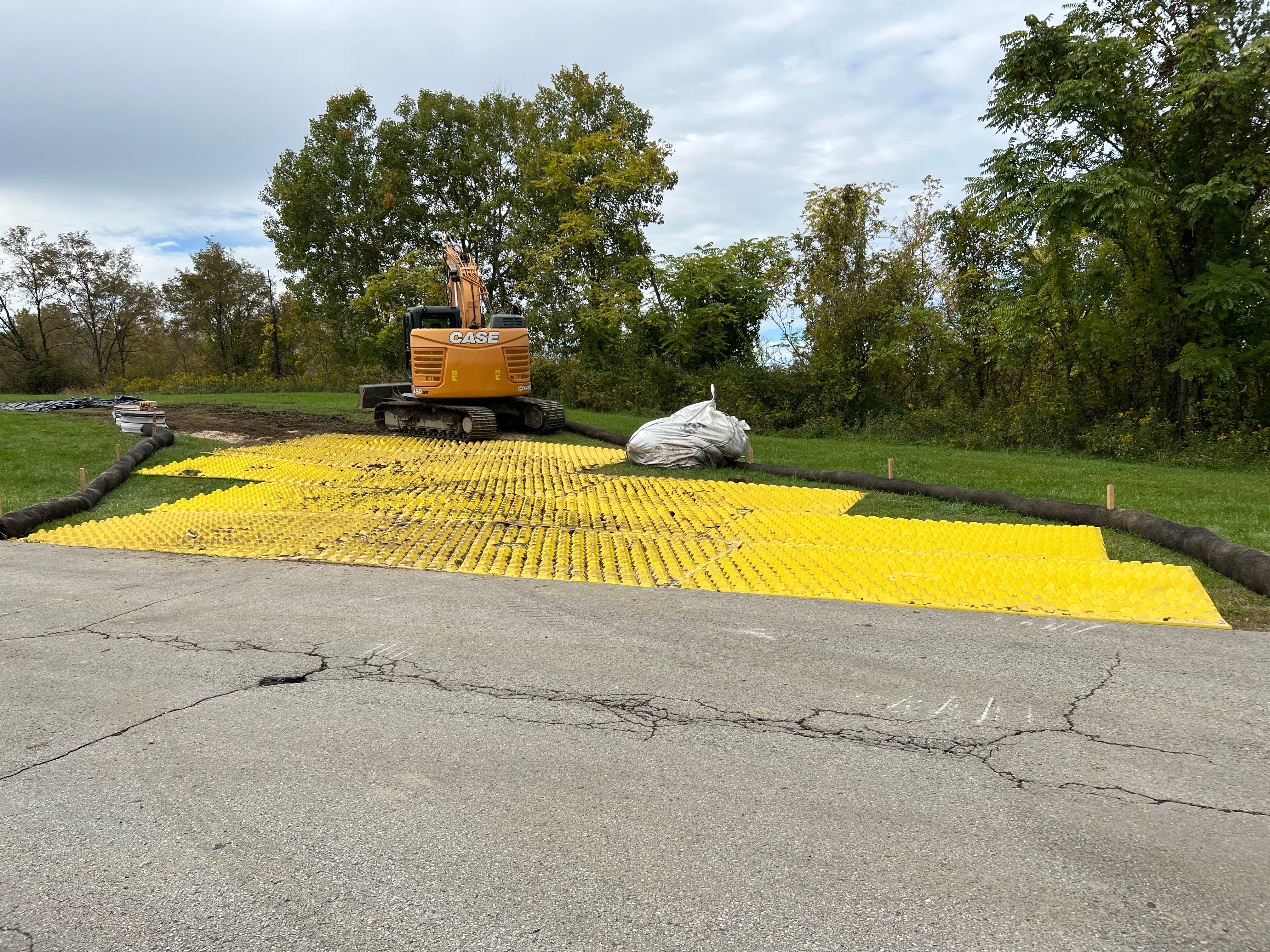

Pennsylvania Construction Entrance Detail
Pennsylvania contains one of the most varied construction landscapes in the country. Projects near Erie drain to the Great Lakes, the Schuylkill and Delaware carry runoff from Philadelphia to the Atlantic, and most of the state between those two poles drains through the Susquehanna into the Chesapeake Bay. Every one of those watersheds is regulated under 25 Pa. Code Chapter 102, and every project that disturbs earth, from a Pennsylvania Turnpike rebuild and a Marcellus well pad in Washington or Bradford County to a Lehigh Valley warehouse, an Allegheny Plateau pipeline, or an expansion at Pittsburgh International Airport, requires a properly specified Stabilized Construction Entrance at each point where equipment enters or leaves the site.
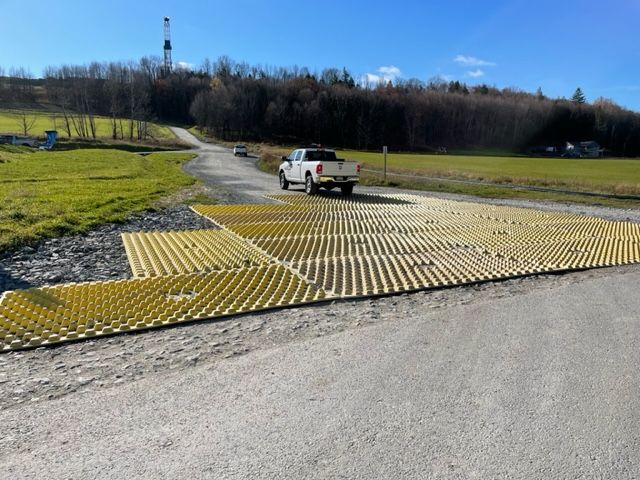
The Pennsylvania Department of Environmental Protection, Bureau of Clean Water, has recognized the FODS Trackout Control System as a preconstructed rumble pad and authorized its use on Pennsylvania construction sites without further review. The sections below explain the regulatory framework, the traditional Rock Construction Entrance specification, the DEP decision that covers FODS, and where FODS fits within Chapter 102 and PAG-02 compliance.
What Is a Stabilized Construction Entrance?
A Stabilized Construction Entrance, also referred to as a Site Access BMP, Rock Construction Entrance, or rumble pad, is the Best Management Practice responsible for removing sediment, rock, and mud from vehicle tires before they leave a construction site. Without an effective entrance in place, soil tracks onto public roads, enters storm drains during the next rain event, and ultimately reaches the Susquehanna, the Ohio, the Delaware, Lake Erie, or any of the Commonwealth's High Quality and Exceptional Value streams.
Site Access BMPs in Pennsylvania are governed by Chapter 3 of the DEP Erosion and Sediment Pollution Control Program Manual (DEP document 363-2134-008). That manual is the technical guidance against which every Erosion and Sediment Control plan submitted under 25 Pa. Code Chapter 102 is reviewed.
Pennsylvania's Rock Construction Entrance Specification
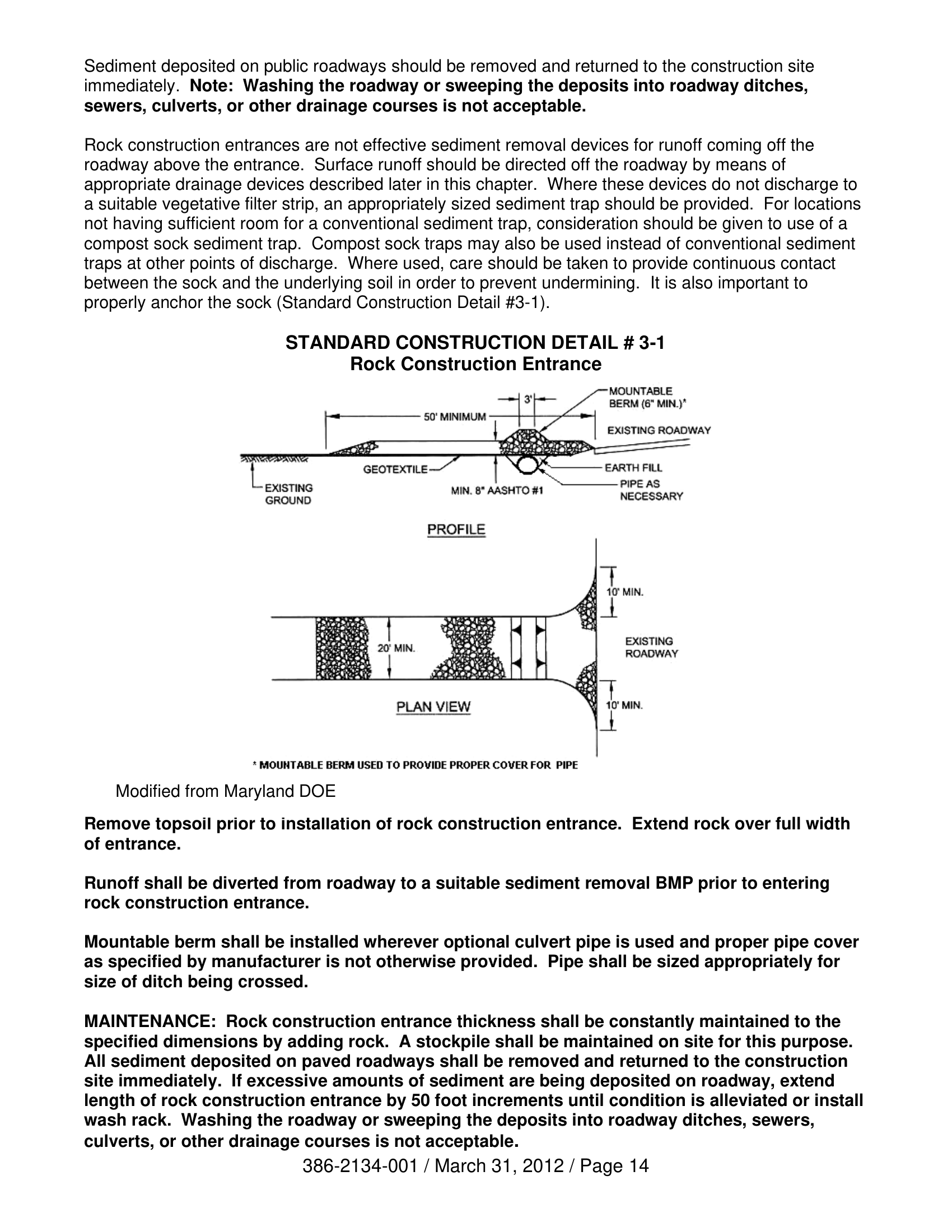
The traditional Site Access BMP in Chapter 3 is the Rock Construction Entrance. The standard detail calls for a minimum pad length of 50 feet and a minimum width of 20 feet, with a wide turning radius where the entrance meets the public road. The pad consists of 8 inches of AASHTO No. 1 coarse stone placed over a geotextile fabric underlayment. If sediment is not adequately contained, Chapter 3 requires operators either to extend the pad by another 50 feet or to install a wash rack. A rock stockpile must be maintained on site so the pad can be topped up as stone compacts with mud and fines over the course of the project.
The basic Rock Construction Entrance has a low sediment removal efficiency and is not classified as an ABACT (Antidegradation Best Available Combination of Technologies), which means it may not be used in isolation inside High Quality (HQ) or Exceptional Value (EV) watersheds. A Rock Construction Entrance combined with a wash rack does qualify as ABACT, as do wheel wash stations.
In practice, a single Rock Construction Entrance on a site outside Reading, Scranton, State College, or Lancaster consumes roughly 15 cubic yards of AASHTO No. 1 stone at installation, is typically re-rocked mid-project, and generates a volume of contaminated aggregate that must be disposed of when the pad is decommissioned. Phased utility projects and pipeline spreads often require the pad to be rebuilt at successive access points as work advances.
DEP Recognition of FODS as a Preconstructed Rumble Pad
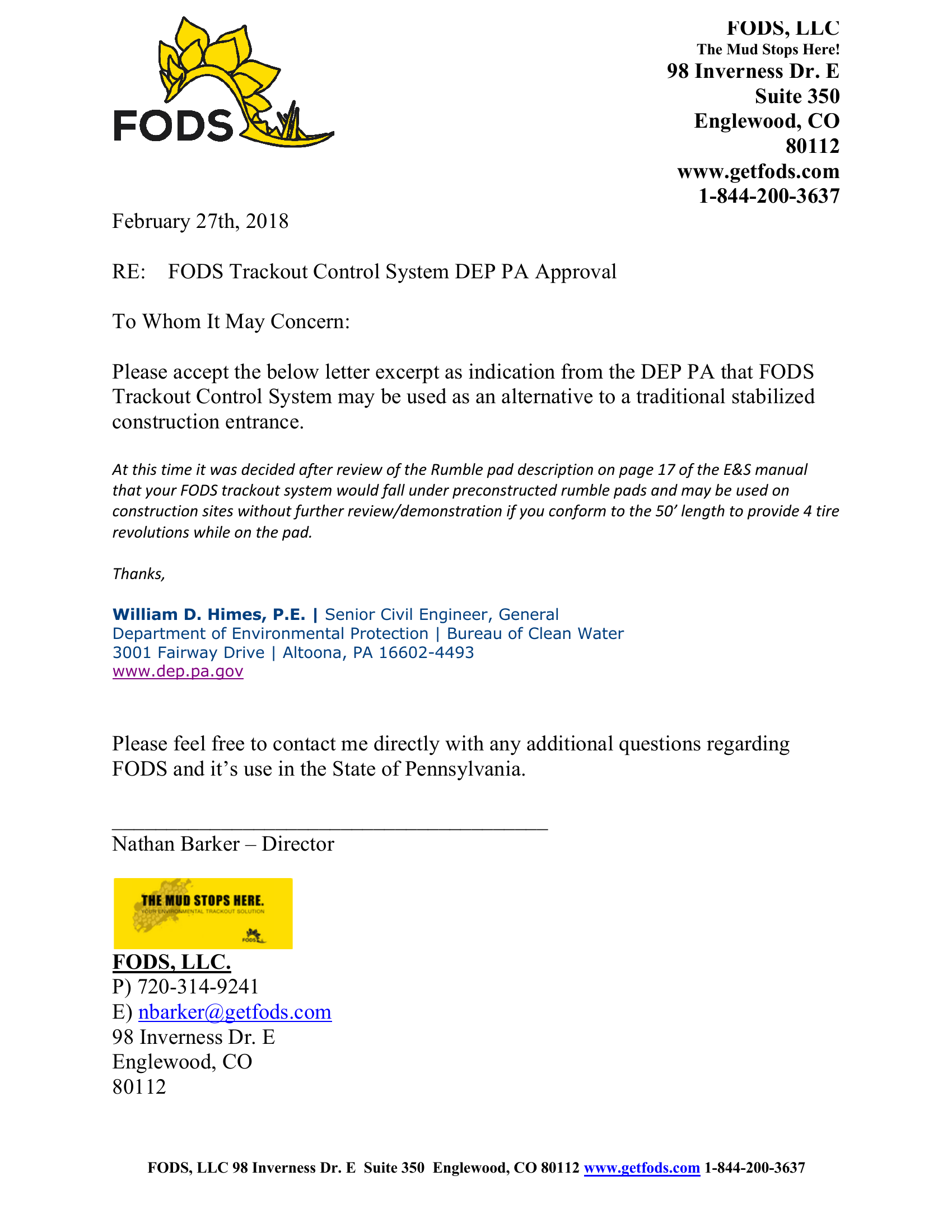
On February 27, 2018, the Pennsylvania Department of Environmental Protection, Bureau of Clean Water, issued a written decision confirming that the FODS Trackout Control System qualifies as a Site Access BMP under Chapter 3 of the Erosion and Sediment Pollution Control Program Manual. The decision was signed by William D. Himes, P.E., Senior Civil Engineer, General, in the DEP Bureau of Clean Water, Altoona office (3001 Fairway Drive, Altoona, PA 16602-4493).
"At this time it was decided after review of the Rumble pad description on page 17 of the E&S manual that your FODS trackout system would fall under preconstructed rumble pads and may be used on construction sites without further review/demonstration if you conform to the 50' length to provide 4 tire revolutions while on the pad." William D. Himes, P.E., Senior Civil Engineer, General Department of Environmental Protection, Bureau of Clean Water 3001 Fairway Drive, Altoona, PA 16602-4493
The decision places FODS within the preconstructed rumble pad category of Chapter 3 and authorizes its use on Pennsylvania construction sites without additional DEP review or project-specific demonstration, provided FODS is installed at a 50 foot length sufficient to deliver four full tire revolutions across the pad. Because the decision applies statewide, County Conservation Districts can approve FODS on any Chapter 102 plan they review without further DEP sign-off. This aligns Pennsylvania with other states in which FODS holds a named regulatory approval, including Maryland, Washington, California, and Georgia.
Pennsylvania's Construction Stormwater Permit (PAG-02)
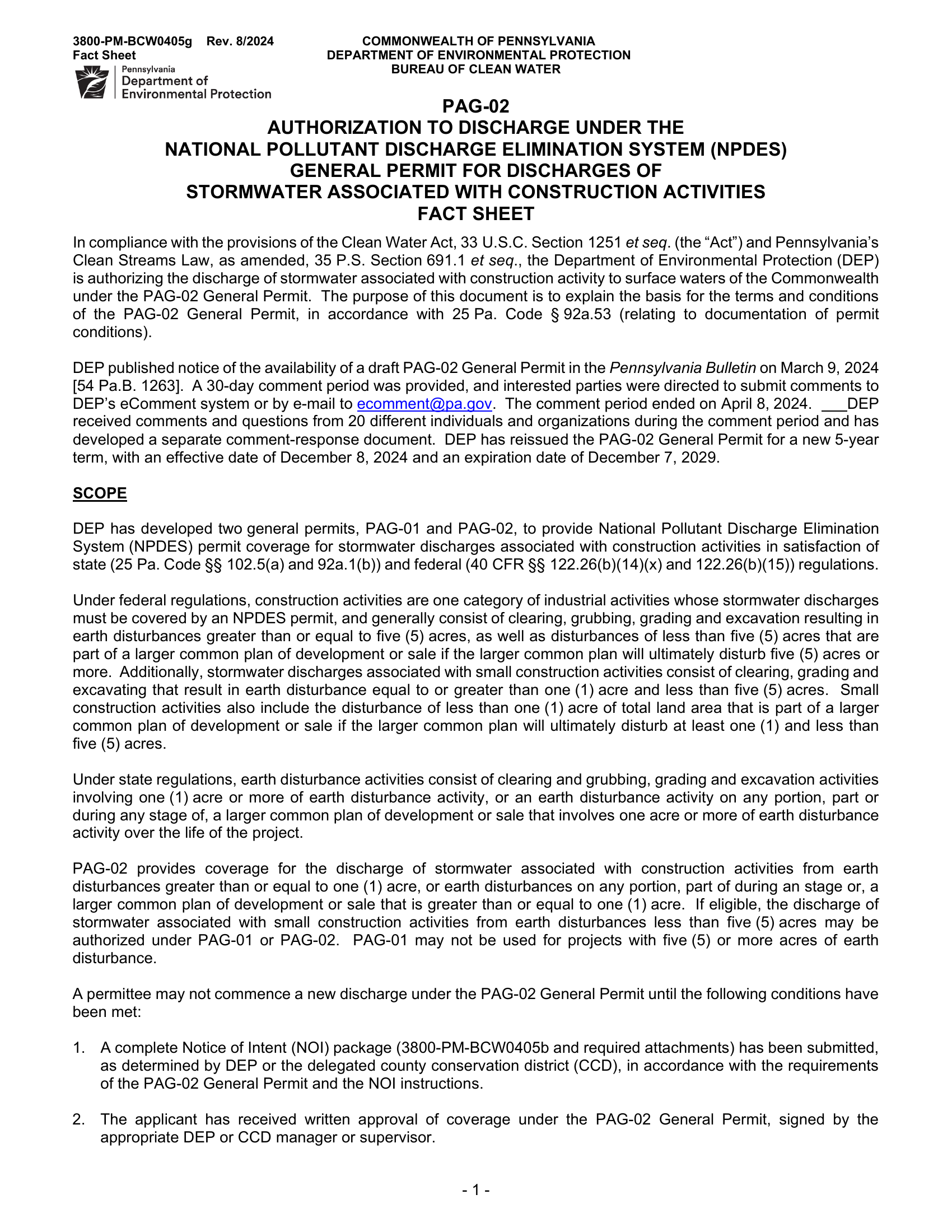
Projects that disturb one acre or more of earth, or that are part of a larger common plan of development totaling one acre or more, require coverage under Pennsylvania's NPDES construction permit. Most projects obtain coverage under the PAG-02 General Permit administered by DEP's Bureau of Clean Water. The current PAG-02 was reissued on December 8, 2024. Two of its more significant provisions, the qualified-inspector requirement and the infiltration confirmation testing requirement, phase in on December 8, 2025, one year after the permit's effective date.
PAG-02 coverage requires an approved Chapter 102 Erosion and Sediment Control plan reviewed by the County Conservation District, a Post-Construction Stormwater Management (PCSM) plan where applicable, a Notice of Intent filed through the DEP ePermit system, and a Stabilized Construction Entrance (either the Rock Construction Entrance or a DEP-recognized alternative such as FODS) at every point of ingress and egress. Inspections are required during active construction and after each significant rain event. Projects discharging to HQ or EV waters must incorporate ABACT measures throughout. Sites that do not qualify for the general permit, including certain HQ and EV projects and projects with unique impacts, obtain coverage under an Individual NPDES Permit instead. The Site Access BMP requirement applies in both cases.
On PAG-02 projects, FODS satisfies the preconstructed rumble pad requirement without the rock-hauling, re-rocking, and disposal cycle associated with traditional aggregate pads. The system provides photo-friendly documentation for inspection records, is portable across phased grading, and can be incorporated into an ABACT-compliant design for HQ and EV watersheds as part of a combination approach reviewed by the Conservation District inside the project's SWPPP.
PennDOT Projects
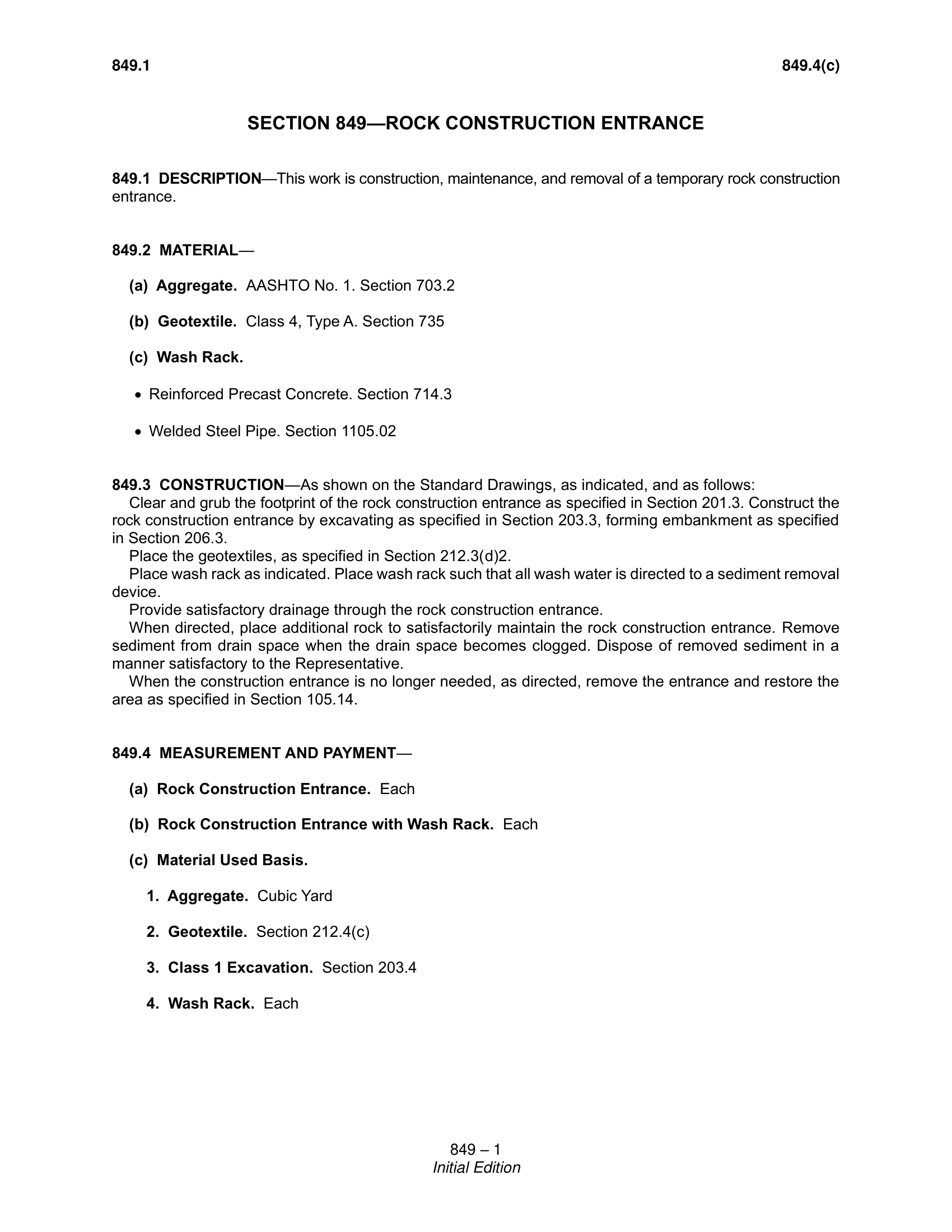
On Pennsylvania Department of Transportation work, trackout control is addressed in Publication 408, Section 849, Rock Construction Entrance, which specifies the rock entrance and wash rack layout used on state highway contracts. Section 850 covers rock lining. Publication 408 is maintained as a base specification with quarterly change documents, so the current revision on the PennDOT Construction Specifications page should always be referenced during bid and shop drawing review.
FODS is accepted on PennDOT contracts on the same category basis under which the DEP E&S Manual recognizes preconstructed rumble pads. When FODS is specified or substituted on a PennDOT project, the plan should reference the February 27, 2018 DEP Bureau of Clean Water decision and the Chapter 3 preconstructed rumble pad category, and the PennDOT district Erosion and Sediment Control engineer should be included in the review early in the project.
Pennsylvania Case Study: Cumberland County Landfill
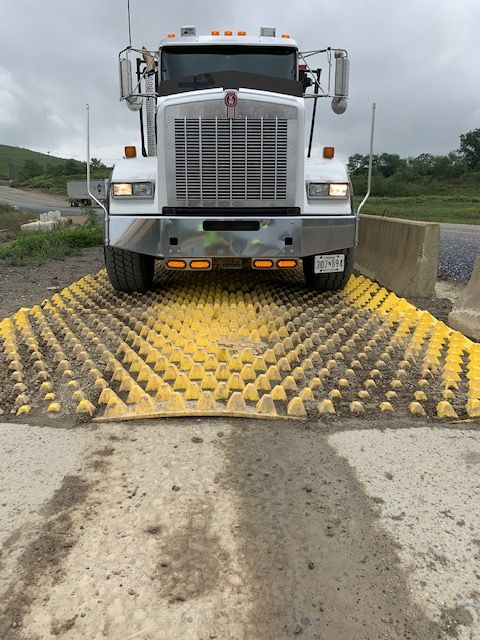
Advanced Disposal Services, now part of Waste Management, deployed a 1 by 6 FODS mat configuration at the scale entrance of the Cumberland County Landfill in Newburg, Pennsylvania. The landfill receives up to 2,900 tons of municipal, industrial, and construction and demolition waste per day, and controlling sediment and debris trackout at the scale is both a Chapter 102 compliance obligation and a public safety measure for the surrounding roadway. FODS eliminated the continuous rock top-dressing previously required at the scale entrance and provided inspectors with a consistent, repeatable Site Access BMP for weekly compliance walkthroughs.
Frequently Asked Questions
Does FODS require separate approval for each Pennsylvania project? No. The February 27, 2018 decision from the DEP Bureau of Clean Water states that FODS "may be used on construction sites without further review or demonstration." County Conservation Districts can approve FODS on any Chapter 102 plan they review under this decision.
Is FODS an ABACT? FODS is categorized as a preconstructed rumble pad under Chapter 3 of the E&S Manual. On HQ and EV watersheds, FODS is incorporated into an ABACT-compliant design, typically as part of a combination approach (for example, FODS paired with a wash station or a sweeping protocol) reviewed by the Conservation District inside the project's SWPPP.
What is the required installation length? The DEP decision requires a 50 foot length of FODS sufficient to deliver four full tire revolutions across the pad. FODS manufacturer installation guidance governs anchoring, turning radius, and panel configuration.
Does FODS replace the SWPPP, the E&S plan, or inspection requirements? No. FODS replaces the rock pad within the Site Access BMP. The Chapter 102 E&S plan, the PAG-02 NOI and SWPPP, the PCSM plan where applicable, and all routine and rain-event inspection obligations remain in effect.
Is FODS accepted on PennDOT jobs? Yes. FODS is specified or substituted on PennDOT contracts on the same preconstructed rumble pad category basis used in the DEP E&S Manual. The Himes letter and Chapter 3 category should be referenced on the plan, and the PennDOT district E&S engineer should be included in the review.
Where can I obtain a copy of the DEP approval letter? A copy of the Himes letter is provided with every Pennsylvania quote, along with suggested plan-note language referencing Chapter 3 of the E&S Manual and the February 27, 2018 decision from the Bureau of Clean Water.
Additional Resources:
DEP Erosion & Sediment Pollution Control Manual
Erosion and Sediment Control (E&S) program Chapter 102
PAG-02 NPDES General Permit For Construction