Project Overview: A Highway Expansion Project of High Public Importance
In Oi Town, Fukui Prefecture, the Maizuru–Wakasa Expressway Nojiri Tunnel Construction Project (舞鶴若狭自動車道 野尻トンネル工事) was delivered as part of NEXCO West’s E27 four-laning program, a major national initiative to expand the Maizuru–Wakasa Expressway to four lanes between Maizuru-Higashi IC and Obama IC. This corridor is designated as high-priority national infrastructure, supporting improved traffic safety, enhanced disaster resilience, and long-term regional logistics and tourism development across northern Kinki and the Reinan region.
Oi Town is a small coastal municipality in Fukui Prefecture, characterized by steep terrain, forested hillsides, and limited flat land for construction staging. The area around the Nojiri Tunnel includes a mix of residential neighborhoods, local access roads, and rural infrastructure, with construction activity occurring in proximity to everyday community traffic. Because of these conditions, construction access routes are narrow and often shared with local traffic, leaving little margin for error in terms of road cleanliness and safety.
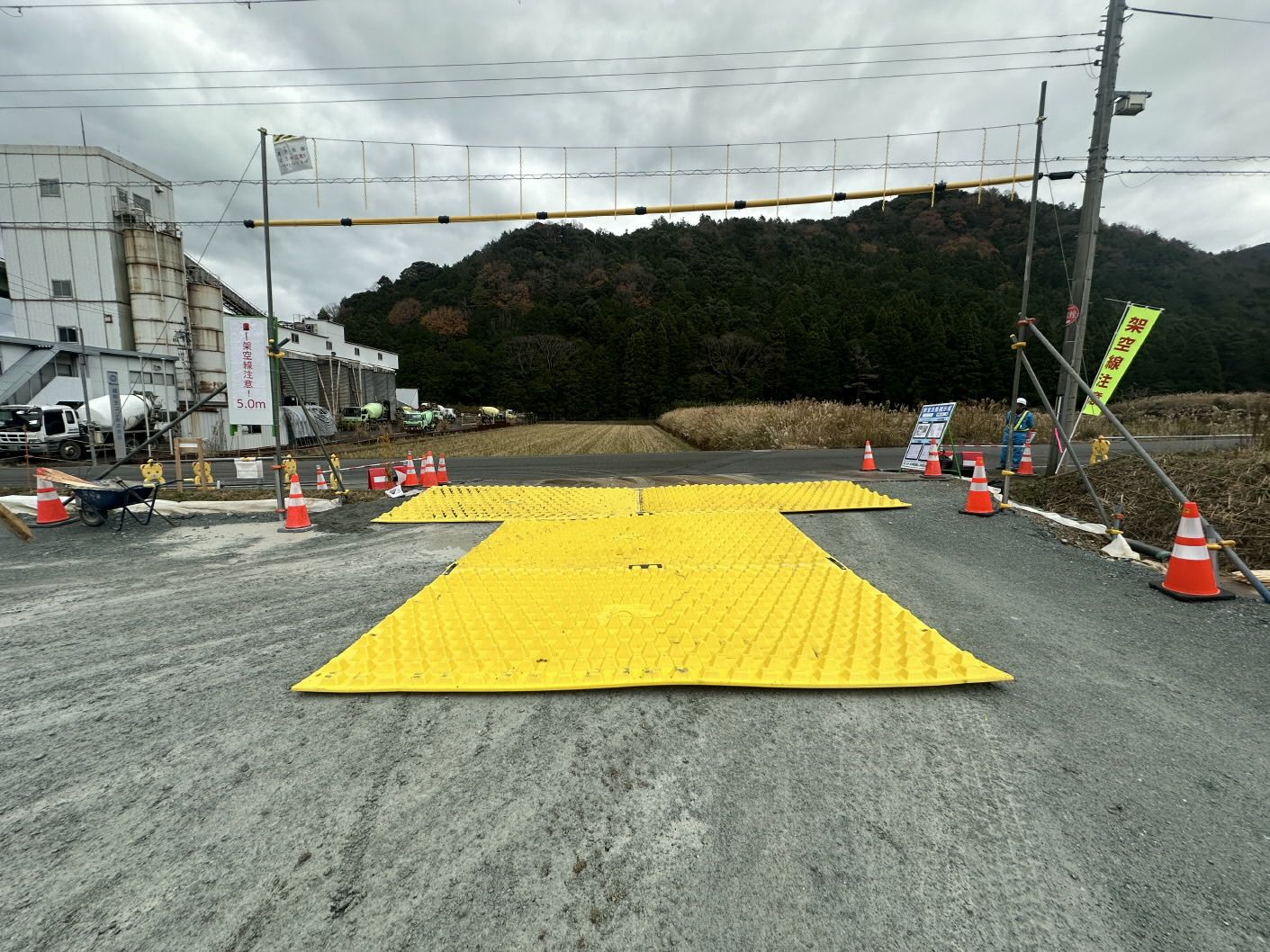
Seasonal weather patterns in the region, including frequent rainfall and periods of heavy moisture, further increased the risk of sediment being tracked onto public roads. Maintaining clean access points was therefore not only a regulatory requirement but also an essential consideration for protecting nearby road surfaces and minimizing disruption to residents. These local conditions made trackout control a practical necessity rather than a secondary site consideration.
The Nojiri section of the project spans approximately 1,483 meters between the Nojiri and Yamada districts of Oi Town. The construction scope included the excavation and construction of a new tunnel tube approximately 246 meters long, built in parallel with the existing 306-meter Nojiri Tunnel. Additional work included nine bridge substructures and corresponding foundations, the development of temporary access roads, and the installation of a provisional girder bridge to support construction traffic. Significant quantities for the project totaled roughly 20,000 cubic meters of excavation, 11,000 cubic meters of concrete placement, and 1,200 metric tons of reinforcing steel. The contract period was set at 1,080 days, with construction required to commence no later than August 24, 2024, following the official award notice published on July 22, 2024.
Trackout control was a concern from the start of construction. Soil and materials had to be hauled along local public roads, following residential areas, so keeping mud and debris on site was important. During the pre-yard stage, there was not enough space to install a standard wet-type wheel wash system.
Narrow temporary routes and a provisional girder bridge limited access to the tunnel face. This restricted equipment access and made permanent or crane-installed systems impractical. These constraints raised concerns around tire-borne sediment, roadway contamination, pavement damage, and the potential for community complaints if trackout was not effectively managed.
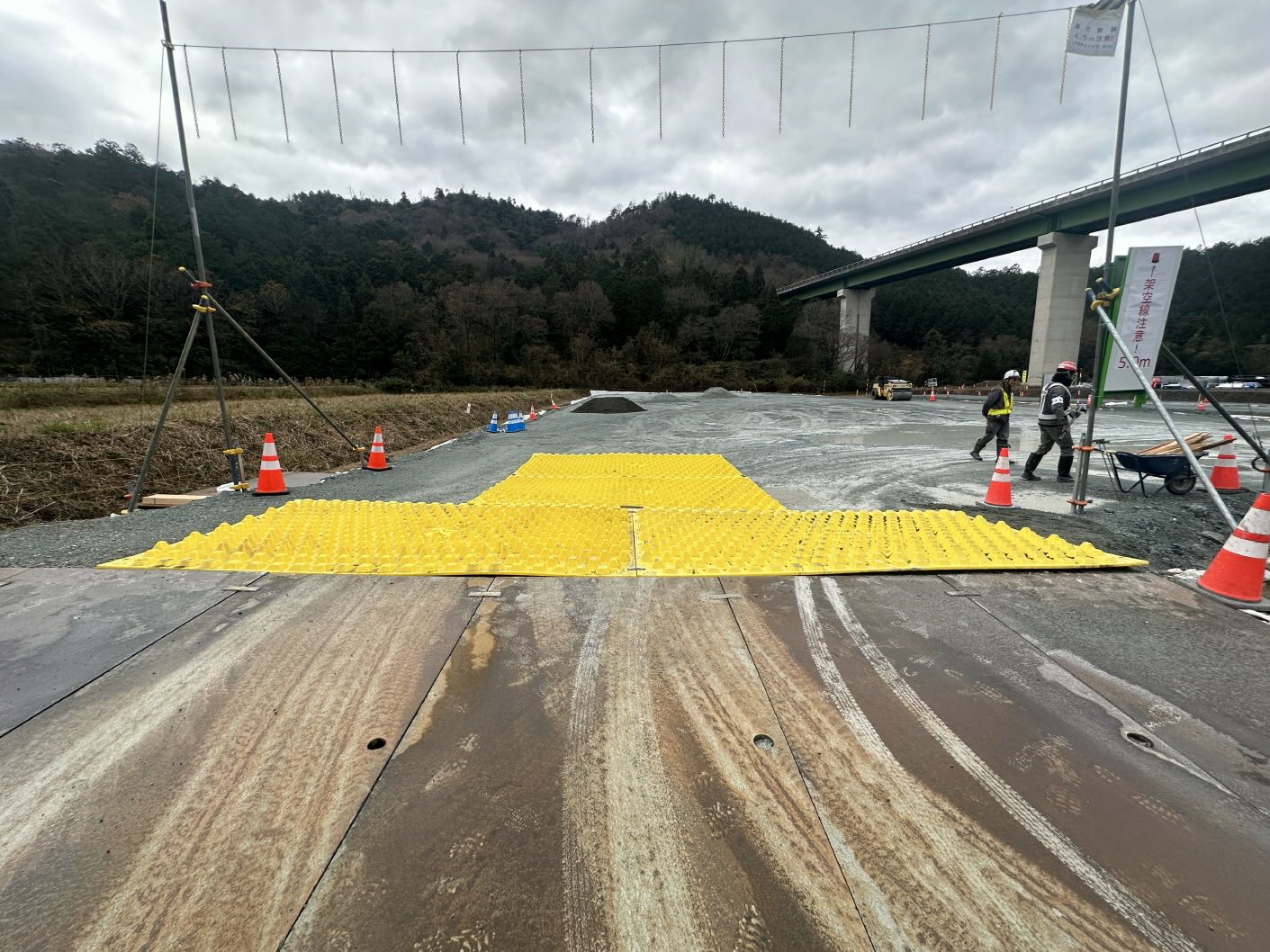
The original plans included wet-type steel mud-removal equipment. However, due to limited space at the site, the construction team chose to use FODS Trackout Control Mats instead. In local documentation, FODS are referred to as a “乾式タイヤ洗浄装置,” or dry-type tire cleaning device, and are accepted as an alternative to wash bays.
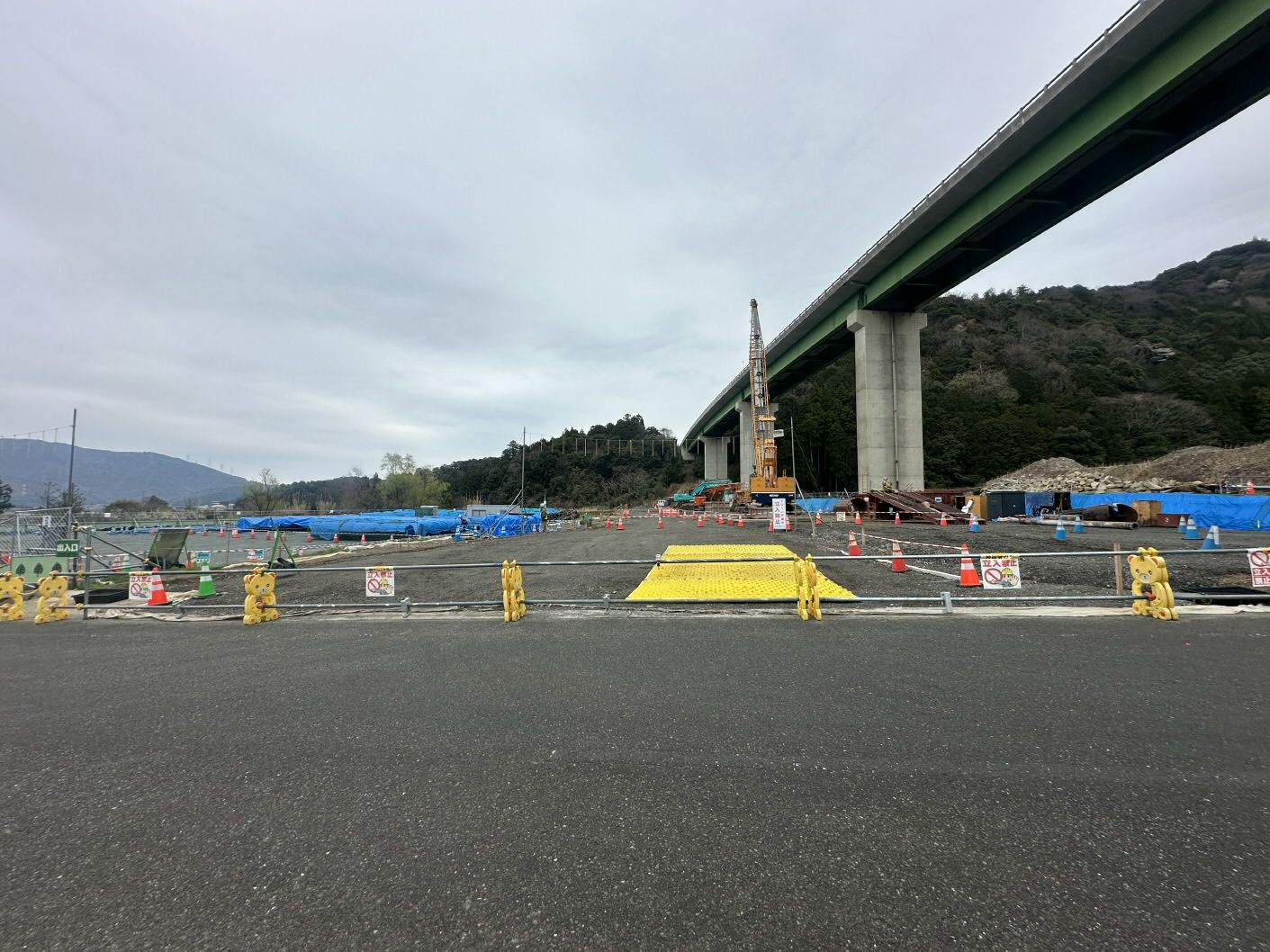
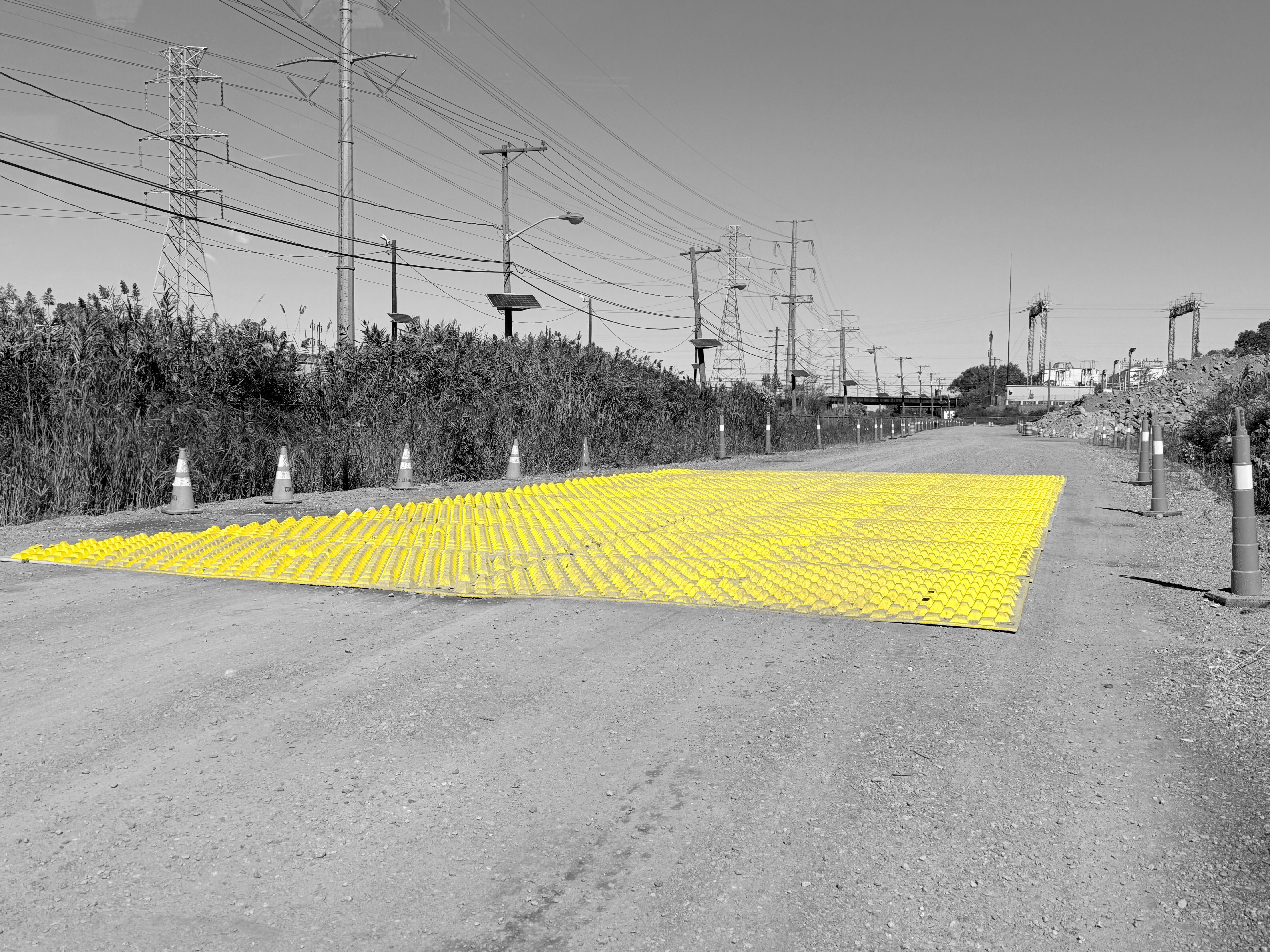
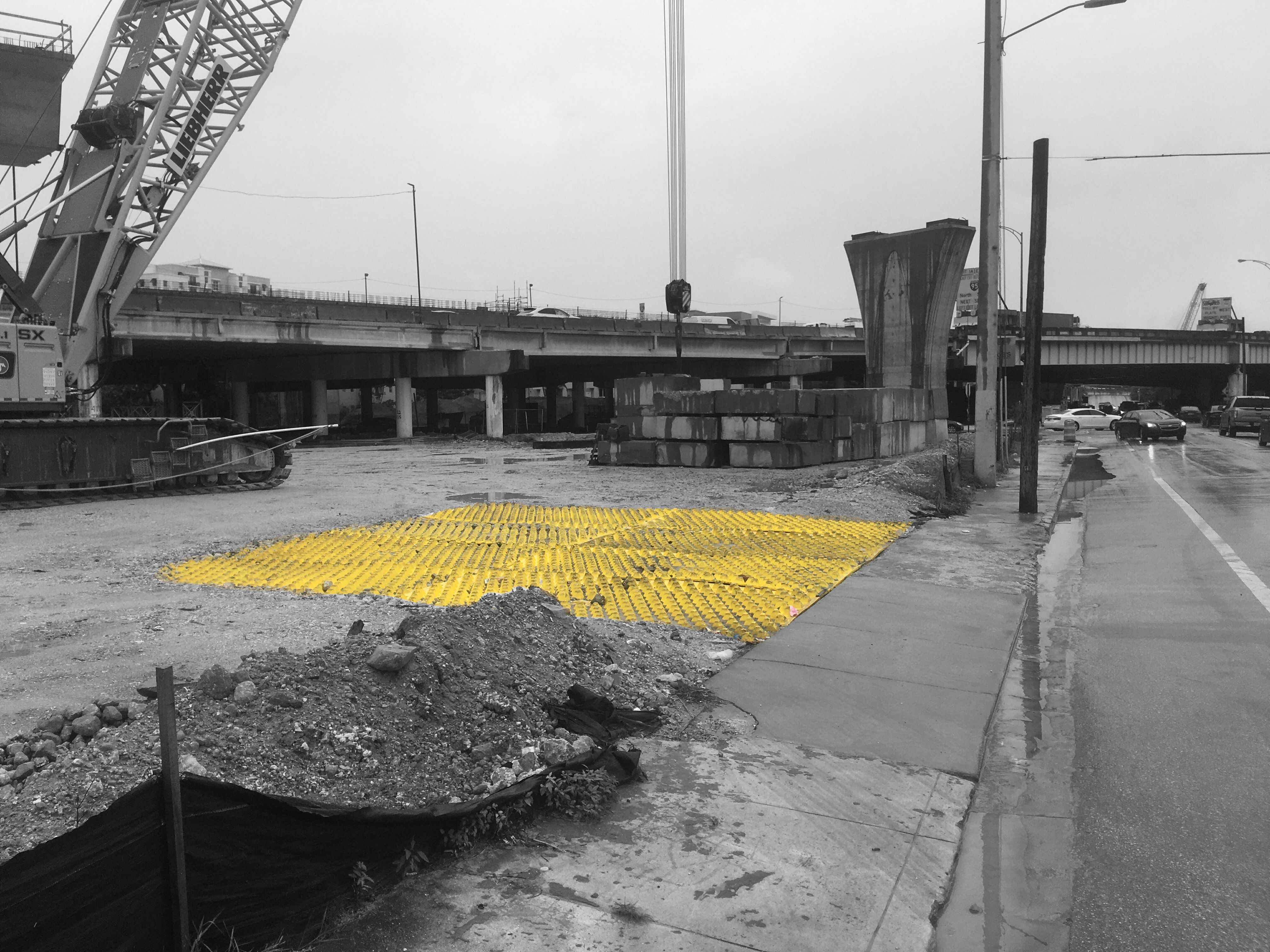
The mats could be installed by hand and did not require cranes, which suited the narrow and temporary access routes at the Nojiri site. They were placed where needed, moved as site conditions changed, and reused without disrupting ongoing work. Their proven performance on major infrastructure and industrial projects worldwide further reinforced confidence in their reliability.
Installation methods were adapted to site-specific surface conditions. On gravel access routes, the mats were secured using anchor pins, allowing each section to be installed in approximately one hour by a small crew. On steel plate surfaces, bolts were welded directly to the plates and fastened with nuts, a process that required several hours per section and minimal support for welding. Because FODS required no hydraulic equipment or heavy machinery, installation was possible even near the temporary bridge deck, where conventional steel wash systems would have been impractical. Site supervisors quickly recognized FODS as an officially accepted alternative, consistent with NEXCO standards, for maintaining clean, safe access routes.
Once operational, the mats effectively removed large clumps of soil embedded in vehicle tire treads, significantly reducing the amount of mud and debris carried onto surrounding public roads. Some fine material still reached the roadway. Even so, road washdowns and manual cleanup were needed less often, including during night work near the Nojiri Tunnel. Cleaning took less time overall, and water use was lower, while the road stayed in workable condition during construction.

With less material leaving the site, the exit areas stayed cleaner. This reduced day-to-day maintenance and helped avoid issues with nearby residents during the work period. The system contributed not only to operational efficiency but also to broader environmental stewardship and community relations, key objectives of NEXCO West’s infrastructure improvement strategy.
The Maizuru–Wakasa Nojiri Tunnel Project demonstrates how FODS Trackout Control Mats can function as a practical standard for temporary infrastructure in Japan. For projects with tight access or temporary site conditions, FODS provide a simple, reusable option that does not require cranes or permanent infrastructure. The mats help reduce trackout and road cleaning needs, improving construction efficiency while lowering the risk of public road contamination.
As Japan continues to modernize its expressway network through four-laning and disaster-resilience initiatives, FODS Trackout Control Mats are increasingly recognized as an innovative dry-type tire cleaning solution that enables safe, clean, and efficient construction even in narrow or temporary access zones. The Nojiri Tunnel Project stands as a strong example of how modular, sustainable site management systems can integrate seamlessly into Japan’s evolving infrastructure landscape.