In March 2026, the National Nuclear Security Administration approved the start of full construction for the High-Fidelity Training and Operations Center, known as the HFTOC, at the Savannah River Site in Aiken, South Carolina. With a projected cost of $1.4 billion and a completion date set for 2028, the HFTOC represents one of the largest active federal construction projects in the United States.
The facility is part of the broader Savannah River Plutonium Processing Facility program, a national security effort to restore large-scale plutonium pit manufacturing in the United States. Plutonium pits are the core components of nuclear warheads, and domestic production at a significant scale has not occurred for decades. The HFTOC is designed to close a critical workforce gap by giving operators a place to develop and refine their skills before the main processing facility begins nuclear operations.
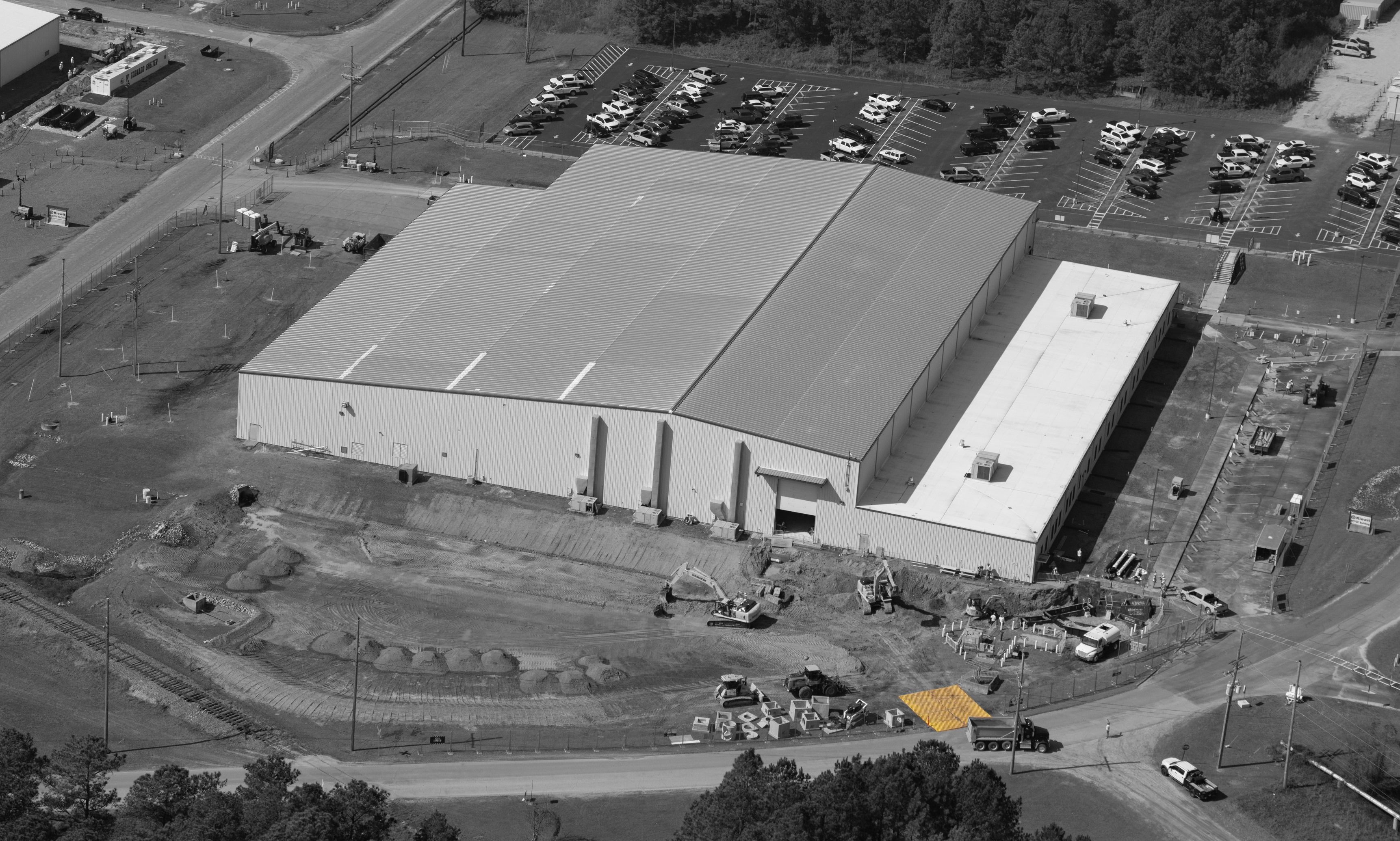
The center will convert an existing 103,000-square-foot building at the Savannah River Site into a fully equipped training environment that replicates the equipment and workflows of the main production facility. Operators will work with like-for-like equipment using non-nuclear surrogate materials to build hands-on competency before live operations begin. The scope of work includes installation of a high-fidelity production line, a material characterization laboratory, a receipt inspection lab, and a salt processing line, along with significant upgrades to the building's ventilation, electrical, and gas systems.
Savannah River Nuclear Solutions, a partnership between Fluor and HII that manages and operates the Savannah River Site on behalf of the Department of Energy, is overseeing the HFTOC program. Kiewit, one of the largest construction companies in North America with deep experience in federal and nuclear work, is serving as the construction subcontractor responsible for the physical buildout. Construction activity involves sustained heavy vehicle traffic from equipment, material deliveries, and specialized systems transport across a federally controlled nuclear installation.
Federal construction projects operating under the oversight of the Department of Energy and NNSA are subject to strict environmental compliance requirements. Among these is a requirement to control vehicle trackout, the mud, sediment, and debris that construction vehicles carry onto public roads on their tires as they exit the site. Sites are required to have a Vehicle Sediment Control Best Management Practice in place at every active entrance and exit, and that system must remain effective throughout the project.
Traditional stabilized construction entrances using rock or aggregate are a common way to address this requirement, but they require ongoing maintenance to remain effective. Heavy traffic displaces and compacts the aggregate over time, requiring frequent replenishment and re-grading. On a project spanning multiple years with continuous heavy-vehicle movement, the maintenance burden is significant and creates compliance risk during periods between upkeep.
The FODS Trackout Control System was selected as the Vehicle Sediment Control BMP for the HFTOC project. FODS is a reusable, aggregate-free mat system manufactured from high-density polyethylene. The surface of each mat features a grid of pyramidal protrusions that flex vehicle tire treads as they pass over the mat, dislodging mud and sediment and depositing it into the base of the mat rather than allowing it to travel off-site. The system can be installed on asphalt, concrete, or compacted dirt without any aggregate supply chain, making it well-suited to the controlled logistics environment of a federal nuclear site.
The FODS system also supports the changing access needs of a phased construction project. As the HFTOC moves from demolition and structural modification to the installation of mechanical, electrical, and process systems, entrance locations can shift. FODS mats can be repositioned quickly without the remediation work that removing an aggregate pad would require, keeping the project on schedule between phases.
The mats are built to withstand heavy, sustained use. Each mat is rated to withstand more than 1,000,000 vehicle passes up to 80,000 pounds, covering the full range of equipment operating on a construction site of this scale. The product has an estimated service life of over ten years, and at the conclusion of the HFTOC project, the mats can be transported and redeployed on future jobs, reducing material waste and long-term BMP costs across an organization's project portfolio.
The HFTOC at Savannah River Site is a project of national significance, and it requires every element of construction operations to perform reliably. As work continues toward the 2028 completion target, the FODS Trackout Control System provides the project team with a consistent, low-maintenance BMP solution that supports continuous environmental compliance throughout the build.
On a project of this scale, consistency matters. The HFTOC requires systems that perform every day without interruption. FODS provides a reliable, low-maintenance trackout control solution that supports continuous compliance as construction progresses toward its 2028 completion. To learn more about how we can help your project stay on schedule and in compliance, contact us at 844-755-9040 or email us at [email protected].