
South Dakota Stabilized Construction Access
The South Dakota Department of Agriculture and Natural Resources (DANR) implements the state's NPDES stormwater permitting program under the federal Clean Water Act. Construction activities that disturb one acre or more, or that are part of a larger common plan of development that will ultimately disturb one acre or more, must obtain coverage under South Dakota's NPDES construction stormwater general permit. Contractors, regulated industrial facilities, and municipal separate storm sewer systems (MS4s) are required to obtain the appropriate NPDES stormwater permit coverage from the South Dakota Department of Agriculture and Natural Resources (DANR) or EPA, as applicable. A Notice of Intent (NOI) must be submitted to DANR at least 15 days before the commencement of construction activities to obtain coverage under SDR100000 Construction General Permit, SWPPP requirements, and related forms to help contractors develop a SWPPP and obtain permit coverage.
South Dakota SDR100000 NPDES Stormwater Permits
To obtain coverage under the Construction Stormwater General Permit, SDR100000, contractors must first develop a SWPPP that identifies the person responsible for managing pollution control measures, and then submit a Notice of Intent (NOI) to DANR. The SWPPP also contains a site map, which details Best Management Practices (BMPs) that will be used to mitigate stormwater pollution. One essential BMP is the use of a Stabilized Construction Access. These access points are designed to minimize the spread of polluted sediment tracked from the jobsite onto impermeable surfaces, such as asphalt roadways. Polluted sediment on roadways will wash down storm drains and enter protected rivers and streams.
Stabilized Construction Access Detail in South Dakota
The current Construction General Permit requires operators to “minimize the track-out of sediment from the construction site where vehicles leave the site.” To meet this requirement, operators must restrict vehicle use to properly designated access points and use appropriate stabilization techniques at all construction site access points so that sediment removal occurs prior to vehicle exit. The DOT outlines several stabilization methods traditionally used in South Dakota, including log or timber entrances, cattle guards, stone pads, wash racks, and FODS Trackout Control Mats.
Stone pads, for example, consist of an excavated area lined with geotextile filter fabric and topped with 6" to 8" of crushed stone. They are commonly installed to mitigate track-out but can quickly degrade during rain events or under high traffic volumes. Exits must be periodically reviewed to ensure they function correctly. When dirt accumulates on the rock, the top layer must be scraped and replaced with clean stone, which can be costly if the site requires frequent refreshing. The other techniques mentioned are often used along with stone when high vehicle volume, inclement weather, or similar conditions are expected to cause stone entrances to degrade quickly. In contrast, FODS Manufactured Stabilized Construction Access Mats offer a different approach, providing a standalone solution that does not degrade over time.
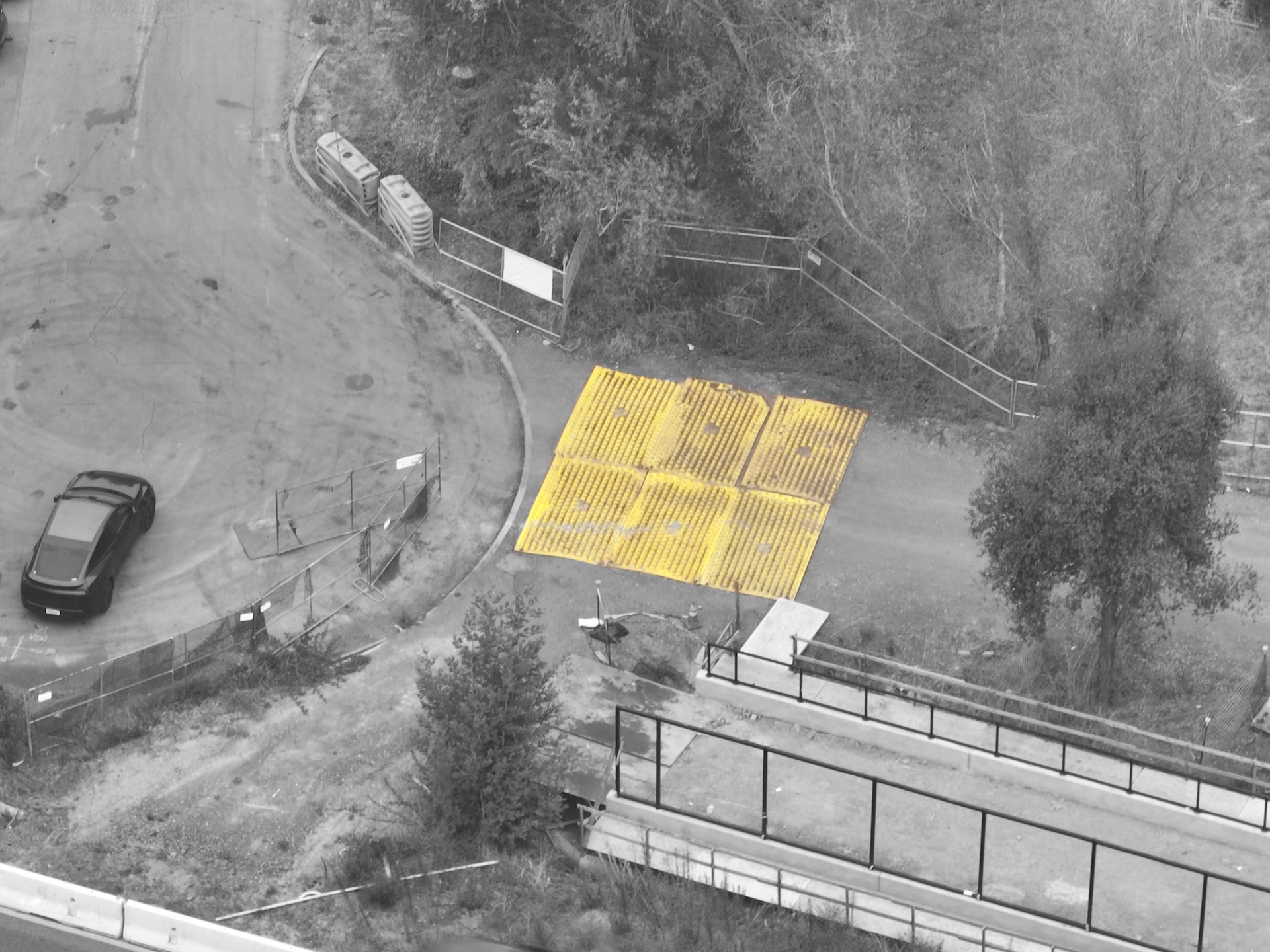
FODS Manufactured Construction Exit
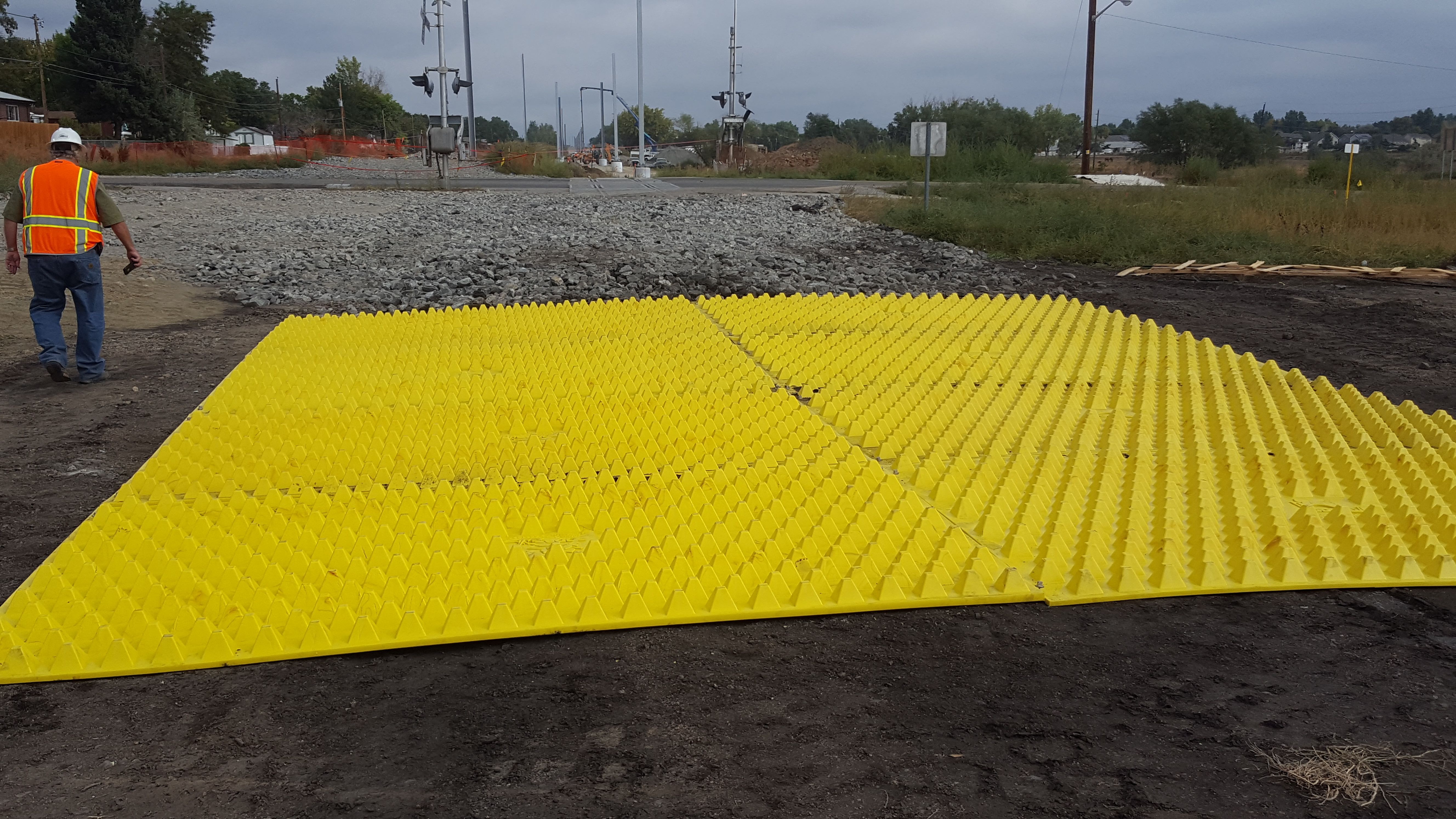
The FODS Trackout Control System is a modular system that is linked together with hardware and anchored to the ground. The mats can be installed without excavation and over a variety of substrates. Installation, relocation, maintenance, and even removal can all be completed without the need for heavy equipment.
FODS mats are composed of a high-density composite material formed into pyramids, designed to remove sediment from vehicle tires. The unique design of the mats deforms vehicle tires and removes sediment that is stuck inside the tire tread. As debris is removed from tires, it falls to the base of the pyramids and does not come into contact with other vehicles. When a rain event occurs or when sediment builds up to the tops of the pyramids, the mats can be easily cleaned to restore functionality completely.
FODS is a modular sediment control device that can be easily customized for each project. A standard layout is a 1x5T, which provides a wide turning radius and 35' of length. FODS are more effective than aggregate construction entrances, so this layout is commonly used to replace a 70' stone construction exit.
A unique advantage of using FODS is that it can be easily reused & relocated throughout various phases of a construction project. Engineered for high durability, FODS mats are designed to have a service life of 10 years or more.
FODS Approved For Use By SD DOT
The FODS Trackout Control System has been approved for use by the South Dakota DOT and is listed in the Section D - Erosion Control Notes. Similar to the Colorado and other state DOTs, the South Dakota DOT recommends using a 1x5 or 1x5T FODS configuration to create a stabilized entrance. The FODS Stabilized Construction Access is ideal for highway projects and linear projects where one or more entrances are required during each construction phase. The FODS Mats can be relocated and reused throughout the project, helping to reduce costs on each deployment. Additionally, the FODS system is highly effective at containing trackout and does not introduce aggregate to the site's access points. The rockless system can help to reduce the risk of rocks entering active lanes of travel.
Contact us to learn more about using FODS on a DOT project in South Dakota.
Additional Resources:
SD DENR Stormwater Pollution Prevention Plan Guide
List of South Dakota DOT Construction Entrance/Exit BMPs
South Dakota DOT Construction Field Manual
South Dakota DENR Construction General Permit SDR100000
South Dakota DOT File Downloads