
Rhode Island Stabilized Construction Entrances and Trackout Control
RIPDES Construction General Permit and Soil Erosion and Sediment Control Handbook Compliance
Rhode Island is the smallest state in the country by area, yet the second most densely populated, which means construction here happens close to people, pavement, and water. Narragansett Bay, the largest estuary in New England, reaches north from Rhode Island Sound and Block Island Sound and gives the state roughly 400 miles of tidal shoreline, fed by the Taunton, Blackstone, and Pawtuxet rivers. That water supports commercial fishing out of ports like Point Judith and defines the health of the state's coastal ecosystems. On tight urban and coastal job sites, keeping sediment out of the storm drains and off public roads is a core compliance duty, and a stabilized construction entrance is one of the first controls installed and inspected.
Rhode Island RIPDES Construction Permit
The Rhode Island Department of Environmental Management (RIDEM) administers the state's delegated National Pollutant Discharge Elimination System (NPDES) program through the Rhode Island Pollutant Discharge Elimination System (RIPDES). Any construction that disturbs one acre or more, or that is part of a larger common plan of development of that size, requires coverage under the RIPDES Construction General Permit.
The RIPDES Construction General Permit was reissued in 2025, replacing the previous permit that expired on September 25, 2025, so operators should confirm the current version and its requirements on RIDEM's stormwater permitting site. Coverage is obtained by developing a Soil Erosion and Sediment Control (SESC) plan and a Stormwater Pollution Prevention Plan, and filing a Notice of Intent with RIDEM, which now accepts applications through a new online permitting system. RIDEM also publishes a Model SWPPP to help owners who have not yet prepared a site-specific plan. The SESC plan identifies the site's potential pollutant sources and the best management practices (BMPs) that will contain them.
Rhode Island documents recommended practices in the Rhode Island Soil Erosion and Sediment Control Handbook, which RIDEM publishes with examples and standards for dust control, land grading, street sweeping, sediment traps, and sediment retention at access points. Because so much of Rhode Island lies near the coast, projects in the coastal zone may also fall under the Coastal Resources Management Council and the state's Stormwater Design and Installation Standards Manual.
The Aggregate Construction Entrance and Its Limits
The Soil Erosion and Sediment Control Handbook describes a traditional aggregate construction entrance, or gravel tracking pad. The pad is built at least fifty feet long, or one hundred feet where the soil contains clay or silt, and wide enough for the turning radius of the largest vehicle on the site. The stone layer is at least four inches thick, using ASTM C-33 No. 2 or No. 3 rock or RIDOT two-inch crushed stone, placed over a geotextile that protects the native soil.
The weakness of the gravel pad is maintenance. As soil works up between the rocks, the surface smooths out and stops cleaning tires, so the pad must be top dressed with fresh stone, often after every rain event. When the gravel entrance alone cannot control trackout, crews add supplemental controls such as steel rumble strips or rattle plates, which shake sediment loose but must be lifted to clean the buildup beneath them, or a wheel wash, which sprays tires with pressurized water and needs power, water, and a sediment trap for the runoff. In Rhode Island the handbook is clear that tracked sediment must be swept, vacuumed, or cleaned by the end of the day, and that water should not be used to wash it off the road, since that only carries it into the storm drains. Each traditional option carries a recurring cost and a maintenance cycle that a durable manufactured entrance can avoid.
FODS as a Compliant Construction Entrance in Rhode Island
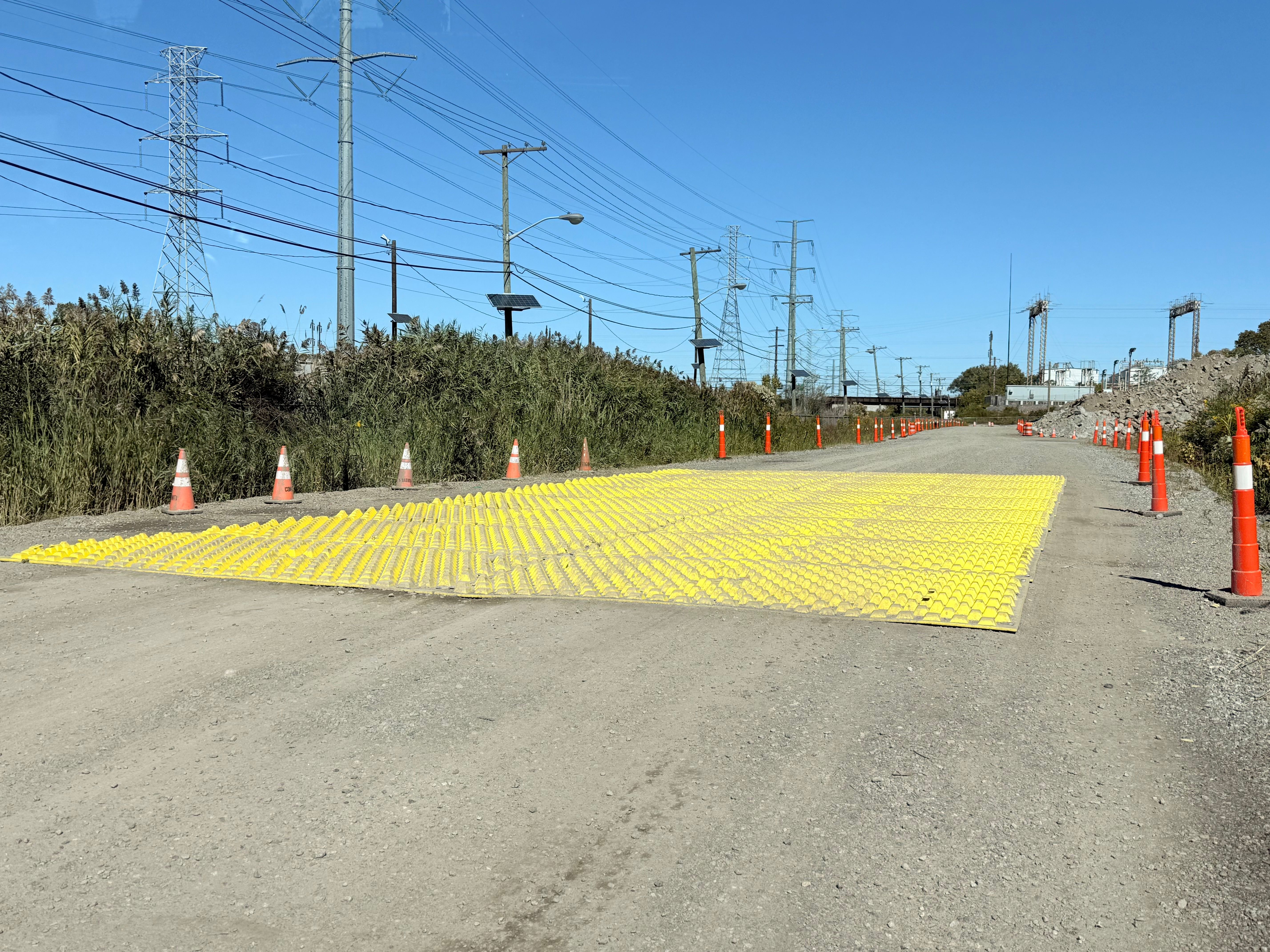
Rhode Island does not maintain a brand-name product approval list for construction exits. RIDEM evaluates a construction entrance on whether it performs the function the handbook describes, cleaning tires and holding sediment before vehicles reach the road, and the operator specifies the chosen practice in the SESC plan and SWPPP. FODS Trackout Control Mats can be named directly in that plan as the site's stabilized construction entrance, satisfying the same purpose as the gravel pad while removing the loose rock and the heavy maintenance the traditional options depend on.
FODS Trackout Control System
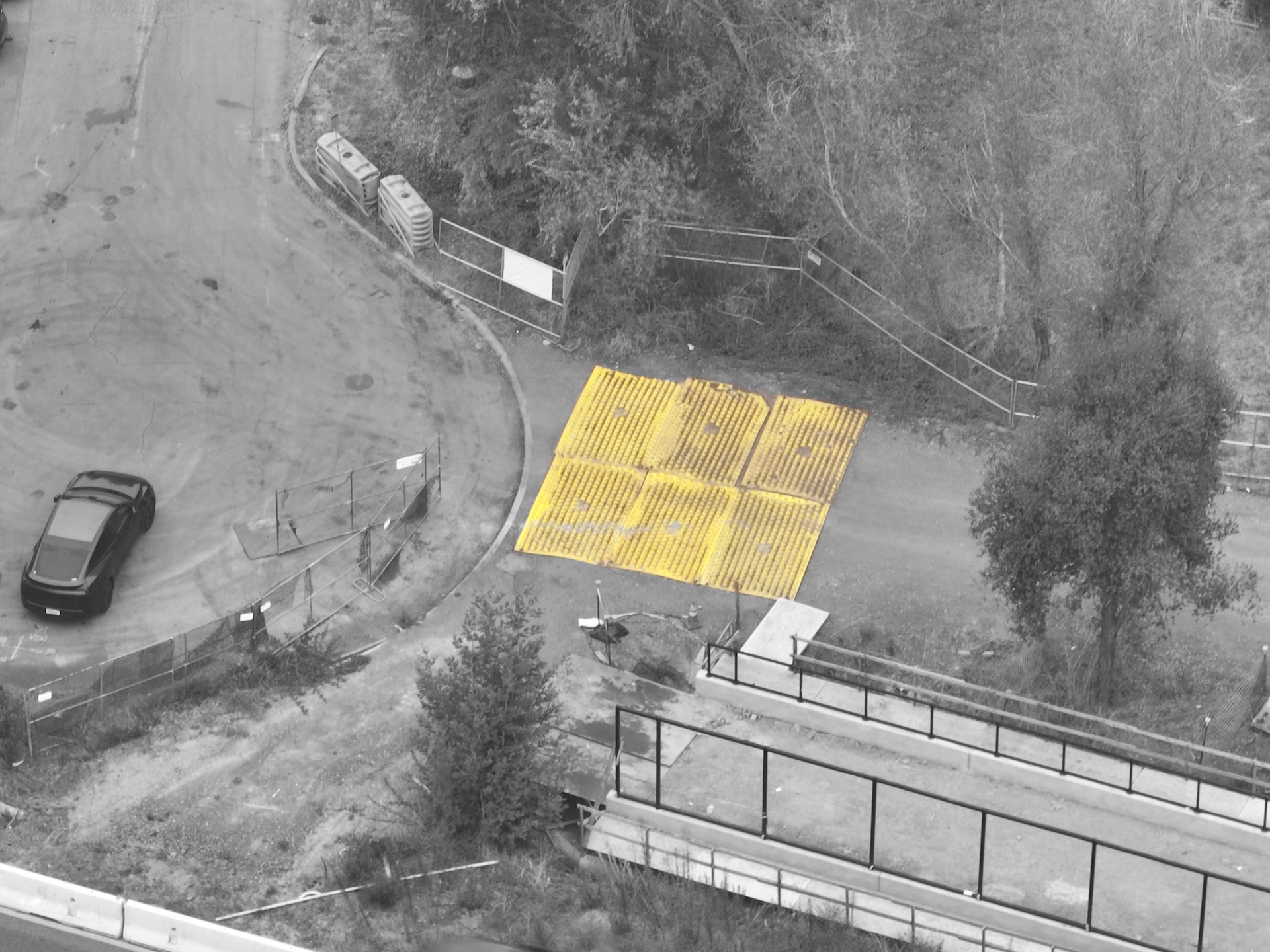
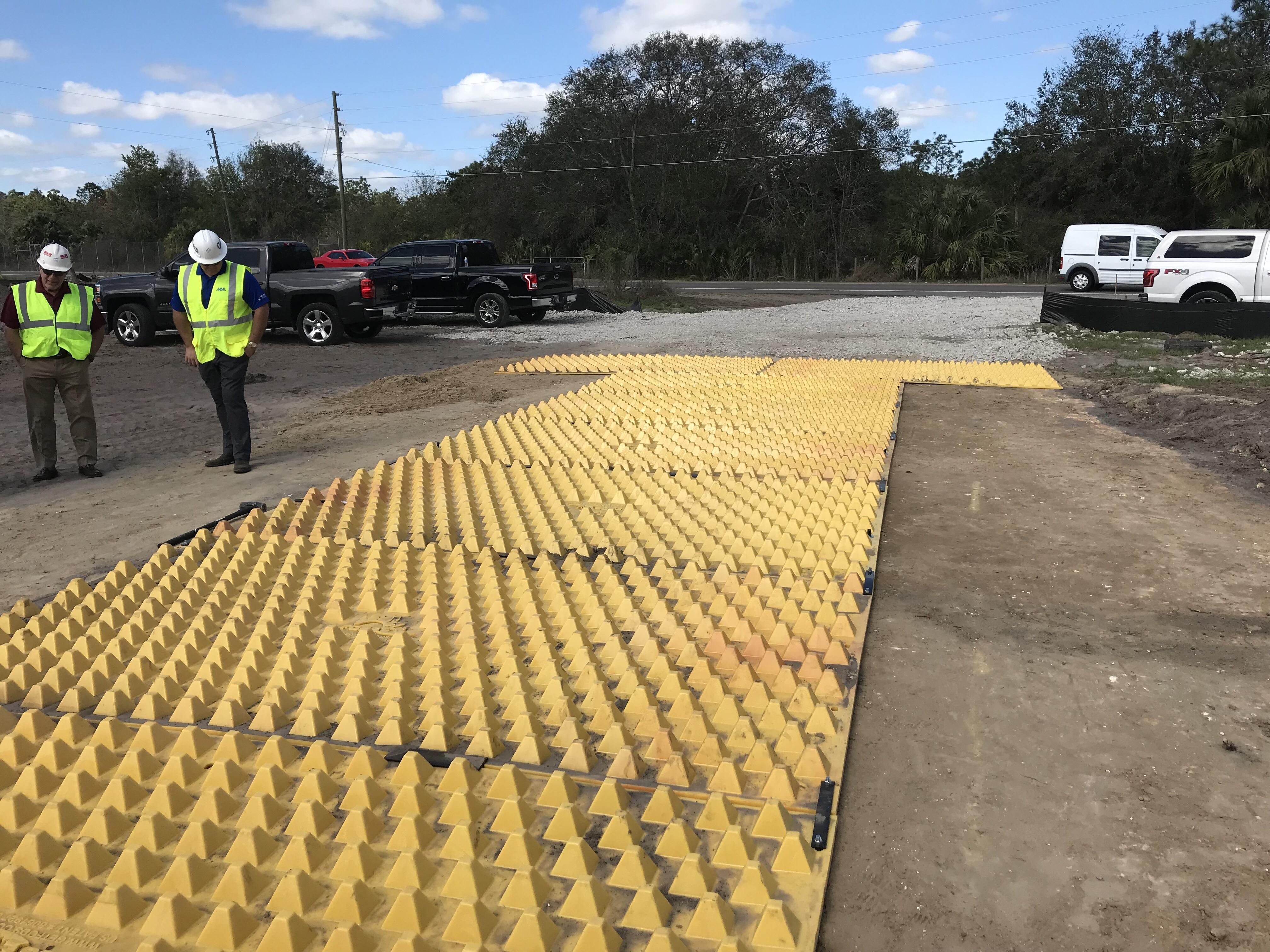
The FODS Trackout Control System is a modular, reusable BMP made of twelve foot wide by seven foot long mats studded with pyramids. The pyramids create a permanent rough surface that deforms vehicle tires so sediment and soil drop freely from the tread, and in side-by-side studies FODS has reduced required street sweeping by roughly 59 percent compared with aggregate systems. The mats do not compact or degrade over time, so they refresh with a simple cleaning, usually a skid steer broom or a FODS shovel, and they use no power or water. Because the system uses no rock, there is no risk of loose aggregate being tracked onto the roadway or thrown from dual tires.
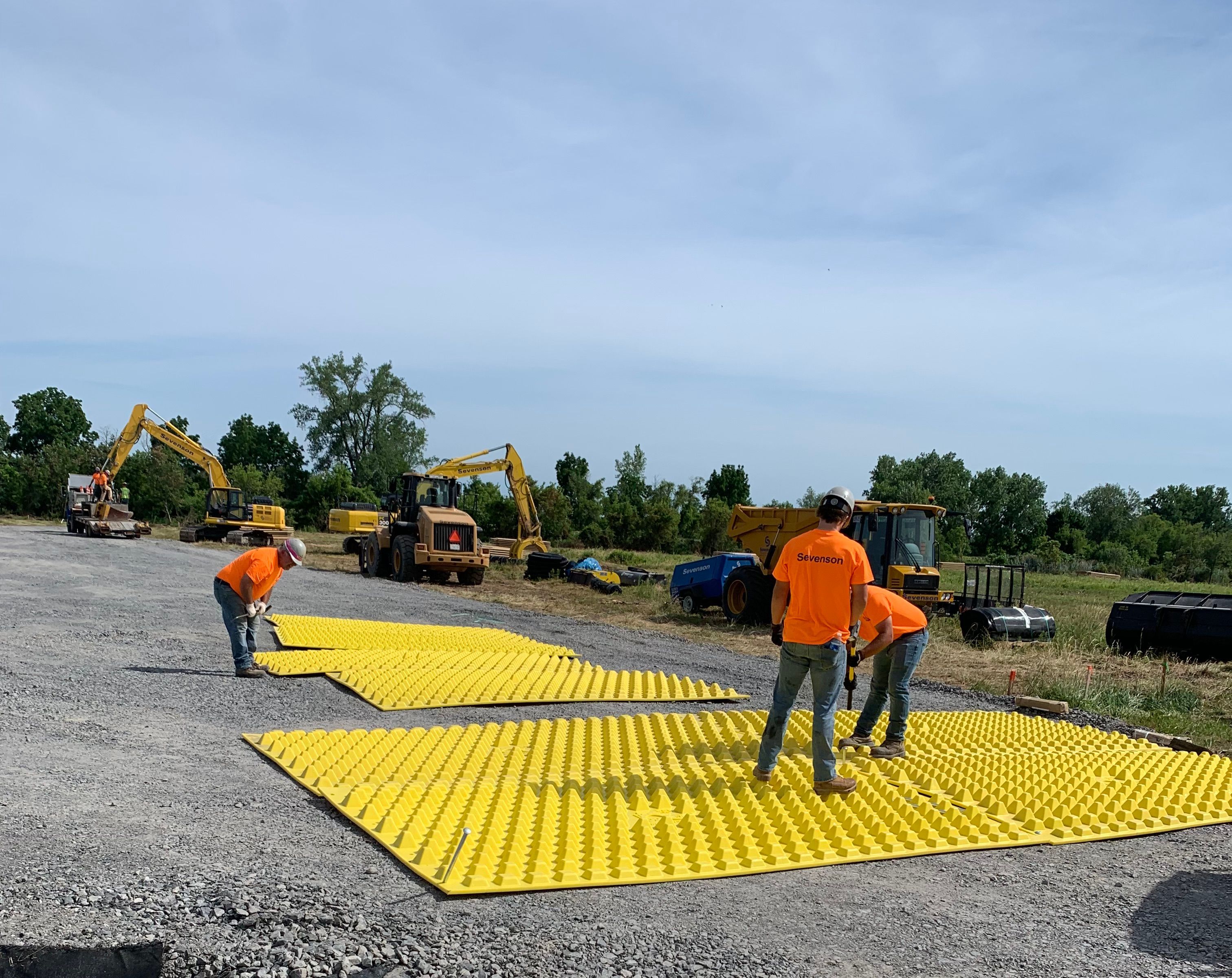
FODS installs over any substrate, including dirt, concrete, and asphalt, which makes it well suited to Rhode Island's urban and coastal sites, and a configuration can be deployed in as little as thirty minutes and relocated as the work moves. Just as important in the nation's densest small state, FODS delivers equal performance in a shorter footprint. A 1x5T layout of about thirty-five feet commonly replaces a seventy-foot rock entrance while still providing a wide turning radius, which is a real advantage on compact job sites where there simply is not room for a hundred-foot gravel pad. With a service life of ten years or more, the same mats can be reused across projects, shifting the cost of a construction entrance from a recurring expense to a one-time investment.
Risks of Vehicle Trackout on Roadways
Safety is a primary concern wherever construction traffic meets a public road. Aggregate exits deposit rock and debris onto pavement, creating hazards for drivers and workers, and loose stone can lodge between dual tires and be thrown at speed. Wheel washes add the burden of supplying and containing water and, in cold weather, the risk of dripping vehicles building ice on the road. FODS uses a rockless, water-free technique to clean tires and does not carry the same risk of injury or liability as aggregate entrances. The mats are durable and reusable across many projects, which reduces the environmental impact tied to aggregate production, hauling, and disposal. On Rhode Island sites that drain to Narragansett Bay or the state's rivers and coastal waters, keeping rock and sediment off the road also helps keep it out of the water.
Additional Resources
RIDEM Stormwater Construction Permitting
RIDEM Soil Erosion and Sediment Control Resources