
New Mexico Construction Track-Out Controls and Stabilized Construction Exits
EPA Construction General Permit, NMDOT, and Albuquerque Fugitive Dust Compliance
New Mexico is the fifth largest state in the country, spanning the Chihuahuan Desert, the gypsum dunes of White Sands National Park, the Sangre de Cristo Mountains, and the forests of the Gila National Forest. The Rio Grande runs the length of the state and remains its most important water source, joined by the Pecos and San Juan rivers, while heavy construction concentrates around Albuquerque and Santa Fe and across the booming Permian Basin oil and gas fields in the southeast. In a dry climate where soils blow and wash easily, keeping construction sediment off public roads is both a water quality and an air quality duty, and a stabilized construction exit is one of the first controls installed on any site.
Two regulatory layers shape a New Mexico construction exit, one federal and one local. Understanding both is the key to specifying the right track-out control and staying in compliance.
The National Pollutant Discharge Elimination System (NPDES) Permits
The Clean Water Act of 1972 established the National Pollutant Discharge Elimination System (NPDES) to regulate the discharge of pollutants into the nation's waters. In New Mexico, the U.S. Environmental Protection Agency currently administers NPDES permits, including stormwater permits for construction activities. To obtain coverage for stormwater discharges from construction, operators may apply for coverage under the EPA Construction General Permit. The process typically includes submitting a Notice of Intent and preparing a Stormwater Pollution Prevention Plan (SWPPP), which outlines anticipated pollutant sources and describes the best management practices to be used for minimizing pollution and sediment runoff. The specific methods are referred to as Best Management Practices (BMPs). One of the first BMPs to be installed on any construction project is the stabilized construction entrances/exits. Additionally, the TESCP will outline maintenance schedules to ensure the BMPs remain effective throughout the project.
Federal NPDES Coverage: EPA Construction General Permit
New Mexico is one of the states that did not take delegation of the National Pollutant Discharge Elimination System (NPDES) program, so the U.S. Environmental Protection Agency, through EPA Region 6, is the permitting authority for construction stormwater. Construction that disturbs one acre or more, or that is part of a larger common plan of development of that size, requires coverage under the EPA Construction General Permit (CGP).
EPA reissued the current CGP on February 17, 2022, and it runs through February 2027. Operators obtain coverage by preparing a Stormwater Pollution Prevention Plan (SWPPP) and filing a Notice of Intent through EPA's NPDES eReporting Tool (NeT). The SWPPP identifies the pollutant sources on the site and the best management practices (BMPs) used to control them, and a stabilized construction entrance is one of the first BMPs installed and maintained. While EPA issues the permit, the New Mexico Environment Department reviews it and provides the Clean Water Act Section 401 water quality certification, so the state retains a role even though the permit is federal.
Construction Track-Out Controls
The EPA National Menu of BMPs for construction stormwater describes track-out controls that keep vehicles from carrying sediment onto paved public roads, where it can wash into storm drains and degrade rivers and lakes. The menu lists several accepted approaches, including gravel pads, wash stations, shaker racks, and manufactured devices. Every option depends on regular inspection, inspection after storm events, and street sweeping to capture any sediment that escapes the entrance.
Albuquerque Fugitive Dust and Track-Out Requirements
In the Albuquerque area, the most direct track-out rules come from air quality regulation. The Albuquerque-Bernalillo County Air Quality Program enforces Fugitive Dust Control under 20.11.20 NMAC, and a Fugitive Dust permit is required for any job that disturbs three quarters of an acre or more. The regulation makes it a violation to allow fugitive dust, track-out, or transported material to cross beyond the property line or right-of-way, and dirt tracked onto paved surfaces must be promptly removed. For contractors in and around Albuquerque, a construction exit that actually keeps sediment on site is the difference between passing and failing a dust inspection, and a durable track-out control supports both the stormwater SWPPP and the local dust permit at once.
NMDOT Stabilized Construction Entrance
On state transportation projects, the New Mexico Department of Transportation (NMDOT) sets its own requirements through the NMDOT NPDES Manual. The manual's Standard Drawing 603-01-7/7, Offsite Tracking Prevention, details a traditional rock construction entrance, and the manual specifies a minimum fifty foot length for aggregate systems. The aggregate pad is built by placing crushed stone over a geotextile filter fabric so the rough surface dislodges sediment from tires, and it must be inspected and top dressed with fresh stone as it compacts and fills with soil. At the end of the project, the aggregate and fabric must be excavated and removed before final stabilization.
The Aggregate Entrance and Its Limits
The traditional New Mexico construction exit is the stone pad, and its weakness is maintenance. As vehicles compact the aggregate and sediment fills the voids, the pad loses its roughness and must be regraded, top dressed, or lengthened. When a gravel pad alone cannot control tracking, contractors add supplemental controls. A wash station uses pressurized water to clean tires but needs a water and power source throughout the project, a real constraint in arid New Mexico. A shaker rack, cattle guard, or exit grid uses steel structures to vibrate sediment loose into a void below, which must be excavated when it fills. Each option adds equipment, water handling, or sediment cleanout, and each carries a recurring cost.
FODS as a Compliant Track-Out Control in New Mexico
Neither EPA nor New Mexico maintains a brand-name product approval list for construction exits. The standard is performance based, so a track-out control qualifies when it removes sediment from tires before vehicles reach the road, and the operator specifies the chosen device in the SWPPP. FODS Trackout Control Mats qualify as the manufactured track-out control device the EPA menu describes, and they can be named directly in the SWPPP and listed as the track-out control on an Albuquerque fugitive dust permit.
FODS is already specified on New Mexico projects. Erosion control plans on file with the City of Albuquerque include the FODS Composite Trackout Control System as the project track-out detail, which shows the system being accepted and used on Albuquerque construction sites. For a contractor, that means FODS arrives with a track record in the state, satisfying the same function as a stone pad or wash station while removing the loose rock and the heavy maintenance those options depend on.
FODS Trackout Control System
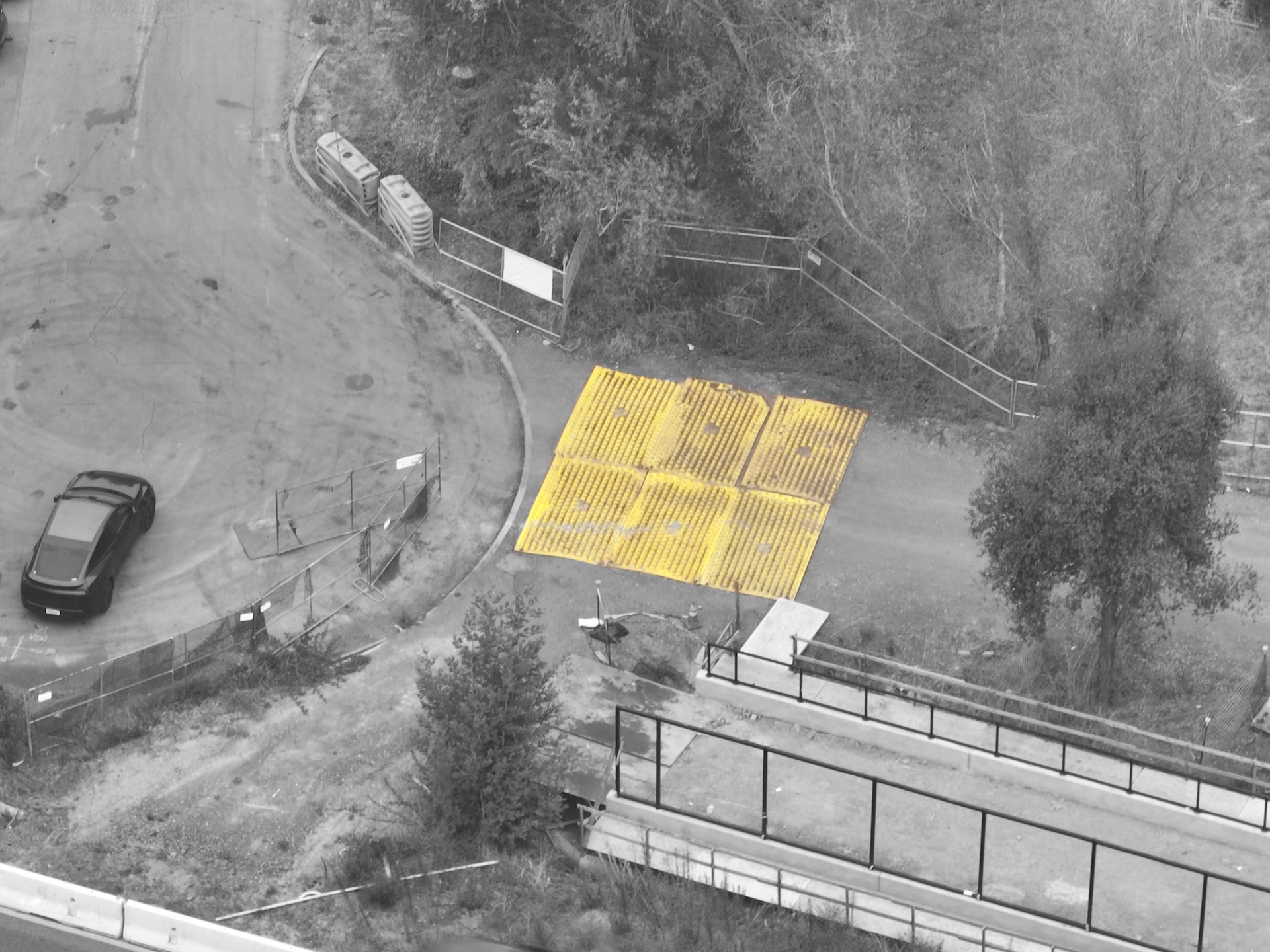
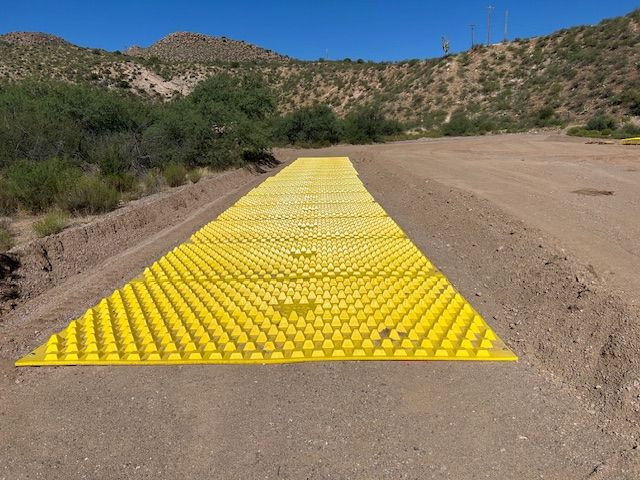
The FODS Trackout Control System is a manufactured track-out control BMP made of high-density polyethylene mats formed into pyramid structures on the surface. As vehicles pass, the pyramids flex the tires and open the tread lugs, dislodging debris, while tires contact only the tips so the voids between the pyramids capture the sediment. The mats are twelve feet wide by seven feet long and are most commonly installed in lengths of 28 to 35 feet to replace 50 to 70 feet of aggregate tracking pad. They anchor to any substrate, including dirt, concrete, and asphalt, and use neither water nor power, which suits both the water scarcity and the dust concerns of New Mexico.
Maintenance is simple, usually a pass with a cleaning shovel, street sweeper, or skid steer broom, and it can be folded into the routine street sweeping a site already performs. The system is modular and reusable across phases and projects, and compared with aggregate entrances FODS has been shown to reduce street sweeping by 59 percent on high traffic sites. With a service life of more than ten years, the mats shift the cost of a construction exit from a recurring expense to a one-time investment, and the same mats can be relocated as access points move through the project.
Risks of Vehicle Trackout on Roadways
Safety is a primary concern wherever construction traffic meets a public road. Aggregate exits deposit rock and debris onto pavement, creating hazards for drivers and workers, and loose stone can lodge between dual tires and be thrown at speed. Wash stations add the burden of supplying and containing water in a desert climate. FODS uses a rockless, water-free technique to clean tires and does not carry the same risks or liabilities as aggregate entrances. The mats are durable and reusable across many projects, which reduces the dust, the water use, and the environmental impact tied to aggregate production, hauling, and disposal. On New Mexico sites that drain to the Rio Grande, the Pecos, or the San Juan, keeping rock and sediment off the road also helps keep dust out of the air and sediment out of the water.
Additional Resources
EPA 2022 Construction General Permit (CGP)
EPA National Menu of BMPs for Stormwater - Construction
EPA Construction Track-out Controls
NMED Point Source Regulation Section
NMDOT NPDES Manual (Rev 4, 2023)