
Montana Stabilized Construction Entrance/Exit BMP
Montana DEQ and MDT Compliant Trackout Control for Construction Sites
Montana spans major North American drainage divides. Depending on location, stormwater ultimately drains to the Pacific Ocean, the Gulf of Mexico (via the Missouri-Mississippi system), or Hudson Bay/Arctic drainage (via the northern divide region). The diverse watershed system of Montana effectively contributes to the health and sustainability of the agriculture and ecosystem within and below its borders.
Montana boasts over 3,000 lakes, including the largest natural freshwater lake in the Western United States by surface area: Flathead Lake. The state is home to thousands of named streams and rivers, as well as numerous unnamed ones. The recreation and tourism industry in Montana is highly dependent on the health and quality of the state's watershed system. In 2017, non-resident guided trout fishing generated $ 1.3 billion in revenue for the state. Additionally, the power of numerous rivers is harnessed to provide jobs and electricity for many Montana residents. The water is further utilized for irrigation, mining, and individual consumption.
Montana's vast and natural landscape is a beautiful sanctuary for both humans and animals. The state is home to an extensive ecological system, including several endangered and threatened species, such as the Black-Footed Ferret, the Whooping Crane, and the White Sturgeon. All life is reliant on the purity of the water available to it; therefore, it is of vital concern for residents, industries, and governments to work together and implement plans, rules, and guidelines for protecting Montana's stormwater system.
Montana DEQ MPDES Permitting Program
The Montana Department of Environmental Quality (DEQ) administers the state's stormwater program under the Clean Water Act through the Montana Pollutant Discharge Elimination System (MPDES). Any construction activity that disturbs one acre or more requires coverage, and most contractors obtain it under the Storm Water Construction General Permit (MTR100000), effective January 1, 2023 through December 31, 2027. Coverage requires a Notice of Intent (NOI) and a Stormwater Pollution Prevention Plan (SWPPP) that identifies the Best Management Practices (BMPs) used to control sediment, including a stabilized construction entrance at every point where vehicles leave the site.
Montana Construction Entrance Detail
The Montana Department of Transportation (MDT) sets the design criteria most engineers reference in its Erosion and Sediment Control Best Management Practices Manual, and the DEQ Storm Water Management During Construction Field Guide provides field guidance for contractors. A traditional aggregate vehicle tracking pad must be a minimum of 50 feet long, 12 feet wide, and 12 inches thick, built with rough crushed rock over a geotextile filter fabric so tires drop their sediment before reaching the road. The pad must be sized for the largest vehicles using the exit, inspected regularly, and redressed with fresh rock as traffic compacts the stone and fills the voids with soil. Any sediment tracked onto the roadway must be swept up promptly.
FODS Pre-Fabricated Trackout Control Mats
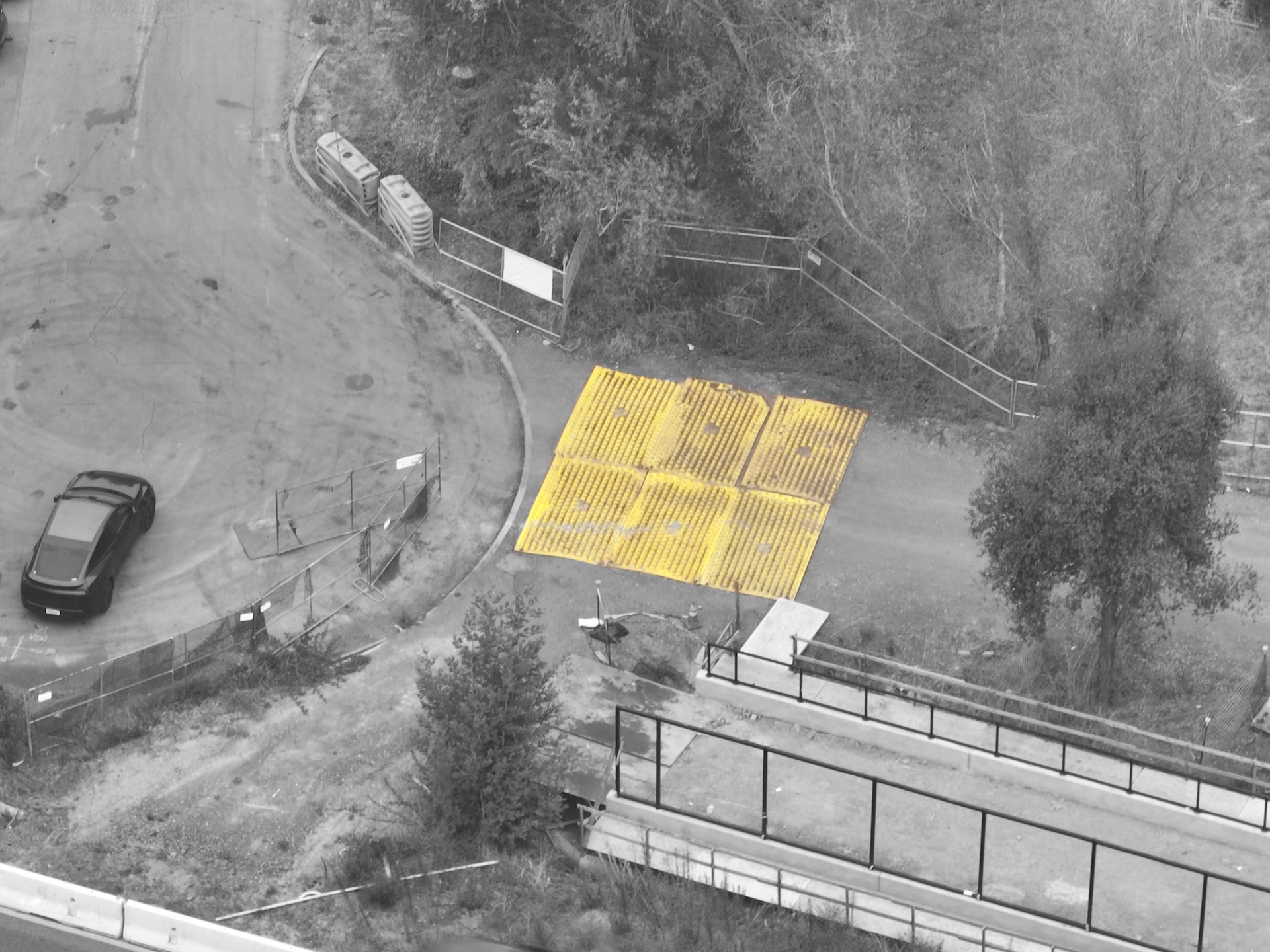
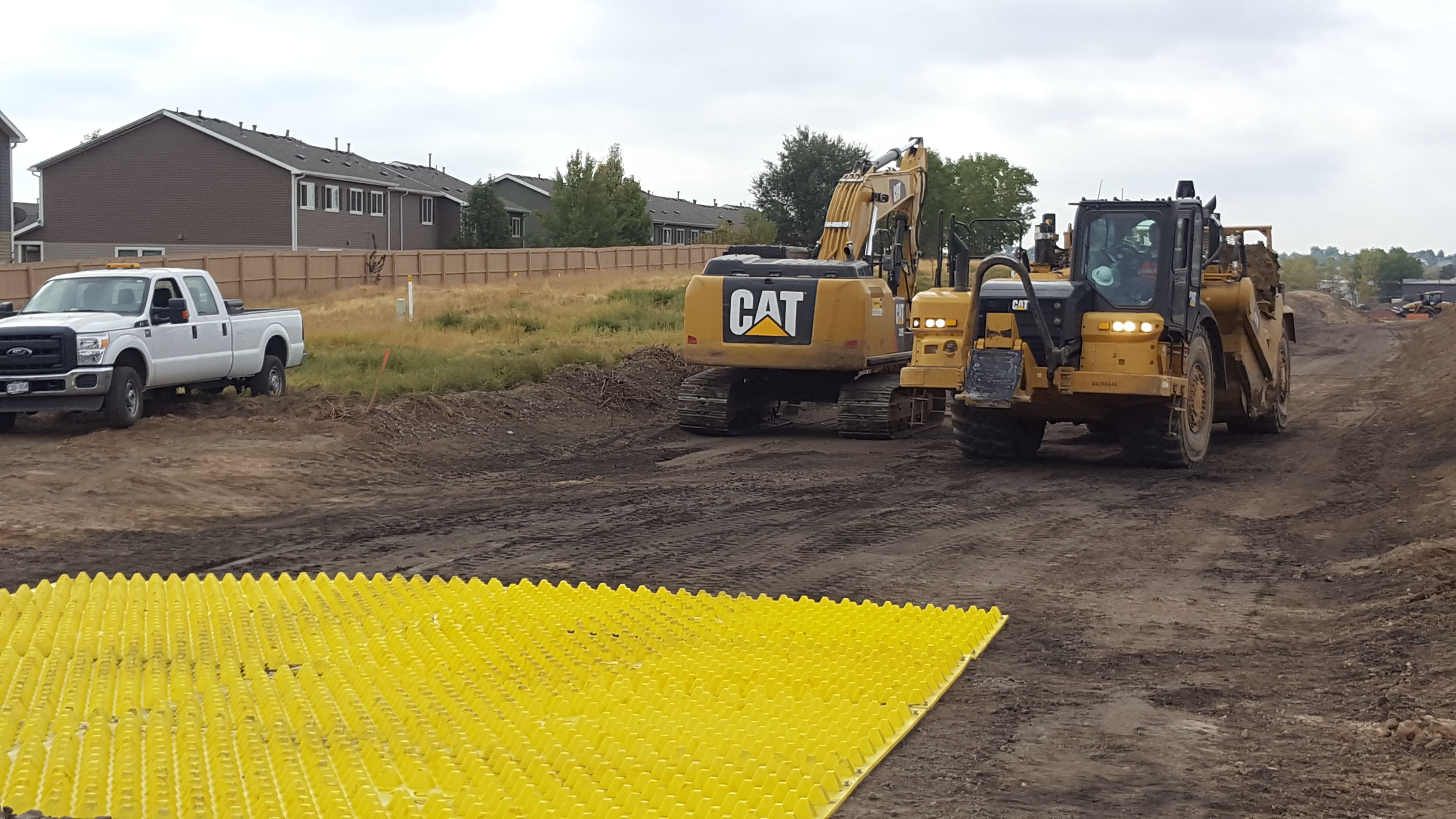
FODS Trackout Control Mats are a manufactured, reusable alternative to aggregate entrances. Instead of loose rock, the mats use a rigid pyramid surface that flexes and deforms vehicle tires to pull sediment from the tread, holding it in the voids below so it does not transfer to the road or to other vehicles. The mats install over dirt, concrete, or asphalt without excavation, link together with connecting hardware, and need no water or power.
Because FODS removes more sediment than rock, the standard 1x5T layout provides 35 feet of travel and replaces a 70 foot aggregate entrance while giving exiting traffic a wide turning radius. The system does not degrade or compact and is up to 59 percent more effective than aggregate based systems. Maintenance is simple: once sediment builds to the tops of the pyramids, clean the mats with a street sweeper, skid steer broom, or FODS shovel instead of refreshing with rock. With a service life of ten years or more, FODS turns a recurring construction entrance cost into a one-time investment.
FODS as a Compliant Construction Exit in Montana
Montana takes a performance-based approach to construction exits, which makes it easy to specify FODS. DEQ and MDT evaluate a vehicle tracking BMP on whether it does the job, removing sediment from tires before vehicles reach the road, and the operator simply names the chosen practice in the project SWPPP. Because the guidance sets a performance and dimensional standard rather than requiring a single material, FODS can be specified directly as the site's stabilized construction exit, no separate approval letter needed. The result is a construction exit that meets the intent of the BMP and the permit, holds up under heavy and repeated traffic, and does not need to be rebuilt after every storm.
A Safer, Rockless Construction Entrance
Aggregate exits deposit rock and debris onto pavement, creating hazards for drivers and workers, and loose rock can lodge between dual tires. Wheel wash stations add a winter risk in Montana, since dripping vehicles can build ice on cold roadways. FODS uses a rockless technique to clean tires and does not carry the same risk of injury or liability as aggregate entrances. The mats are reusable across many projects and fully recyclable, reducing the environmental impact tied to aggregate production, hauling, and disposal. On sites that drain to the Missouri, the Yellowstone, the Clark Fork, or Flathead Lake, keeping rock and sediment out of the road also keeps it out of the water.
Contact us to learn more about FODS reusable construction entrances in Montana, or download the Montana State Submittal Package for SWPPP documentation support.
Additional Resources
Montana DEQ Permitting and Operator Assistance