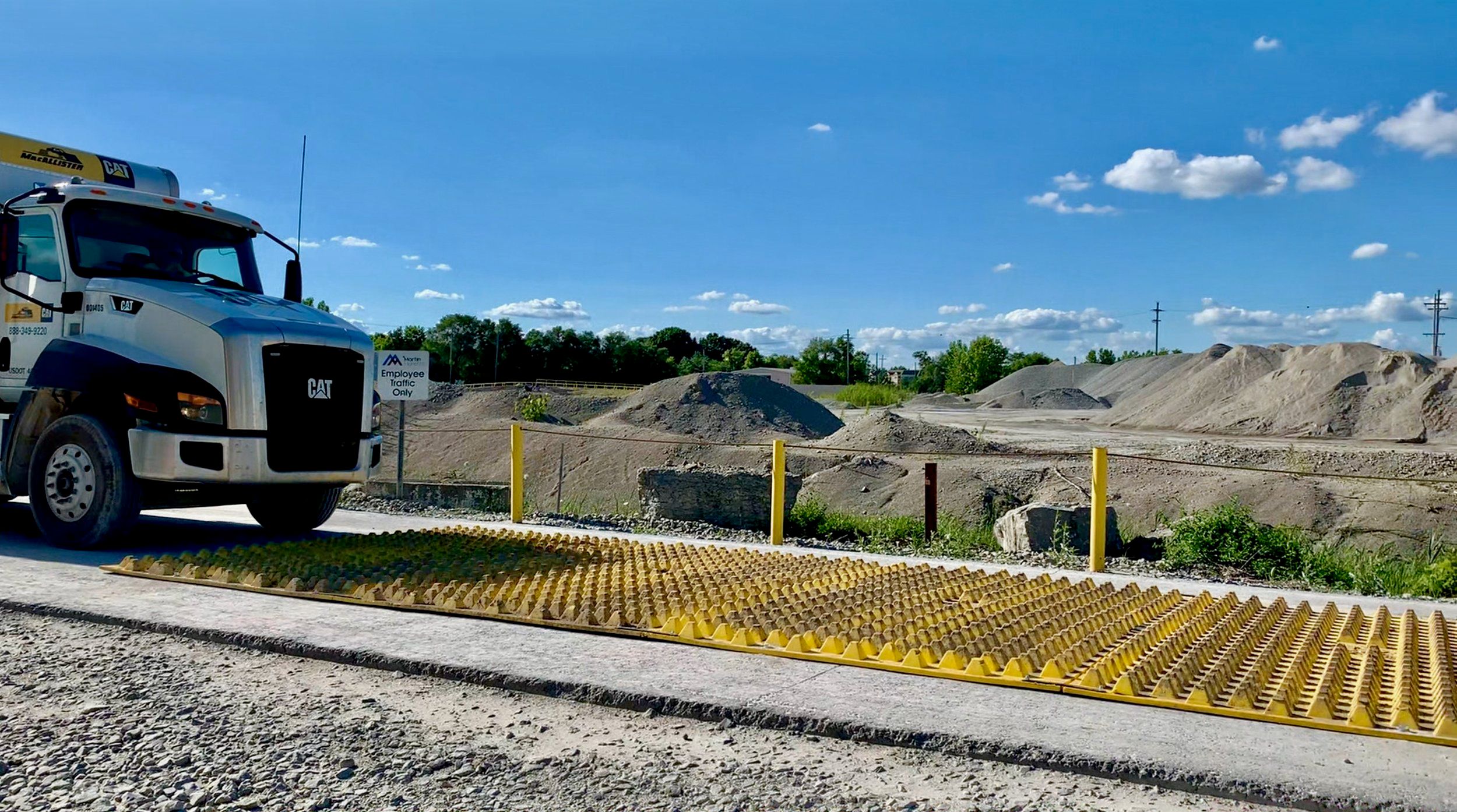
Trackout Control Built for Heavy-Load Operations
Industrial operations run on tight margins and tighter regulations. Manufacturing plants, recycling facilities, quarries, and processing sites experience constant heavy-vehicle traffic, and every truck that rolls off-site is a potential compliance risk.
Vehicle trackout, the mud, sediment, and debris carried onto public roads by outbound trucks, is one of the most common citations under the Clean Water Act and NPDES permit requirements. Managing it effectively is not optional. It is operational.


1/7
TRADITIONAL SOLUTIONS
At landfills, trackout is not just a compliance issue. It is a contamination risk. Unmanaged sediment and potentially hazardous debris can reach public roadways, drainage systems, and surrounding properties, creating liability well beyond a standard NPDES fine.
Traditional aggregate and grate systems have been the default for decades, but they struggle to keep up in the demanding, ever-changing environment of an active landfill:
- High maintenance burden: Heavy truck traffic forces contaminated soils and waste into aggregate, accelerating degradation and creating secondary contamination risks with every replacement cycle.
- Operational limitations and inflexibility: Landfills are constantly evolving environments. Gravel pads are fixed in place and cannot be easily relocated as tipping areas and haul routes shift over time.
- Limited installation options: Rock cannot be installed effectively on paved or concrete surfaces commonly found at transfer areas, scale houses, and landfill entrances.
- Hidden costs: Sourcing, hauling, spreading, and disposing of aggregate creates ongoing operational expenses over the life of the landfill.
- Environmental impact: At landfills, displaced aggregate can carry leachate and contaminants off-site, making gravel part of the environmental problem, not the solution.
These limitations have led landfill operators to adopt more adaptable and durable solutions that better support long-term compliance and operational performance.
The FODS Industrial Trackout Control System
FODS is the next generation BMP for landfill trackout control. Engineered for continuous-operation environments, FODS mats handle the unique demands of waste handling sites: contaminated materials, constant traffic, and shifting site layouts, without the contamination risk or replacement cycles of aggregate.
Key Performance Features
Landfills demand solutions that perform in some of the most challenging conditions in the industry. FODS delivers:
Superior trackout reduction
Independent studies have shown that the FODS Rockless Trackout Control System reduces required street sweeping by 59% to 80%, offering clear cost savings and compliance advantages over traditional solutions.
Durability under heavy loads
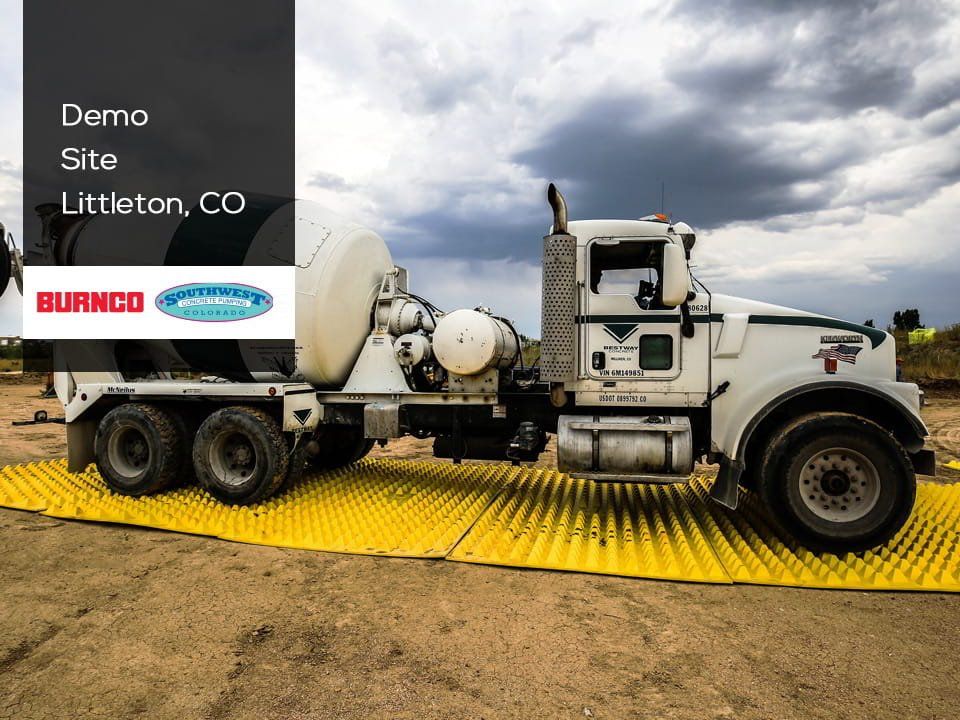
Each pyramid-shaped cleat is rated to withstand 20,000 lbs. of direct load before dimpling, with an ultimate crush strength exceeding 50,000 lbs. per pyramid, ensuring performance under the heaviest compactors, collection trucks, and highway-legal vehicles.
Long service life
Constructed from ultra-durable, high-density polyethylene (HDPE), FODS mats are designed for 10+ years of harsh environment use, even in extreme climates and high-traffic conditions.
Portability and adaptability
Unlike gravel, FODS mats install, anchor, relocate, and store without heavy equipment, making them ideal for landfill environments that change over time. Equally effective on pavement, asphalt, concrete, or directly on grade.
Environmental responsibility
The mats eliminate the need for mining, quarrying, transporting, and ultimately disposing of stone, dramatically reducing lifecycle carbon emissions while preventing secondary sediment pollution from gravel itself.
FODS Applications Across Industrial Environments
Active Landfill Cells and Haul Roads
As active cells expand and haul routes shift, fixed aggregate entrances cannot keep up. FODS mats relocate quickly to match changing traffic patterns, maintaining effective trackout control at every stage of cell development without the need for aggregate sourcing or heavy equipment.
Transfer Stations and Scale House Entrances
High-frequency entry and exit points at transfer stations and scale houses demand trackout control that performs on paved surfaces and holds up under constant traffic. FODS installs directly on concrete or asphalt with no aggregate required, keeping entrance areas clean and compliant with minimal maintenance.
Leachate Management Areas
In areas where leachate contact is possible, aggregate entrances become a contamination vector. FODS mats are cleanable and contain no porous material to absorb contaminants, reducing the risk of secondary off-site contamination from trackout control equipment itself.
REGULATORY ALIGNMENT: NPDES AND BEYOND
Landfills are held to some of the strictest NPDES and stormwater standards in the industry, and unlike construction projects, compliance is not temporary. Active operations run for decades, and trackout control must perform reliably through every phase.
Key compliance considerations for landfill operations:
- Long-term compliance requirements: Landfills require BMPs designed for continuous, multi-year operation, not seasonal replacement cycles.
- Changing site conditions: Active cells, haul roads, and tipping areas change constantly. Trackout control must adapt without downtime or major reinstallation costs.
- Performance on varied surfaces: Access points may include compacted soil, gravel, or paved areas, all requiring effective trackout control.
FODS is engineered to meet these demands, helping landfill operators maintain compliance while reducing off-site tracking and liability exposure.
Cost Efficiency and ROI
The financial case for FODS is straightforward, and gets stronger the longer a landfill operates:
- Eliminated aggregate sourcing, delivery, and disposal costs
- Lower maintenance and cleaning frequency
- Reduced risk of NPDES violations, public complaints, and associated fines
- Long service life exceeding 10 years
- Fully reusable across landfill phases: no replacement cost as the site evolves
Sustainability and Environmental Responsibility
For landfill operators, sustainability is not just a corporate goal. It is a regulatory and community expectation. FODS reduces aggregate deliveries, eliminates quarrying emissions, and removes the disposal burden of spent gravel. Manufactured from recycled material and fully recyclable at end of life, FODS helps operators reduce environmental impact at every stage of the landfill life cycle.
Why Landfill Operators Choose FODS
- Designed for long-term operation: built for 10+ years in continuous-use environments
- Rapid deployment: installed in under 30 minutes with no heavy equipment required
- Works on any surface: concrete, paved entrances, compacted soil, or directly on grade
- Handles contaminated conditions: cleanable surface with no porous material to absorb leachate or hazardous debris
- Fully relocatable: redeploy as active cells, haul routes, and tipping areas shift
- Reduces fugitive dust, sediment, and stormwater runoff: protecting surrounding roads and communities
Meets NPDES BMP requirements: engineered for the continuous compliance demands of active landfill operations
A smart ROI, low long term cost, and meets minimum entrance width requirements
Provides an anchored compact stable exit/entrance for construction traffic
Easily and rapidly installed in under 30 minutes, moved, removed, relocated and reused
Alleviates risk management associated with construction entrances
Helps prevent tracking of mud onto roadways, reduces fugitive dust, sediment erosion and storm water runoff
Is versatile and be anchored to any substrate including concrete, pavement, asphalt, etc.
Longevity: Designed for over ten years of use.