FODS deployed on $866 Million Miami Signature Bridge Project
The thriving coastal hub of business, travel, and the Arts has been on a steady growth trend. Today, Miami’s Metro Area is home to over 6 million residents with millions of travelers passing through Miami International Airport annually. This growth has spurred a major highway development which will serve the growing population while featuring architecture which highlights Miami’s identity.
I-395/SR 836/I-95 Design-Build Project
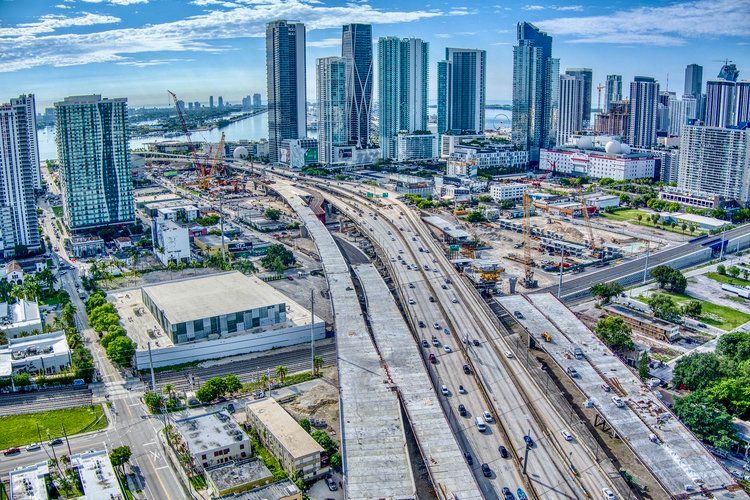
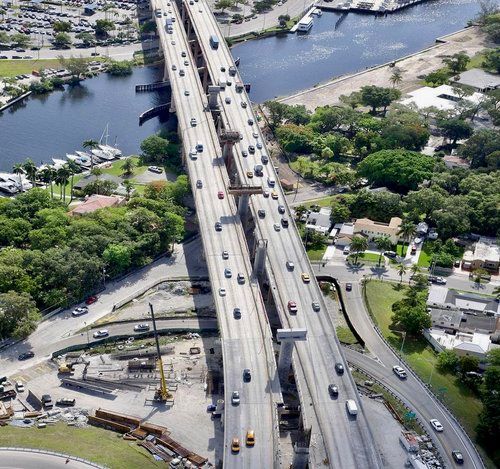
The significant partnership between the Florida Department of Transportation (FDOT) and the Greater Miami Expressway Agency (GMX, formerly MDX) will introduce a double-decked bridge over the Miami River and an iconic arched bridge over Biscayne Boulevard. The I-395/SR 836/I-95 Design-Build Project extends from State Road (SR) 836 at NW 17 Avenue, through the Midtown Interchange, and east to the MacArthur Causeway Bridge, encompassing improvements across three of Miami’s most heavily traveled transportation corridors.
Spanning approximately five miles, the project represents an investment of approximately $866 million and is one of the most complex urban highway reconstruction efforts currently underway in South Florida. Construction is being delivered in phases, with the overall project now expected to reach completion by late 2029, reflecting the scale of the work, evolving construction phasing, and the challenges of delivering a landmark infrastructure project in a dense urban environment.
The planned renovations will enhance I-395, I-95, and SR 836 to improve driving safety, increase roadway capacity, and modernize aging infrastructure. A 1.6-mile stretch of I-95 will receive full concrete pavement replacement in both northbound and southbound directions, along with the addition of an auxiliary lane to better manage traffic entering from SR 836.
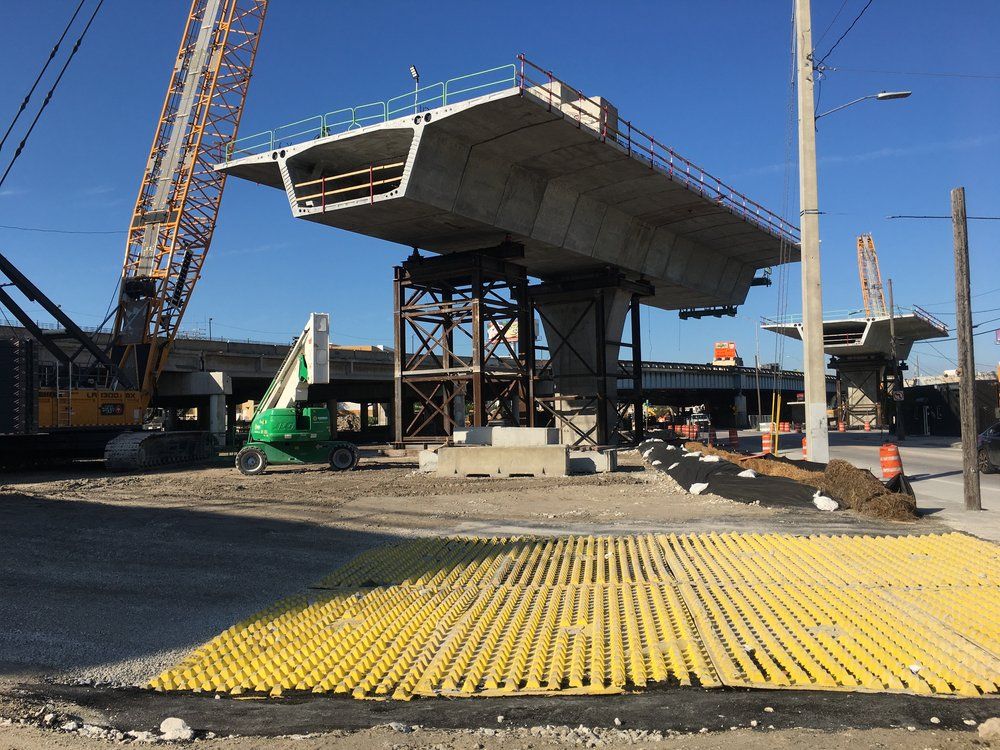
Construction along SR 836 has included significant structural progress on the project’s double-decked roadway system. Crews have completed seven major concrete deck pours totaling more than 12 million pounds of concrete, along with substantial progress on the installation of the roadway’s supporting piers. This work is critical to advancing the elevated roadway segments and maintaining long-term structural performance.
Pedestrian and community connectivity are also key components of the project. Access between Overtown, Downtown Miami, Omni, and Edgewater will be improved through a continuous trail extending from NW 3 Avenue to Biscayne Boulevard, featuring upgraded crosswalks, new bike lanes, and connections to community activity areas.
In addition to roadway and bridge improvements, the project continues to emphasize long-term urban connectivity. Plans for the Underdeck public space and Heritage Trail beneath the new I-395 corridor are intended to help reconnect neighborhoods historically divided by highway infrastructure, including Overtown and Downtown Miami, while creating new pedestrian, cycling, and community-oriented public spaces.
Project Challenges
Located in the heart of downtown Miami, the I-395 corridor is surrounded by dense urban development, constant traffic, and environmentally sensitive waterways. The Miami River flows directly beneath portions of the project and discharges into Biscayne Bay, making erosion and sediment control a critical consideration throughout construction.
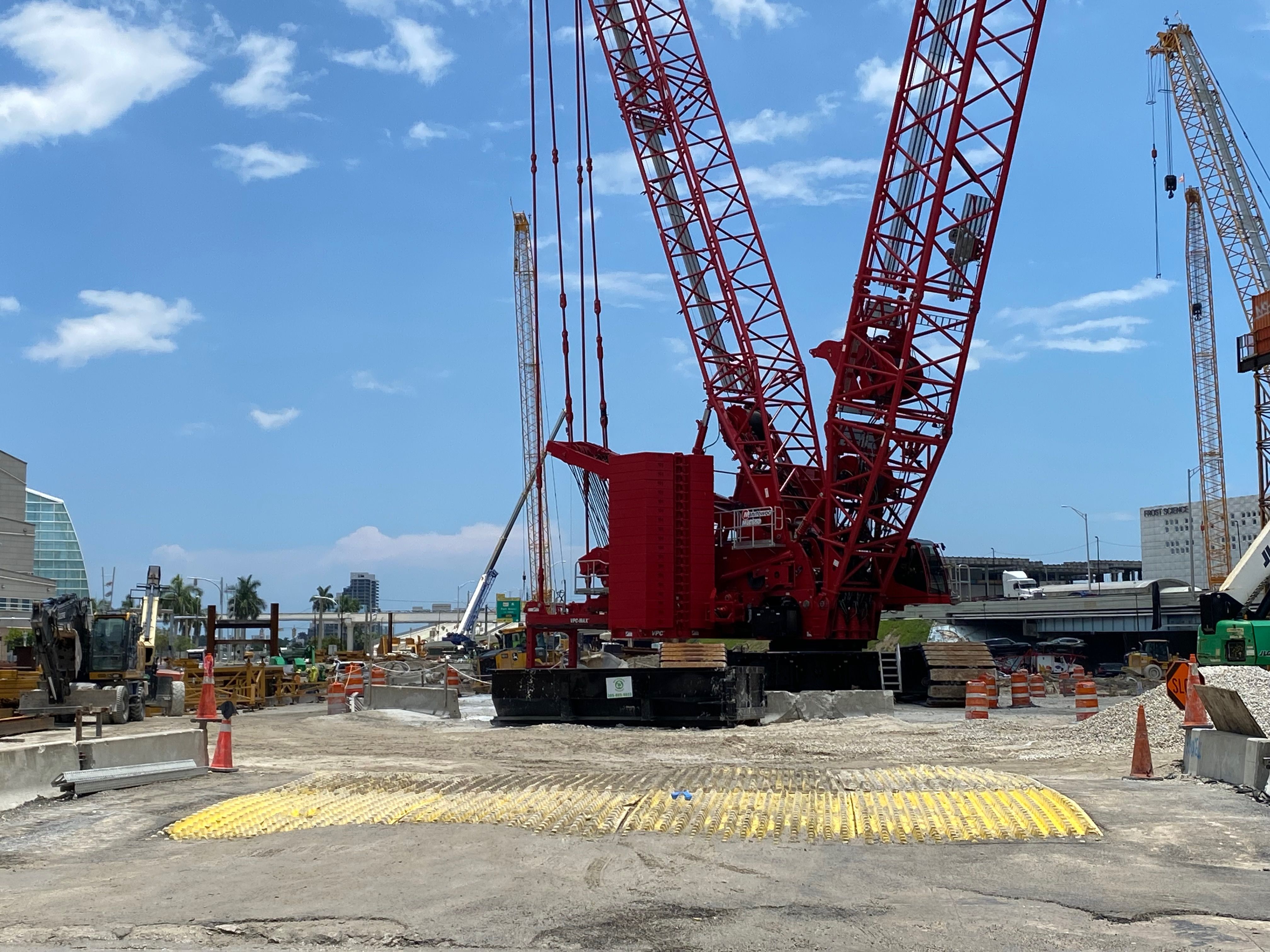
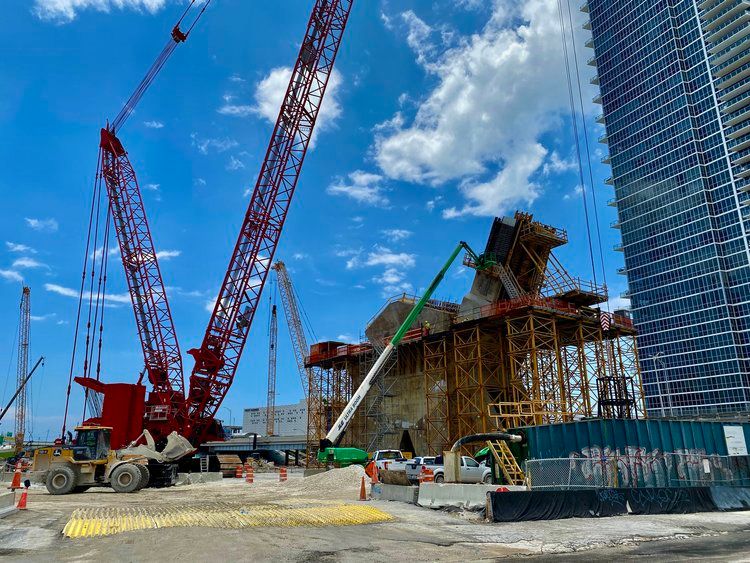
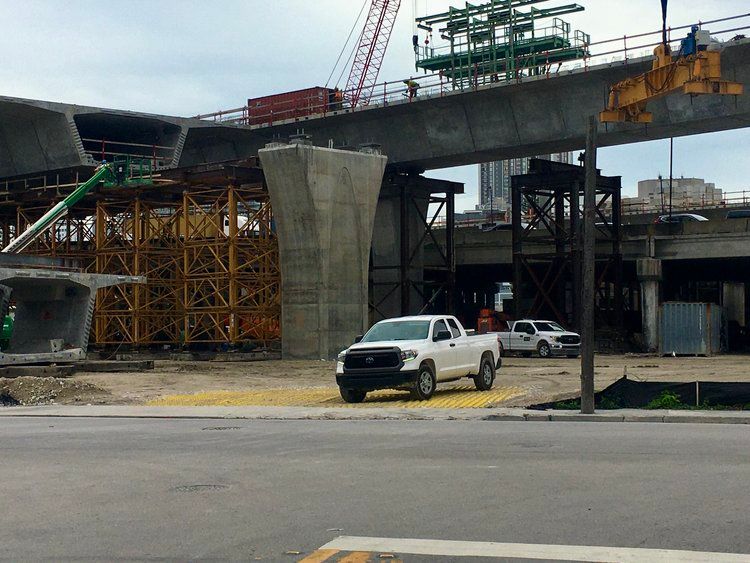
The construction of the Signature Bridge has required extensive substructure and foundation work to support its scale and architectural complexity. More than 530 permanent auger-cast piles have been installed across the project, with some foundations extending up to approximately 135 feet deep. Temporary support systems and falsework have also been used throughout construction to stabilize the structure during the assembly of the signature arches, particularly in areas with limited staging space and challenging subsurface conditions.
The project’s phased, linear layout required construction access points to be relocated frequently as work progressed, while maintaining traffic flow and protecting adjacent roadways and waterways from sediment runoff.
Signature Bridge - The Fountain
I-395 will expand to three lanes in each direction, with new and improved ramps connecting to I-95. Beneath the elevated roadway, NW 2 Avenue will be reconnected, restoring local access for nearby neighborhoods.
As part of the phased traffic management strategy, key roadway improvements have already been delivered. A new northbound I-95 to eastbound I-395 ramp has opened to traffic, helping improve flow through one of downtown Miami’s most congested interchange areas. Additional ramp openings are planned ahead of full project completion, including a westbound I-395 to southbound I-95 connection, which is expected to open in early 2026.
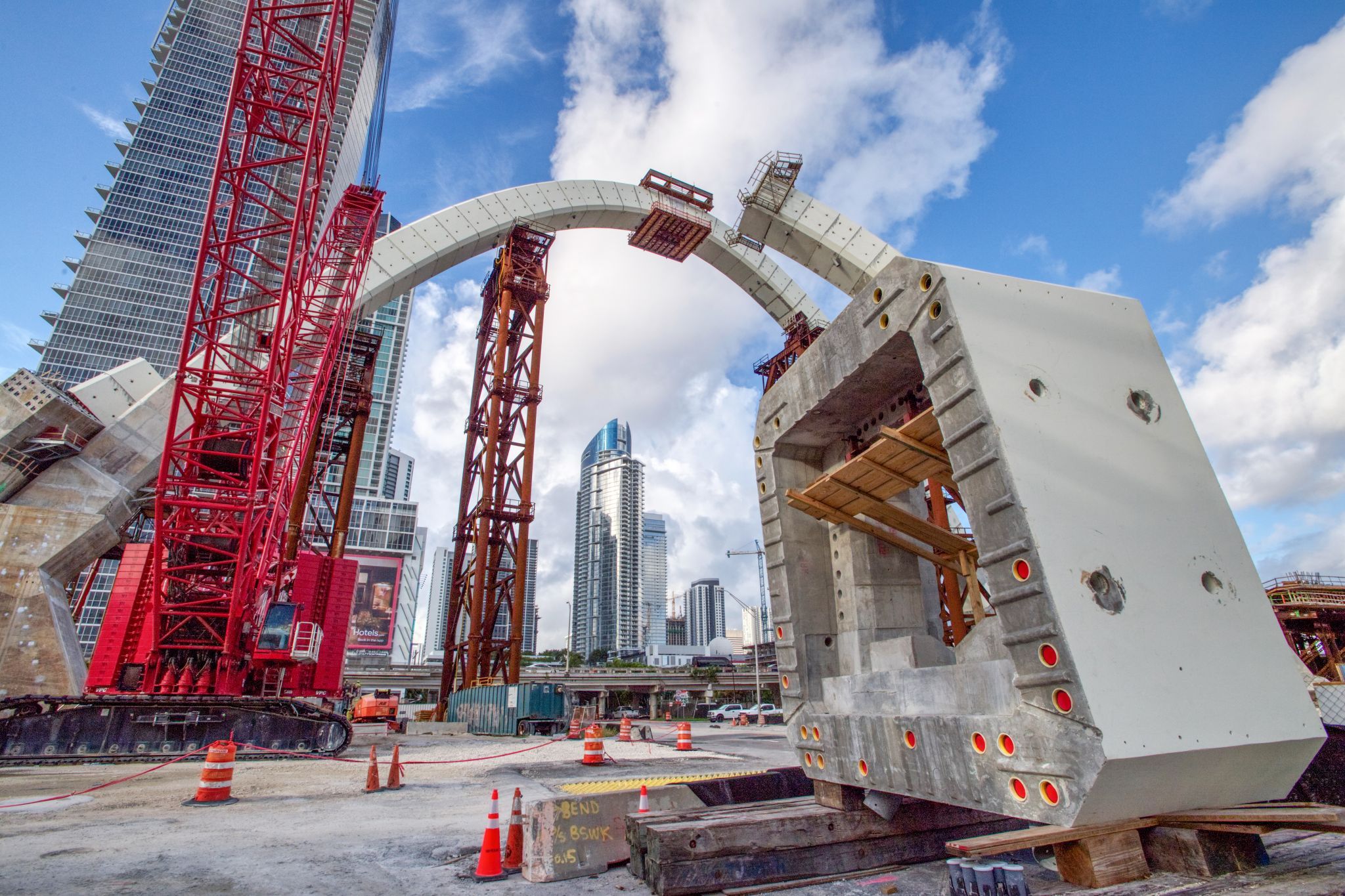
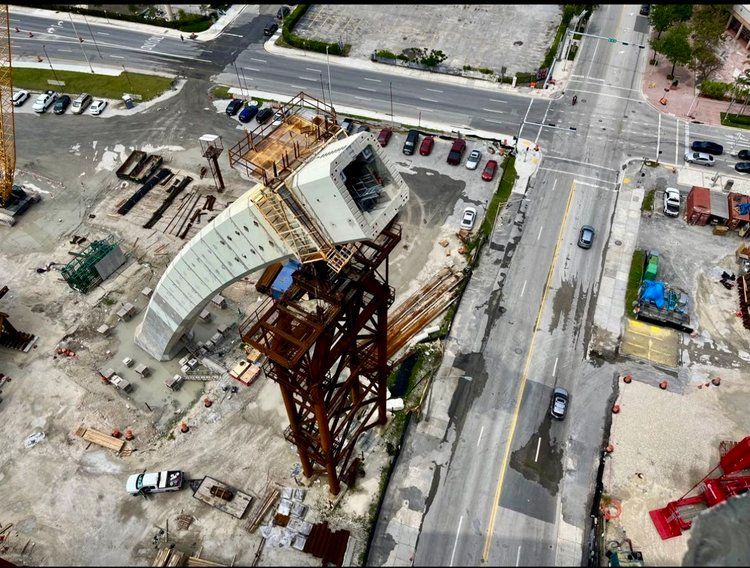
A defining feature of the project is the 1,025-foot signature bridge, known as The Fountain, designed by Donald MacDonald Architects. Spanning NE 2 Avenue and SR-5 / Biscayne Boulevard, the bridge features six sculptural arches that rise above downtown Miami. The bridge’s six arches are being assembled from a total of 345 precast segments, each uniquely formed and weighing around 90 tons. Inspired by the city’s connection to water, culture, and civic life, the structure is intended to serve as a new architectural landmark for the region.
As of late 2025, two of the six signature arches have been completed, and all 86 precast segments for the tallest arch, rising approximately 330 feet above ground, have been installed. Construction activities are continuing on the fourth arch, with foundation work underway for the remaining two arches as the project advances through its next phases.
Archer Western & de Moya Group Joint Venture
The design-build contract was awarded to a Joint Venture between Archer Western and the de Moya Group, with engineering support provided by HDR. The team brings extensive experience delivering large-scale highway and bridge projects in dense urban environments.
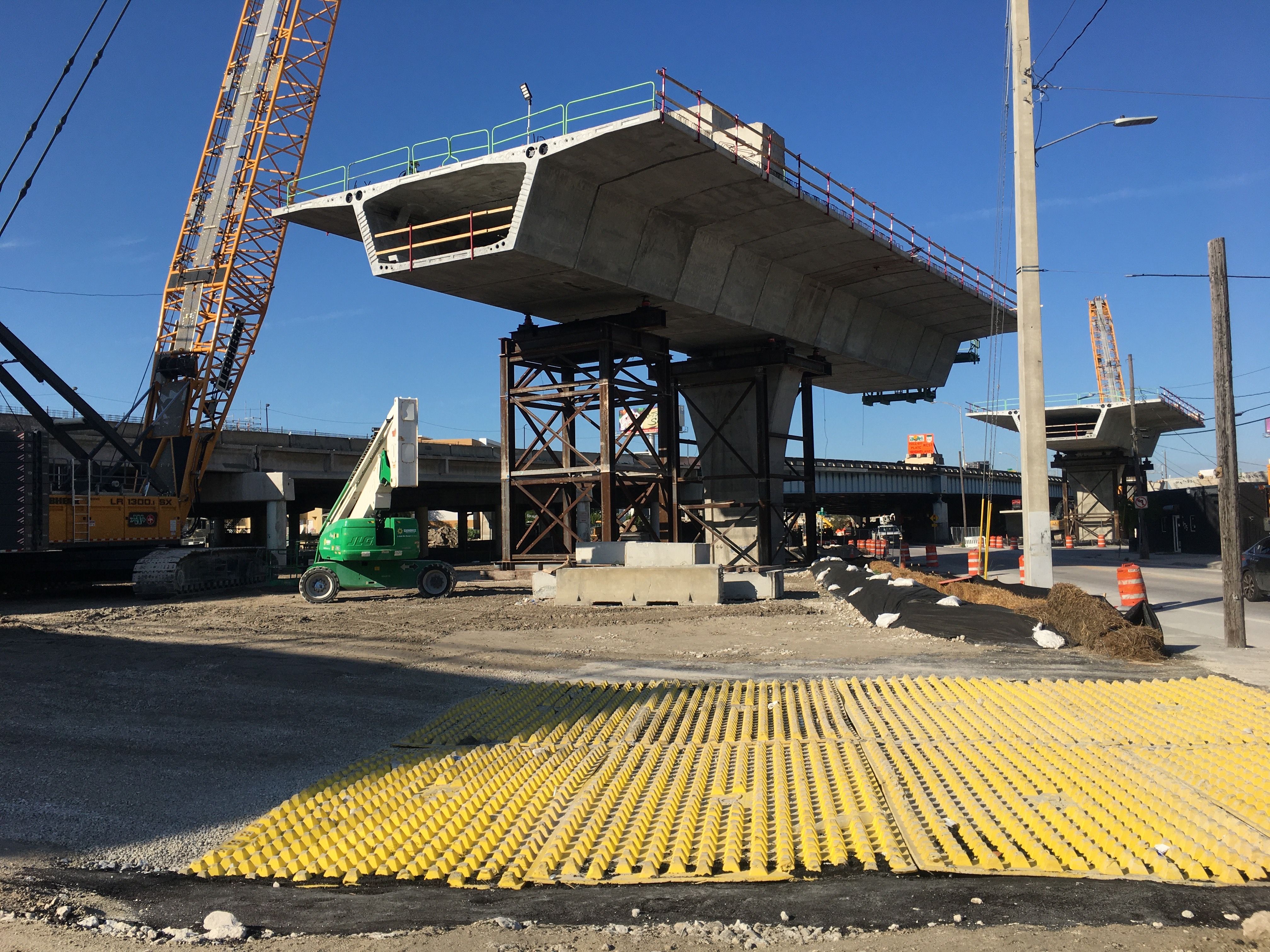
Throughout construction, vehicle tracking controls and erosion-control Best Management Practices (BMPs) have been implemented to minimize sediment tracked onto public roadways and to protect nearby surface waters, including the Miami River and Biscayne Bay.

The FODS Soil Tracking Prevention Device
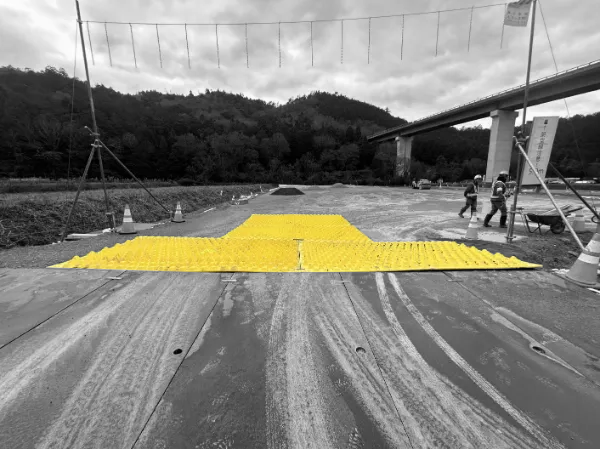
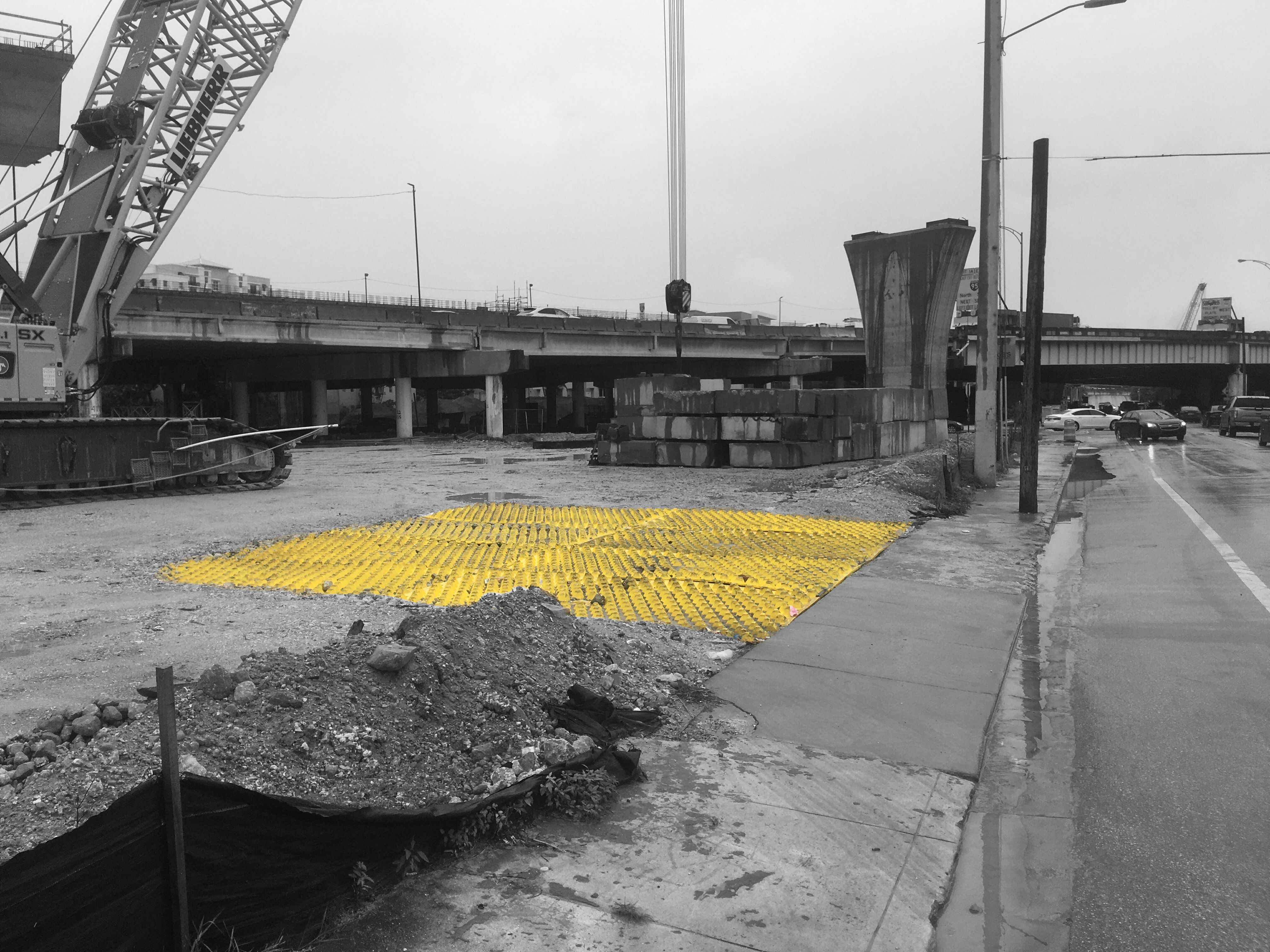
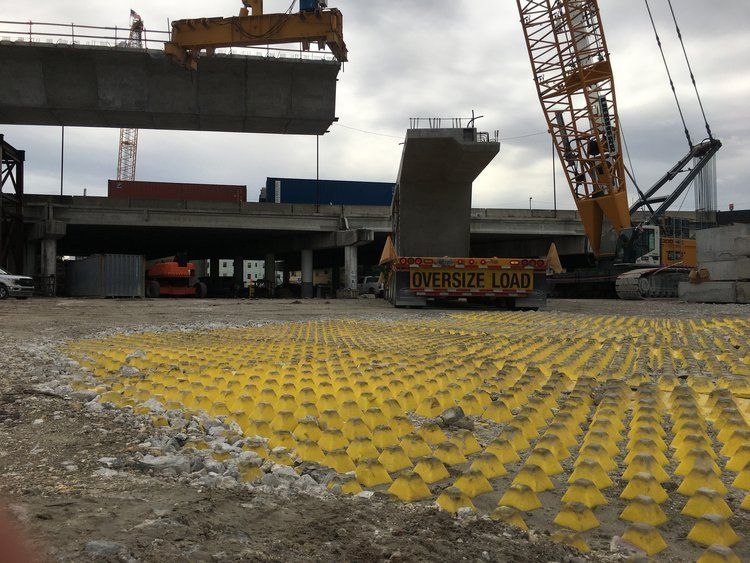
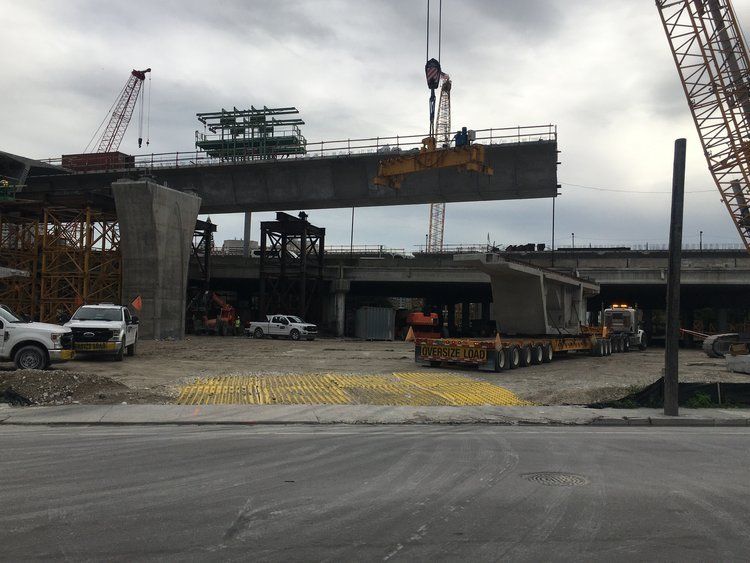
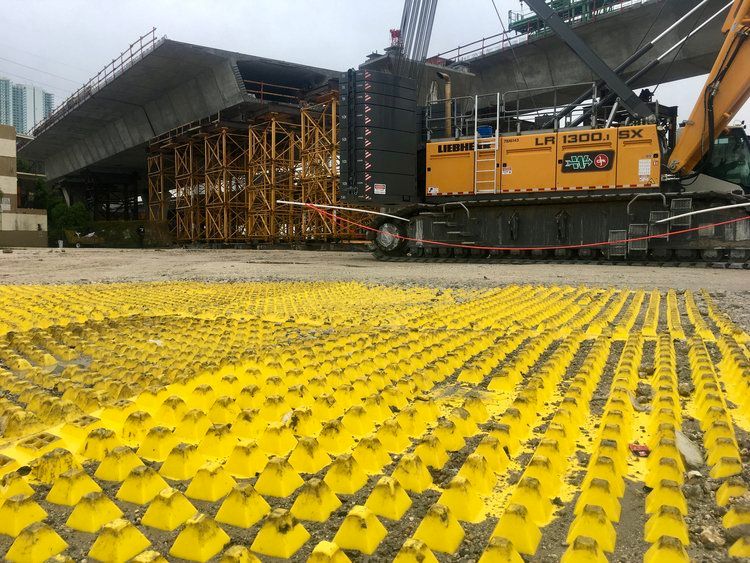
The FODS Soil Tracking Prevention Device, also called Trackout Control Mats, has been deployed throughout the project at construction entrances to minimize sediment. As a portable device, the FODS Trackout Control System can be relocated as needed during each stage of construction. Compared to traditional aggregate-based tracking pads, the FODS system provides a highly effective and versatile solution for phased construction.
Supporting Heavy Civil Design-Build Infrastructure Projects
Design-build highway projects demand construction solutions that can adapt to evolving site logistics without compromising safety or compliance. From bridge foundations to elevated roadway segments, access points often change as work progresses. Trackout control systems used on these projects must support heavy truck traffic, withstand repeated loading, and remain effective throughout extended construction timelines.
FODS Highway Construction
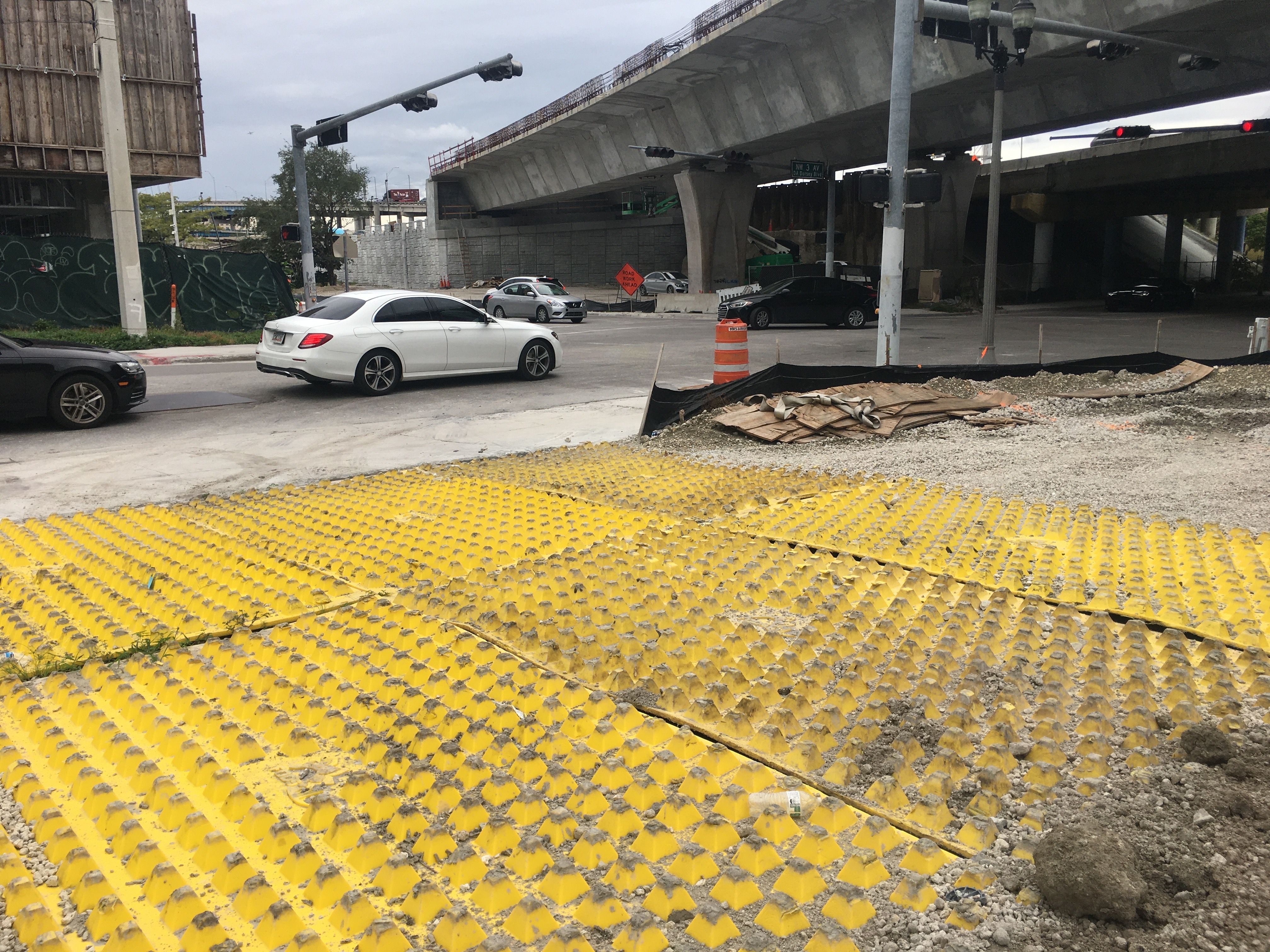
Thanks to the portable, reusable nature of the FODS system, this modern BMP is a favorite Trackout Control BMP for highway construction projects. Across the country, contractors are using FODS Trackout Control Mats to reduce sediment tracking on linear highway construction where entrances can be relocated during each phase of work. The rockless system requires fewer transportation vehicles during installation, removal and maintenance which helps to reduce congestion from delivery vehicles throughout the project. FODS is the safe construction entrance solution as the rockless system reduces the risk of crushed rocks becoming lodged between dual tire vehicles or being tracked onto active traffic lanes. With proven effectiveness, utility, and safety, the FODS Trackout Control System is a leading Best Management Practice for highway construction.
Learn more about FODS in use on Highway Projects.
ABOUT FODS, LLC.
Based in Centennial Colorado, FODS Trackout Control System replace ineffective and costly traditional rock stabilized construction entrances, saving you time and money. Our proprietary mat design works to effectively remove debris from your vehicle tires without damaging the tire or the ground’s surface. We provide the only durable, reusable, and environmentally friendly trackout control system currently available on the market. FODS Reusable Construction Entrances are 100% Made In the USA and 100% recyclable.
To find out more information on how we can help your project stay on schedule and in compliance contact 844-200-3637 or email us at info@getfods.com.