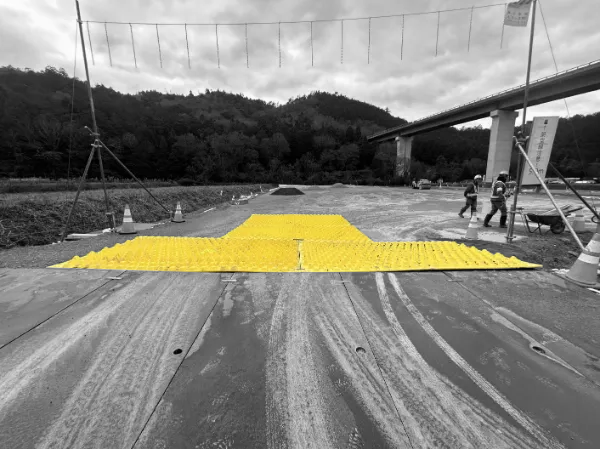
Project Overview: A Highway Expansion Project of High Public Importance
In Oi Town, Fukui Prefecture, the Maizuru-Wakasa Expressway Nojiri Tunnel Construction Project (舞鶴若狭自動車道 野尻トンネル工事) was undertaken as part of NEXCO West’s E27 four-laning program, which aims to expand the Maizuru-Wakasa Expressway to four lanes between Maizuru-Higashi IC and Obama IC.
This corridor is classified as a high-priority national infrastructure route, designed to enhance traffic safety, disaster resilience, and regional logistics and tourism development across northern Kinki and Reinan.
The Nojiri section covers a construction length of 1,483 meters between Nojiri and Yamada districts of Oi Town.
Within the project bid the full scope of the work included:
- Construction of one new tunnel tube (約246 m long, in parallel to the existing 306 m Nojiri Tunnel)
- Nine bridge substructures (橋梁下部工 9 基) and nine foundations
- Temporary access roads and a temporary girder bridge (仮桟橋)
Key quantities included ~20,000 m³ of excavation, ~11,000 m³ of concrete, and ~1,200 t of reinforcing steel.
The contract period was set at 1,080 days, with the start deadline no later than August 24, 2024, and the official award notice (落札者等の公示) published on July 22, 2024.

Site Challenges: Managing Construction Near Residential and Public Roads
The Nojiri Tunnel jobsite required transporting excavated soil and materials via local public roads adjacent to residential areas, making trackout control a priority from the earliest construction stages.
However, in the pre-yard phase, the site lacked sufficient space for conventional wet-type wheel wash systems.
Additionally, access to the tunnel face passed through narrow temporary routes and a provisional girder bridge, limiting the use of heavy machinery and permanent installations.
Concerns included mud and debris contamination, tire-borne trackout, and potential pavement damage from falling material. Addressing these risks proactively was critical to maintaining positive community relations and avoiding road contamination complaints.
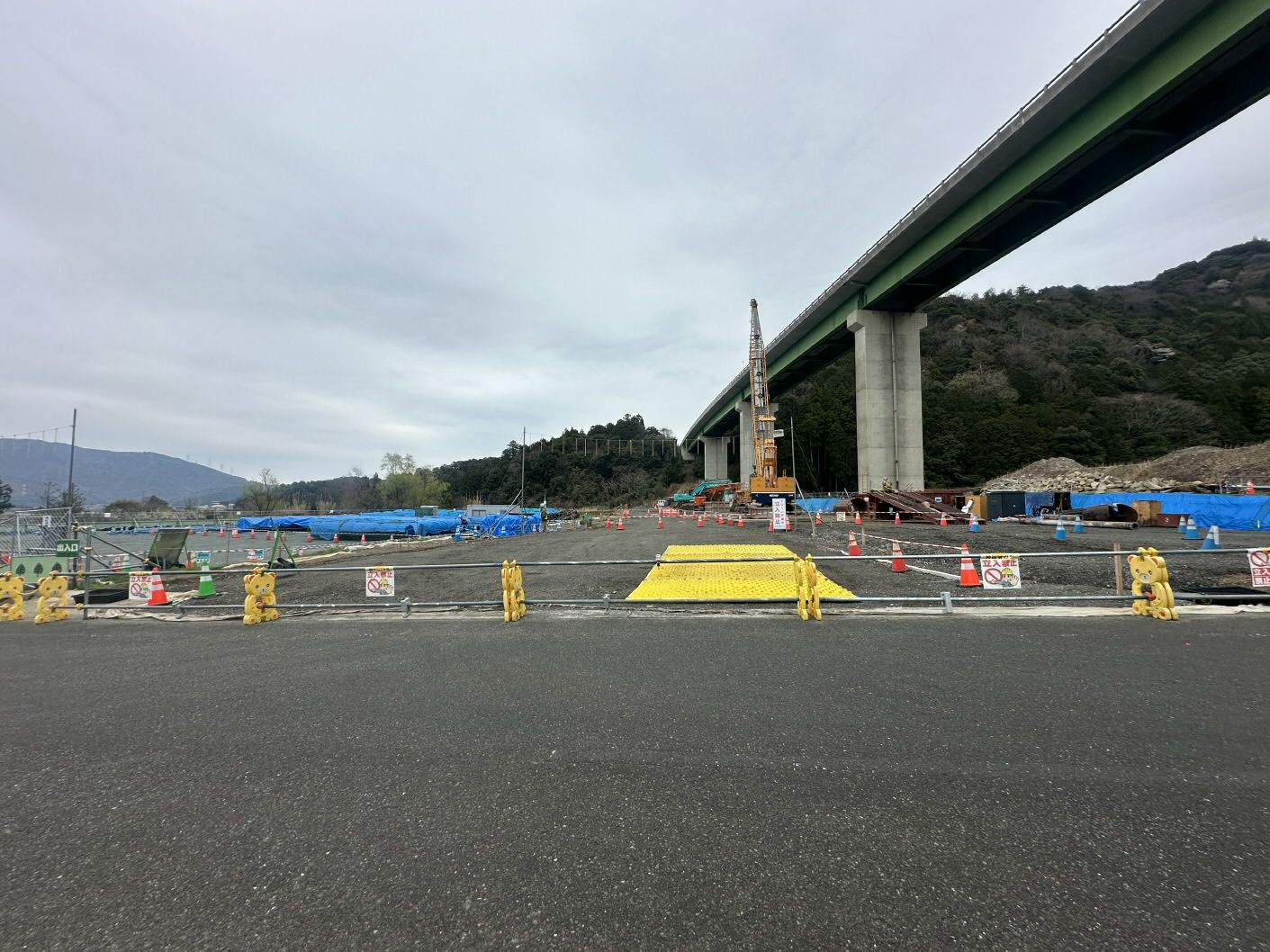
Why FODS: Adaptability in Space-Limited Zones, Manual Installation & Proven Reliability
Although the original design specified wet-type steel mud removal devices, the construction team selected FODS Trackout Control Mats due to their unmatched adaptability and efficiency in restricted environments.
According to local reports (日本語公式紹介), FODS were recognized as a “乾式タイヤ洗浄装置” (dry-type tire cleaning device) a simple, approved, and sustainable alternative to traditional wash bays.
Key benefits included:
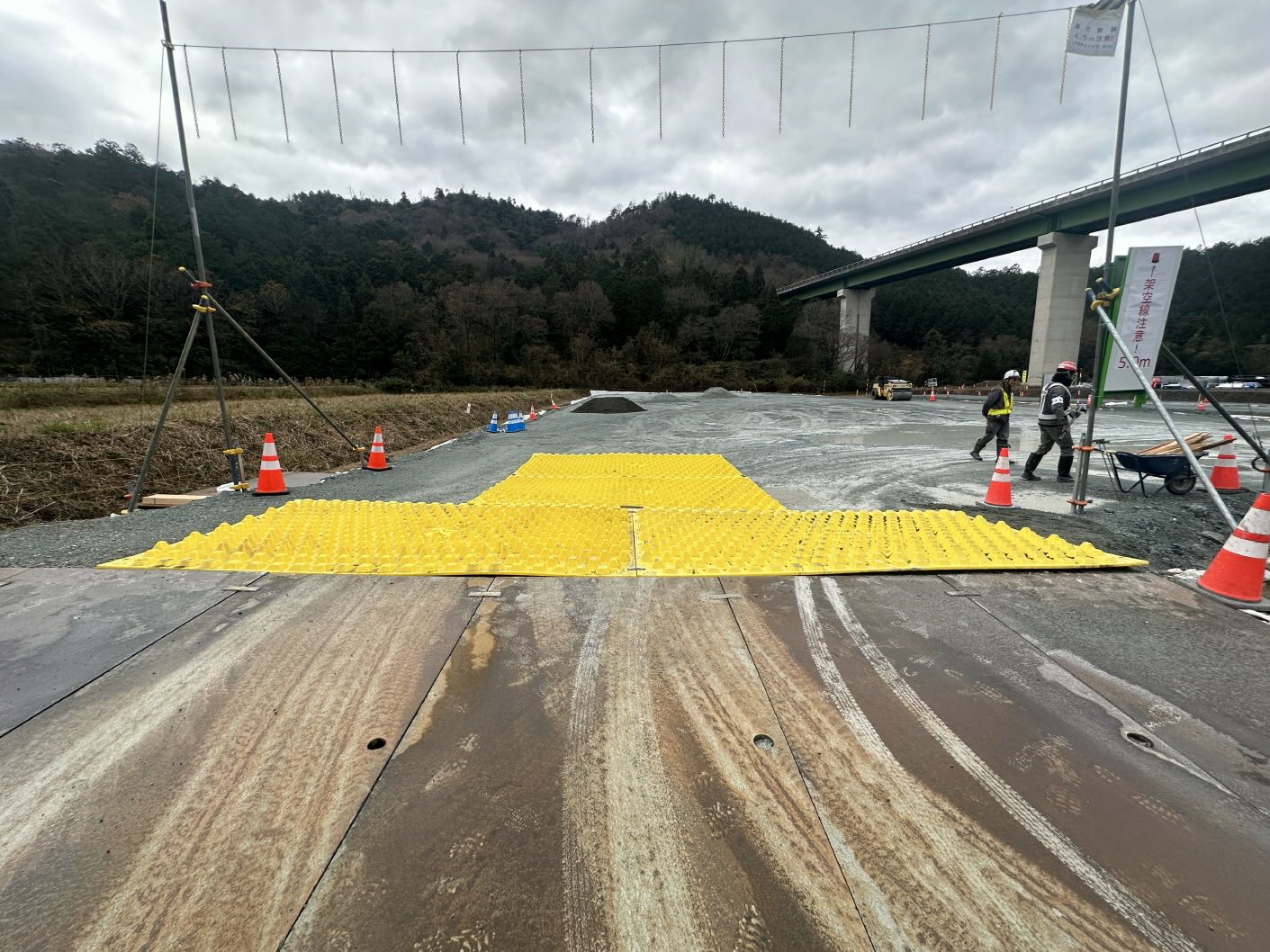
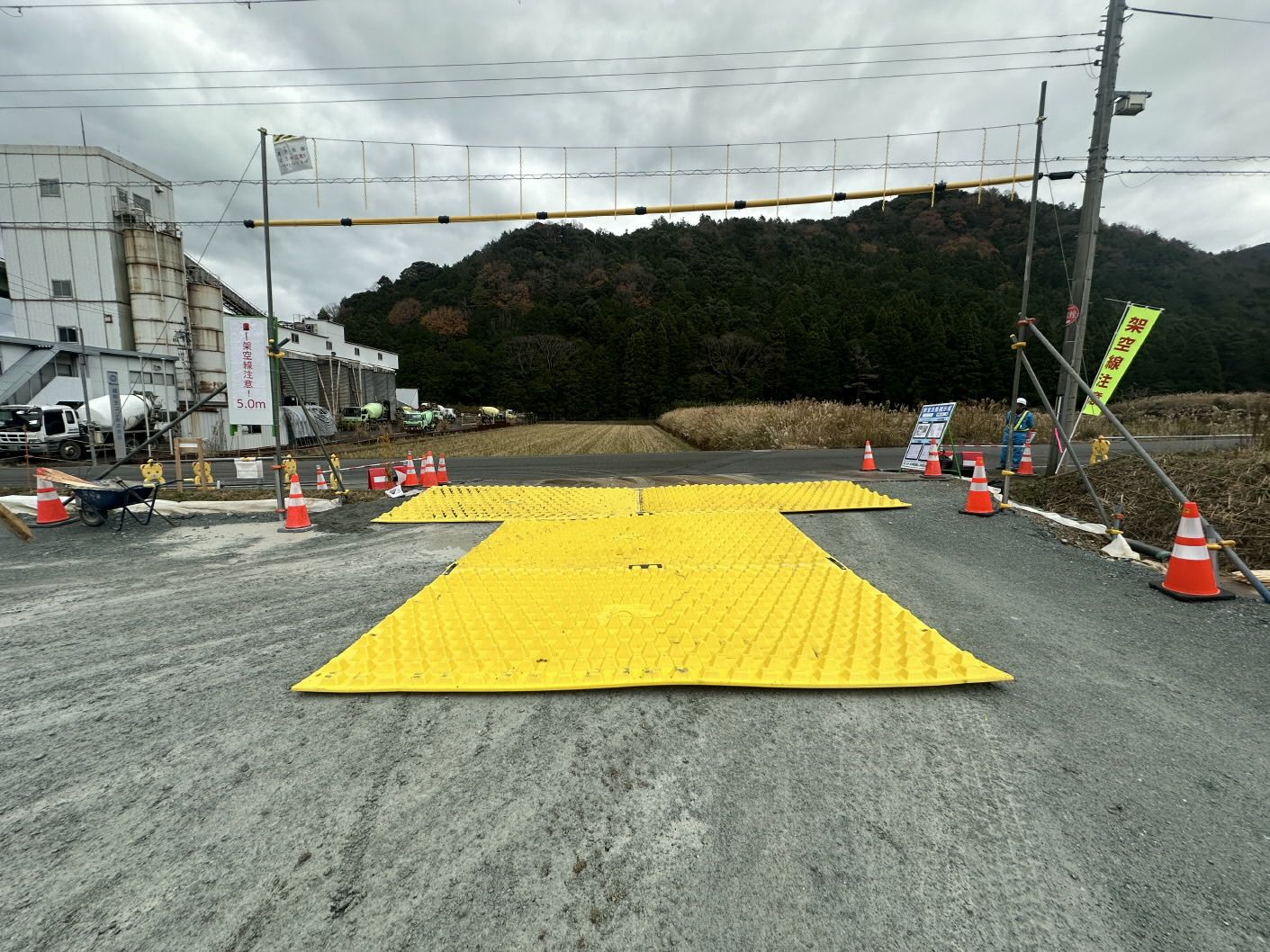
- Manual installation – no crane required, ideal for narrow approaches
- Flexible deployment even in space-limited or temporary access zones
- Rapid relocation or reuse as site conditions evolve
- Proven reliability, with prior use by NASA, Toyota, Tesla, SpaceX, and Meta
These features aligned perfectly with the constraints of the Nojiri site, where quick installation and minimal equipment interference were essential during early-stage operations.
Installation Methods: Flexible Anchoring Adapted to Site Conditions
FODS mats were installed using two primary anchoring methods depending on surface conditions:
- On gravel surfaces: secured with anchor pins (approx. 1 hour per section, 3–4 workers)
- On steel plate surfaces: bolts welded to the steel plates, fastened with nuts (approx. 3–4 hours per section, 3–4 workers + 1 welder)
Because FODS required no cranes or hydraulic machinery, they could be installed manually even in tight spaces or near the temporary bridge deck where conventional steel wash systems would have been impractical.
Site supervisors quickly recognized FODS as an officially approved alternative, consistent with national road authority (NEXCO) standards for maintaining clean access routes.

Measurable Outcomes: Reduced Road Cleaning & Effective Trackout Control
FODS mats effectively removed large clumps of soil trapped in tire treads, preventing mud and debris from being carried onto adjacent public roads.
While some fine particles naturally remained, the frequency of road washdowns and manual cleanings dropped significantly—especially during nighttime lane closures and work-zone traffic regulations near the Nojiri Tunnel (野尻トンネル付近工事規制).
This measurable reduction in contamination and cleaning labor allowed the project team to:
- Maintain cleaner worksite-to-road transitions
- Reduce manpower and water usage for road washing
- Improve public perception and minimize resident complaints
Overall, FODS contributed to labor efficiency, environmental stewardship, and community satisfaction—core objectives of NEXCO West’s infrastructure improvement program.
Future Outlook: A New Standard for Temporary Infrastructure in Japan
This project demonstrated the adaptability and sustainability of FODS Trackout Control Mats in real-world Japanese construction conditions.
Particularly for sites where space is constrained, equipment access is limited, or permanent infrastructure is pending, FODS provide a rapidly deployable, reusable, and crane-free solution.
Beyond their technical performance, the mats also reduce cleaning frequency and prevent municipal complaints—acting as a risk mitigation and public-relations tool.
As Japan continues to modernize expressway corridors under NEXCO’s long-term four-laning and disaster-resilience initiatives, FODS Trackout Control Mats are increasingly recognized as an innovative dry-type tire cleaning device (乾式タイヤ洗浄装置) that:
- Eliminates the need for large-scale machinery during early site setup
- Enables safe, clean, and efficient work even in narrow or remote access zones
- Supports national goals of reducing environmental impact and community disturbance
The Maizuru-Wakasa Nojiri Tunnel Project stands as a model example—demonstrating how modern, modular, and sustainable site management solutions like FODS can integrate seamlessly into Japan’s evolving infrastructure landscape.