
Ohio Stabilized Construction Entrances and Trackout Control
Ohio EPA Construction General Permit OHC000006 and Rainwater and Land Development Manual Compliance
Ohio's waters range from the Lake Erie shoreline in the north to the Ohio River along its southern border, taking in the Cuyahoga, Maumee, Scioto, and Great Miami rivers and sensitive systems such as Big Darby Creek and the Olentangy. These waters supply drinking water and support agriculture, industry, and recreation across the state. With construction active in the Columbus, Cleveland, and Cincinnati metros and throughout Ohio's growing data center and industrial corridors, keeping sediment on the job site and off public roads is a core compliance duty, and a stabilized construction entrance is one of the first controls installed and inspected.
Ohio EPA Construction Stormwater General Permit
The Ohio EPA Division of Surface Water administers the state's delegated National Pollutant Discharge Elimination System (NPDES) program and issues the general permit that covers construction stormwater. Coverage is required for any construction that disturbs one acre or more, or that is part of a larger common plan of development of that size.
The current permit is OHC000006, which took effect on April 23, 2023 and runs through April 22, 2028, replacing the previous permit, OHC000005. Operators obtain coverage by developing a Stormwater Pollution Prevention Plan, which Ohio commonly calls an SWP3, and filing a Notice of Intent through the Ohio EPA eBusiness Center. The SWP3 names the person responsible for pollution control, includes a site map, and identifies the best management practices (BMPs) that will control sediment and runoff. Timing depends on location: the Notice of Intent is submitted at least 21 days before construction in most of the state, and at least 45 days ahead, with the SWP3 attached, for sites within the Big Darby Creek watershed and portions of the Olentangy River watershed, which carry additional watershed-specific requirements in the permit appendices.
The Construction Entrance in the Rainwater and Land Development Manual
Ohio's technical guidance is the Rainwater and Land Development Manual, and its construction entrance practice appears in Chapter 7. The manual describes a traditional entrance as a stabilized pad of stone underlain with a geotextile. It recommends a stone depth of at least six inches, increased to ten inches for heavy-duty loads, with a pad at least fourteen feet wide and seventy feet long, or thirty feet for individual lots, and it calls for diverting runoff to a sediment basin or containing it on site.
The weakness of the stone pad is maintenance. As traffic compacts the stone and sediment fills the spaces between the rocks, the surface smooths out and stops cleaning tires effectively, so the pad must be top dressed with fresh stone or washed and reworked. When the stone pad alone cannot control trackout, crews add a wheel wash, which sprays tires with pressurized water and requires containment for the sediment-laden runoff. As the manual and field practice both note, using water in cold weather can create icy conditions on the pavement, a real concern through an Ohio winter.
FODS as a Compliant Construction Entrance in Ohio
Ohio does not maintain a brand-name product approval list for construction exits. Ohio EPA evaluates a construction entrance on whether it performs the function the manual describes, cleaning tires and holding sediment before vehicles reach the road, and the operator specifies the chosen practice in the project SWP3. FODS Trackout Control Mats can be named directly in the SWP3 as the site's stabilized construction entrance, satisfying the same purpose as a stone pad while removing the loose rock and the heavy maintenance cycle the traditional options depend on. FODS can serve as a standalone entrance or be combined with other BMPs, depending on site conditions and permit requirements.
FODS Reusable Construction Entrance Mats
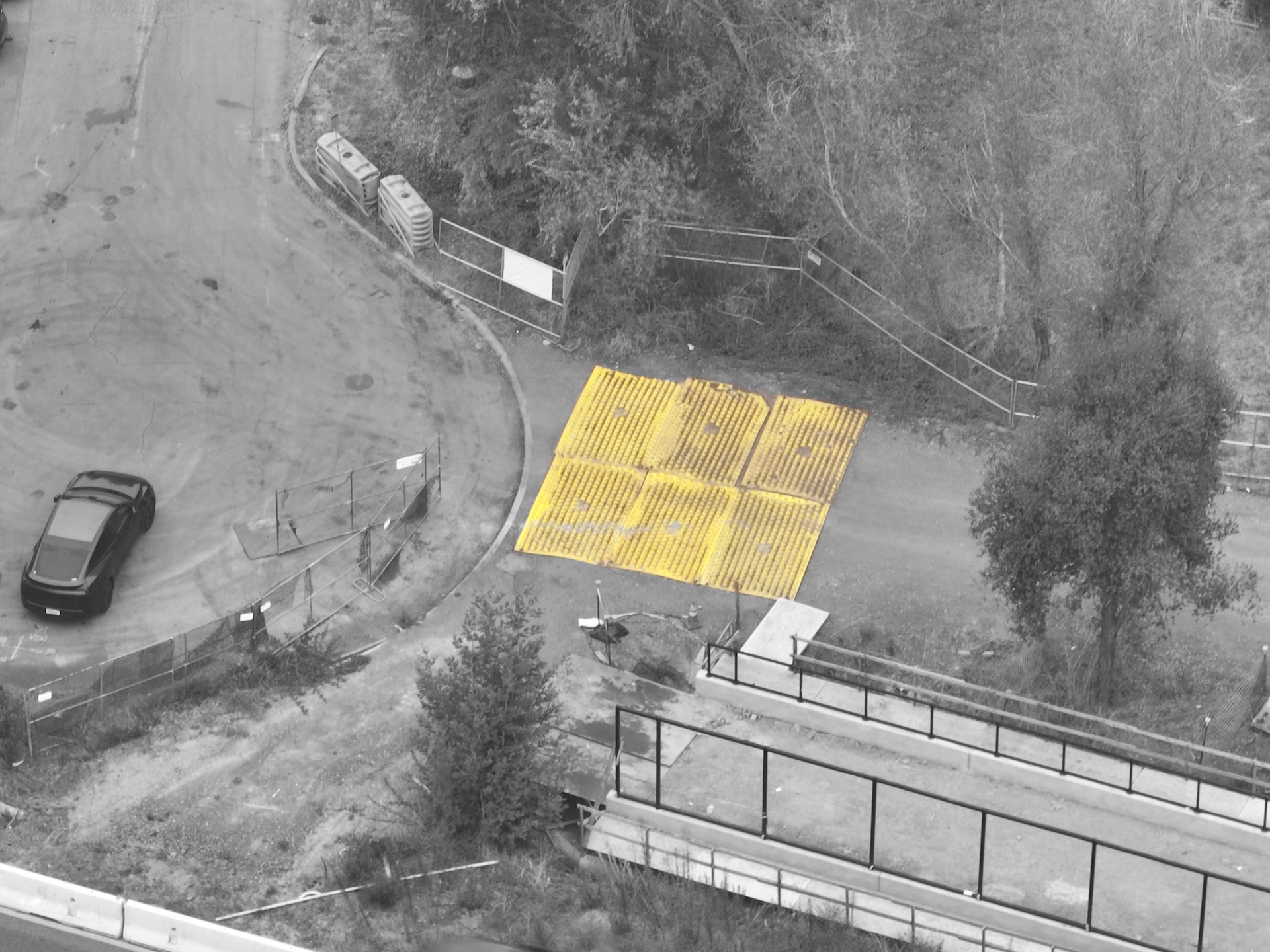
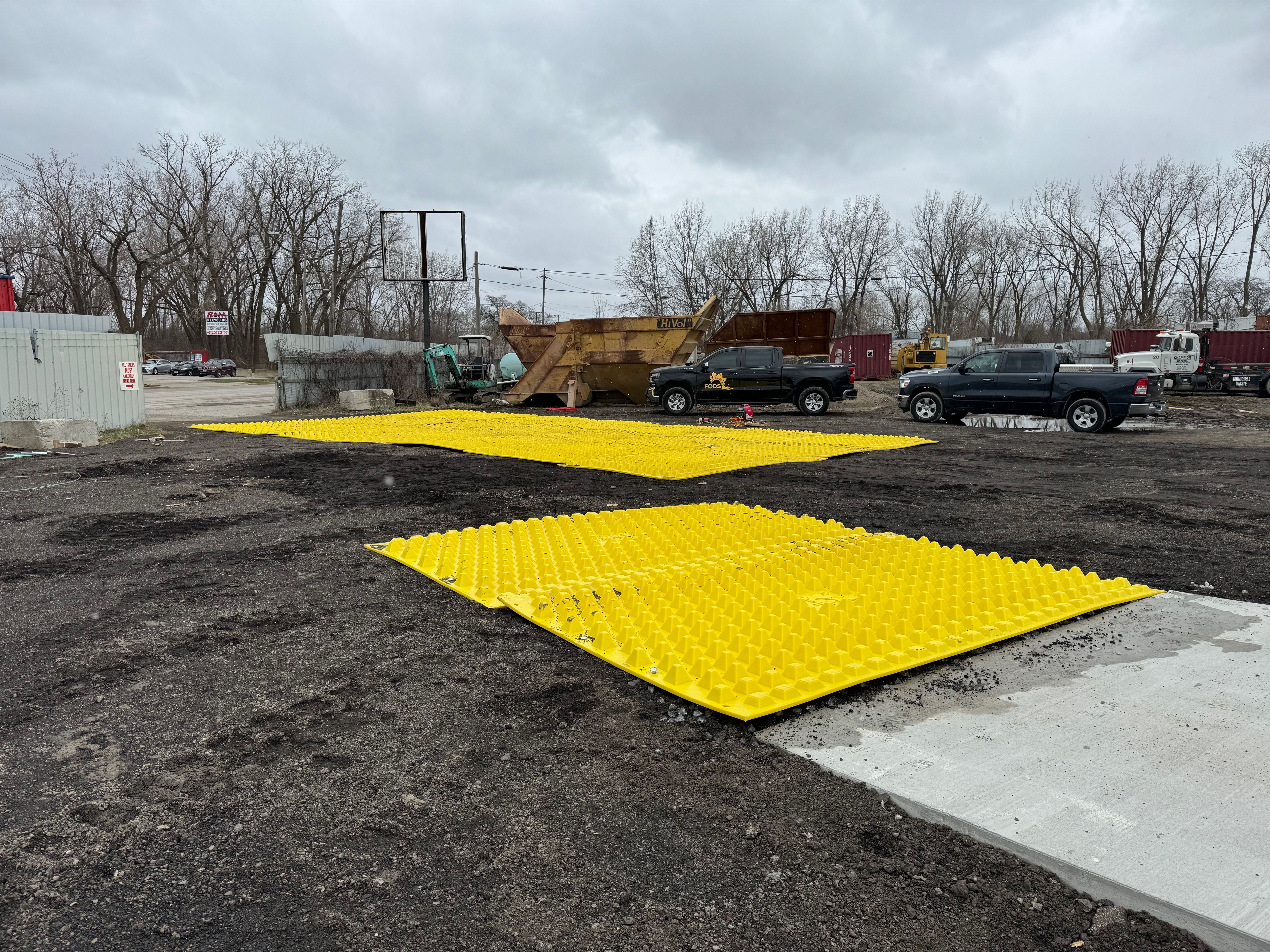
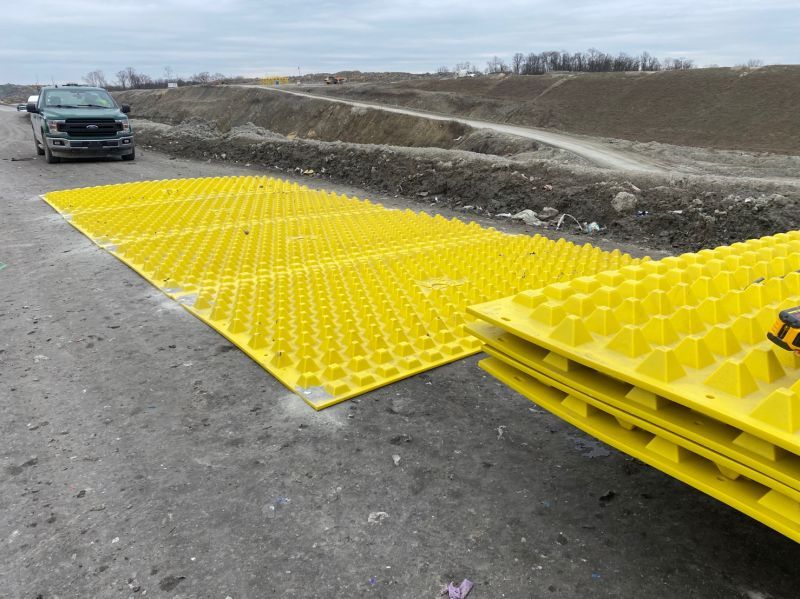
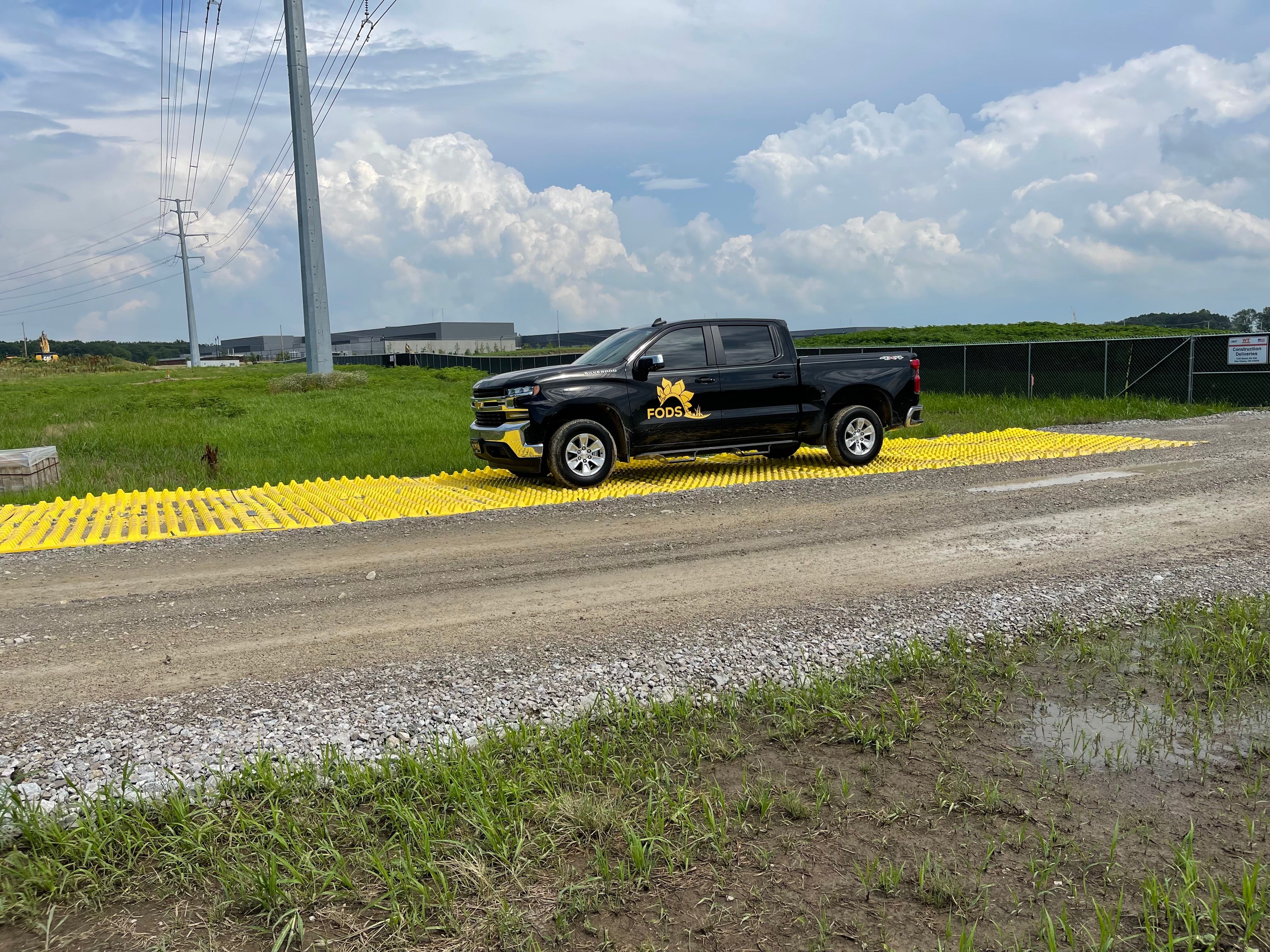
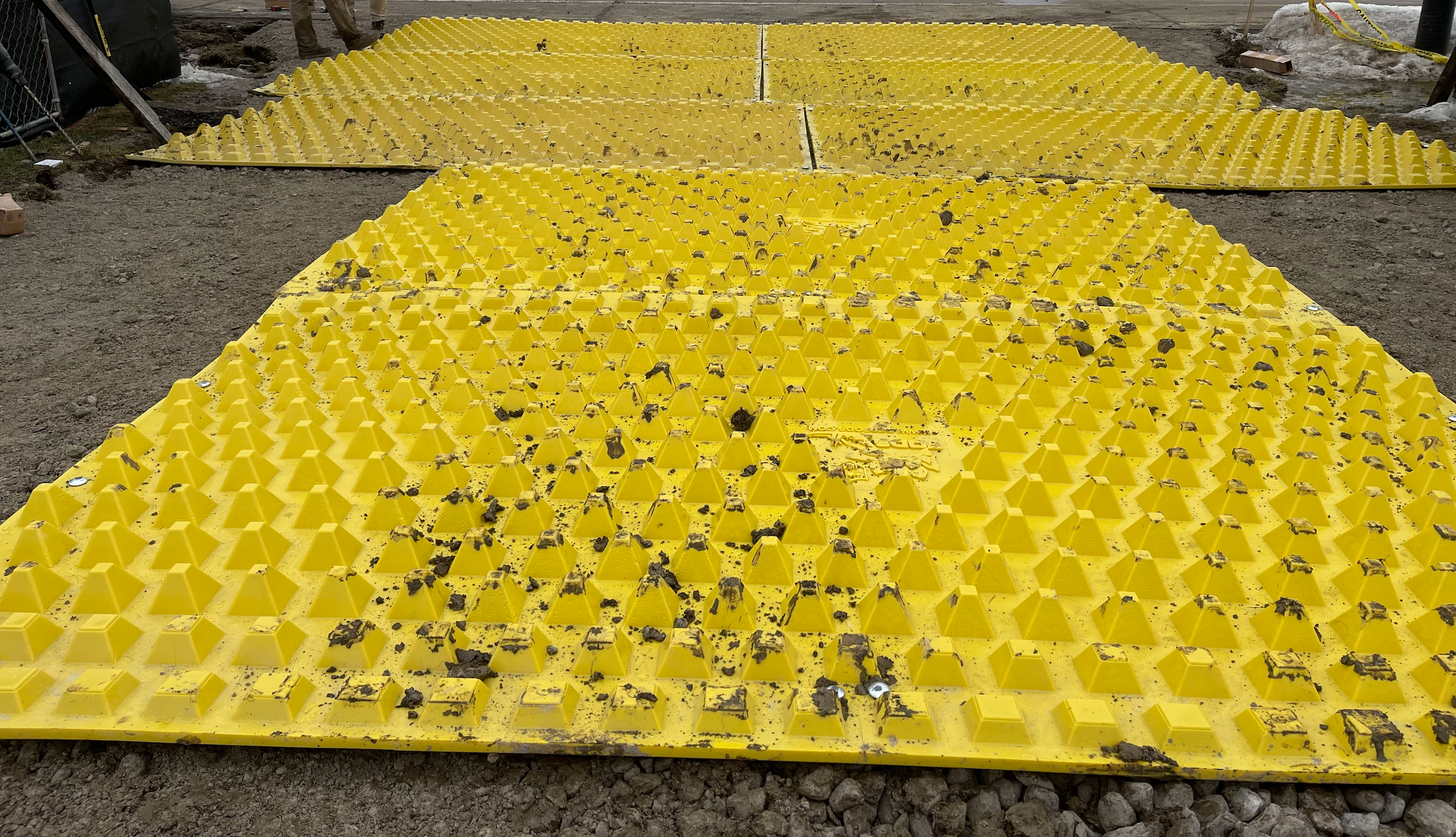
The FODS Trackout Control System is a modular set of twelve foot by seven foot high-density composite mats that link together with connecting hardware and anchor to the ground. The surface is molded into pyramids that deform vehicle tires and pull sediment from the tread, simulating the rough surface of a stone pad without compacting or degrading over time. Tires contact only the tips of the pyramids, so the voids between them capture the debris, and when sediment builds up to the tops of the pyramids, roughly two and a half to three inches, the mats are cleaned with a FODS shovel or a sweeper to restore performance.
The mats install over dirt, concrete, or asphalt without excavation or heavy equipment, and a configuration can be deployed or relocated in short order. A standard 1x5T layout is arranged in a T shape for a wide turning radius and provides about thirty-five feet of travel surface as an alternative to a longer stone entrance, with most entrances using four to eight mats depending on traffic. Because FODS uses no water, it is safe to use in cold weather without creating icy roads, and because it uses no rock, there is no loose aggregate to be tracked onto active roadways or thrown from dual tires. The mats are reusable across phases and projects, with a service life of ten years or more, which shifts the cost of a construction entrance from a recurring expense to a one-time investment.
Ohio Projects Using FODS
FODS has proven out across a range of demanding Ohio sites. The mats have served as the stabilized construction entrance on large data center construction in Ohio, on landfill operations including the Creekside Landfill in the Toledo area and the Amsterdam Interstate Landfill, and on healthcare construction such as a hospital project in Mentor handled by Independence Excavating. On landfill and industrial sites in particular, where trucks cycle constantly and access points move as work advances, a reusable entrance that can be relocated quickly and cleaned during routine sweeping keeps sites compliant without the repeated cost of hauling and replacing rock.
Risks of Vehicle Trackout on Roadways
Safety is a primary concern wherever construction traffic meets a public road. Stone exits deposit rock and debris onto pavement, creating hazards for drivers and workers, and loose aggregate can lodge between dual tires and be thrown at speed. Wheel washes add a cold-weather risk, since dripping vehicles can build ice on Ohio roadways. FODS uses a rockless, water-free technique to clean tires and does not carry the same risk of injury or liability as aggregate entrances. The mats are durable and reusable across many projects, which reduces the environmental impact tied to aggregate production, hauling, and disposal. On sites that drain to Lake Erie, the Ohio River, or protected systems like Big Darby Creek, keeping rock and sediment off the road also helps keep it out of the water.
Additional Resources
Ohio EPA Construction Stormwater General Permit OHC000006
Ohio EPA Division of Surface Water Permitting
Ohio EPA Rainwater and Land Development Manual
Rainwater and Land Development Manual - Chapter 7 (Construction Entrance)