
North Dakota Stabilized Construction Access and Trackout Control
NDPDES Construction Stormwater and NDDOT Compliance
North Dakota spreads across the northern Great Plains, from the Red River of the North that forms the Minnesota border and runs through Fargo and Grand Forks, to the Missouri River, Lake Sakakawea, and the badlands of Theodore Roosevelt National Park in the west. The state's economy leans on two things that put a premium on clean water and clean roads: agriculture, where nearly every county grows wheat and North Dakota leads the nation in canola, and energy, where construction across the Bakken and the Williston Basin builds well pads, access roads, and pipelines at a steady pace. On all of it, keeping sediment on the job site and off public roads is a core compliance duty, and a stabilized construction access is one of the first controls installed and inspected.
NDDEQ Construction Stormwater Permit
The North Dakota Department of Environmental Quality (NDDEQ) administers the federal stormwater program through the North Dakota Pollutant Discharge Elimination System (NDPDES). Coverage is required before construction disturbs one acre or more, or a smaller area that is part of a larger common plan of development that will ultimately disturb an acre or more.
The current construction stormwater general permit is NDR11-0000, which took effect on April 1, 2025 and replaced the previous permit, NDR10-0000. Operators obtain coverage by submitting a Notice of Intent to NDDEQ and developing a Stormwater Pollution Prevention Plan (SWPPP) that is kept on site and available for review. The SWPPP identifies the potential sources of sediment and pollution on the site and the best management practices (BMPs) that will control them, and it names a knowledgeable person responsible for installing, inspecting, and maintaining those controls. Common SWPPP measures include silt fence, soil retention blankets, seeding, and stabilized construction entrances.

The Aggregate Construction Access and Its Limits
The North Dakota Department of Transportation (NDDOT) sets the standard for construction entrances in its Erosion and Sediment Control Manual, which describes an aggregate stabilized construction exit. The design is a tracking pad of large aggregate, typically fifty to one hundred feet long, sized to give the largest vehicles enough tire rotations before they reach the road, and laid over a geotextile fabric that keeps the stone from sinking into the soil. The aggregate is coarse enough to create a rough surface and to keep stones from lodging between dual tires.
The weakness of the aggregate pad is maintenance. As traffic compacts the rock and sediment saturates the voids, the pad loses its roughness and must be top dressed with fresh stone, and it needs inspection on a schedule and after every rain event, which can leave excess mud on the pad. When an aggregate exit alone is not enough, crews add supplemental controls. Steel rumble or shaker plates shake debris loose and are often paired with an aggregate pad, but sediment fills the voids beneath them and heavy equipment is often needed to reposition or clean them. A wheel wash station sprays tires with pressurized water, but it needs power, a water source, and a sediment basin to catch the runoff. Each option carries a recurring cost and a maintenance cycle that a durable manufactured entrance can avoid, and each becomes harder to manage through a North Dakota winter.
FODS as a Compliant Construction Access in North Dakota
North Dakota does not maintain a brand-name product approval list for construction exits. NDDEQ and NDDOT evaluate a construction access on whether it performs the required function, removing sediment from tires before vehicles reach the road, and the operator specifies the chosen practice in the project SWPPP. FODS Trackout Control Mats can be named directly in the SWPPP as the site's stabilized construction access, satisfying the same purpose as an aggregate pad while removing the loose rock and the heavy maintenance the traditional options depend on.
FODS Trackout Control System
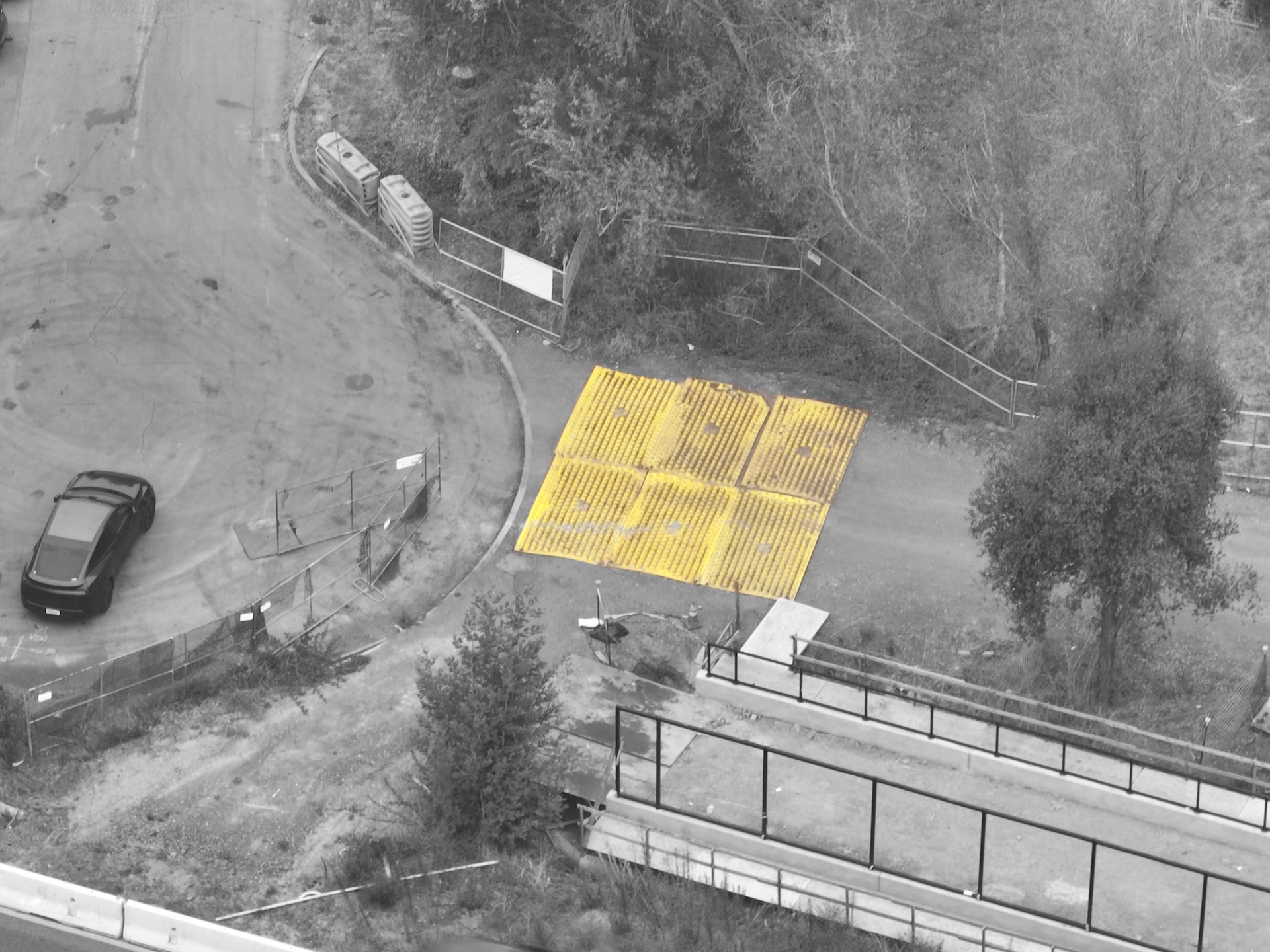
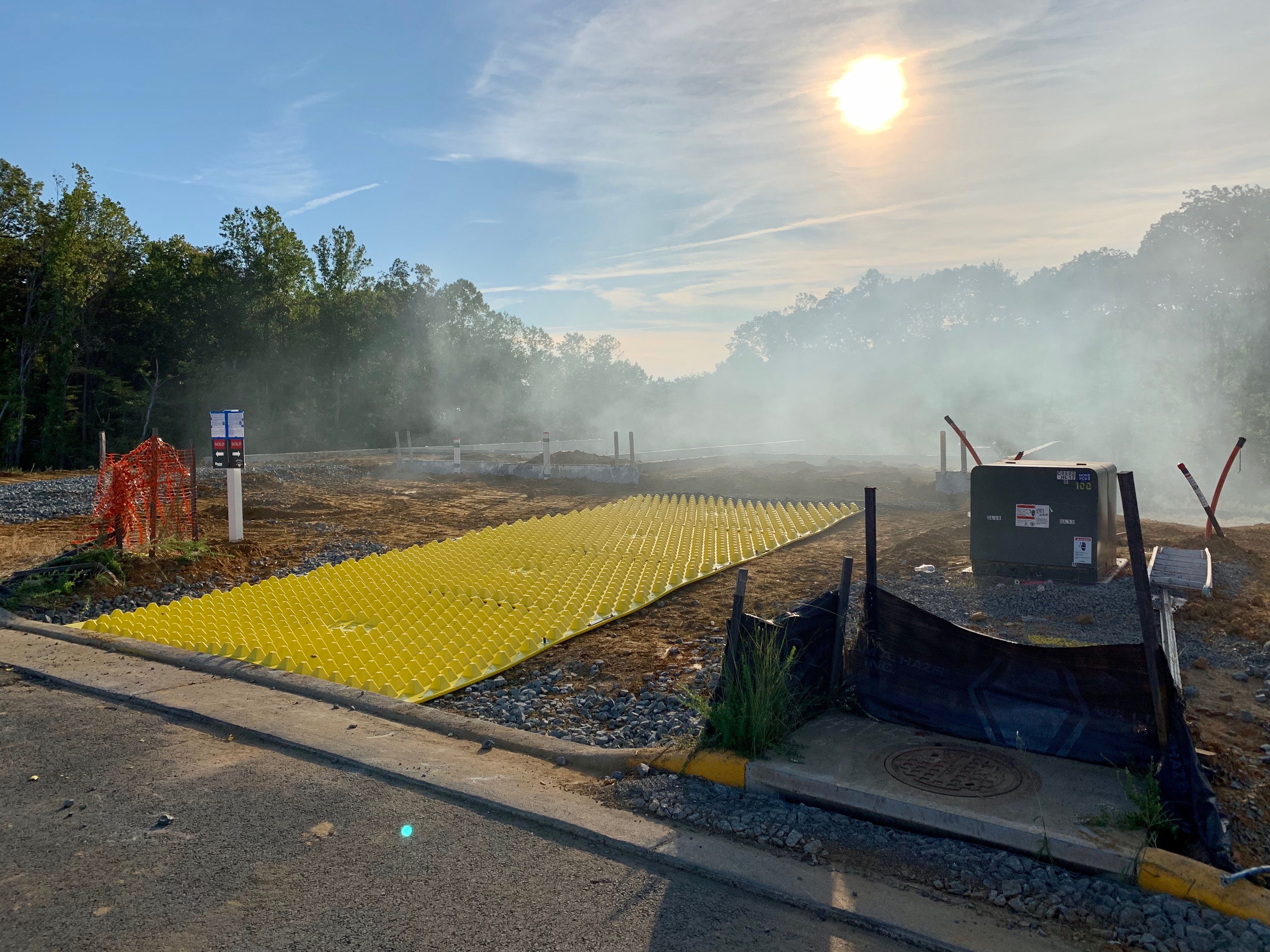
The FODS Trackout Control System is a reusable, manufactured construction access made of modular high-density polyethylene mats with a pyramid-shaped surface. As vehicles pass over the mats, the pyramids flex the tires in multiple directions to dislodge sediment, rock, and debris from the tread, and the voids between the pyramids capture the material. The three-inch pyramids hold up to two and a half inches of sediment, because tires contact only the tips, and the system does not degrade under heavy use or after rain events. When maintenance is needed, a pass with a street sweeper or a skid steer broom restores performance, and crews can fold that into the routine street sweeping the permit already calls for.
The mats install over dirt, concrete, or asphalt without excavation or heavy equipment, and a configuration can be deployed or relocated in under thirty minutes. A modular layout is commonly specified at roughly half the length of a stone pad while providing equal performance, and with a service life of more than ten years the same mats can be reused across phases and across projects. That portability is a strong fit for North Dakota's linear and phased work, from highway projects to Bakken well pads and access roads where entrances move often. Just as important in this climate, FODS is a water-free, all-weather system, so it keeps working through freeze-thaw cycles and hard winters that quickly degrade a rock pad or freeze a wheel wash.
Risks of Vehicle Trackout on Roadways
Safety is a primary concern wherever construction traffic meets a public road. Aggregate exits deposit rock and debris onto pavement, creating hazards for drivers and workers, and loose stone can lodge between dual tires. Wheel washes add a cold-weather risk, since dripping vehicles can build ice on North Dakota roadways. FODS uses a rockless, water-free technique to clean tires and does not carry the same risk of injury or liability as aggregate entrances. The mats are durable and reusable across many projects, which reduces the environmental impact tied to aggregate production, hauling, and disposal. On sites that drain to the Red River, the Missouri, or Lake Sakakawea, keeping rock and sediment off the road also helps keep it out of the water that North Dakota agriculture and communities depend on.
Additional Resources
North Dakota DEQ Stormwater Permits
NDPDES Construction Stormwater General Permit NDR11-0000
NDDOT Erosion and Sediment Control Manual (ESCM)