
New York Stabilized Construction Access and Trackout Control
SPDES Construction General Permit and Blue Book Compliance
New York holds an extraordinary range of waters, from the Atlantic shoreline of Long Island and the harbor around New York City to the Hudson River, the Finger Lakes, the Adirondack and Catskill headwaters, Niagara Falls, and the Great Lakes and St. Lawrence River along the northern border. These lakes, rivers, and reservoirs supply drinking water to more than nineteen million residents and support agriculture and recreation statewide. With construction underway from the five boroughs to the North Country, keeping sediment on the job site and off public roads is a core compliance duty, and a stabilized construction access is one of the first controls installed and inspected.
New York SPDES Construction General Permit
The Clean Water Act created the National Pollutant Discharge Elimination System (NPDES) to regulate discharges to surface waters, and New York is authorized to run that program itself through the State Pollutant Discharge Elimination System (SPDES). The New York State Department of Environmental Conservation (NYSDEC) administers SPDES and issues the general permit that covers construction stormwater.
Construction that disturbs one acre or more, or that is part of a larger common plan of development of that size, requires coverage under the SPDES General Permit for Stormwater Discharges from Construction Activity. The current permit is GP-0-25-001, which took effect on January 29, 2025 and runs through January 28, 2030, replacing the earlier GP-0-20-001. Operators obtain coverage by preparing a Stormwater Pollution Prevention Plan (SWPPP) and filing a Notice of Intent with NYSDEC. Projects within New York City carry an added step, since the permit requires a SWPPP acceptance or approval from the New York City Department of Environmental Protection before coverage is granted.
The SWPPP identifies the potential sources of sediment and pollution on the site and the best management practices (BMPs) that will control them, and every SWPPP must use practices consistent with the New York Standards and Specifications for Erosion and Sediment Control. Regular inspections confirm that the BMPs in the plan are installed and maintained.
Stabilized Construction Access in the Blue Book
The New York Standards and Specifications for Erosion and Sediment Control, known as the Blue Book, is the state's technical standard for erosion and sediment control, and its current edition dates to November 2016. Its Standard for Stabilized Construction Access governs construction entrances. A stabilized access is installed at every point where vehicles leave the site, with all other access blocked, so traffic cannot bypass the control and carry sediment onto public roads.
The Blue Book's traditional design is a stone pad. It calls for a stabilized pad of stone or reclaimed crushed concrete aggregate placed over a geotextile fabric, with a minimum depth of six inches, a width of twelve feet, and a length of fifty feet, widening near the road to give trucks room to turn. Some local jurisdictions or project specifications adjust these dimensions for single access points or small residential projects.
The Aggregate Entrance and Its Limits
The stone pad works by scraping sediment from tires, but the same traffic wears it out. Soil compacts on the surface and fills the voids, which reduces effectiveness and forces the crew to mix and fluff the aggregate or top dress it with fresh stone, often frequently in wet conditions and during the freeze-thaw cycles of a New York winter. When vehicles still track sediment onto the road, it must be removed immediately, and street sweeping is routine on high-traffic sites. Where a stone pad alone is not enough, a wheel wash is added, using pressurized water over a stabilized area that drains to a sediment basin. A wheel wash needs a water source, containment, and ongoing cleanout, and in a cold climate it introduces the risk of dripping vehicles building ice on the pavement.
FODS as a Compliant Construction Access in New York
New York does not maintain a brand-name product approval list for construction exits. NYSDEC evaluates a construction access on whether it performs the function the Blue Book describes, cleaning tires and trapping sediment before vehicles reach the road, and the operator specifies the chosen practice in the project SWPPP. Because the standard is performance based, FODS Trackout Control Mats can be named directly in the SWPPP as the site's stabilized construction access without a separate approval.
FODS satisfies the same purpose the Blue Book assigns to a stone pad, while removing the loose aggregate and the heavy maintenance cycle that the traditional options depend on. For inspectors working under GP-0-25-001, the result is a construction access that meets the intent of the Standard, holds up under repeated traffic and freeze-thaw conditions, and does not need to be rebuilt after every storm.
FODS Reusable Construction Entrance
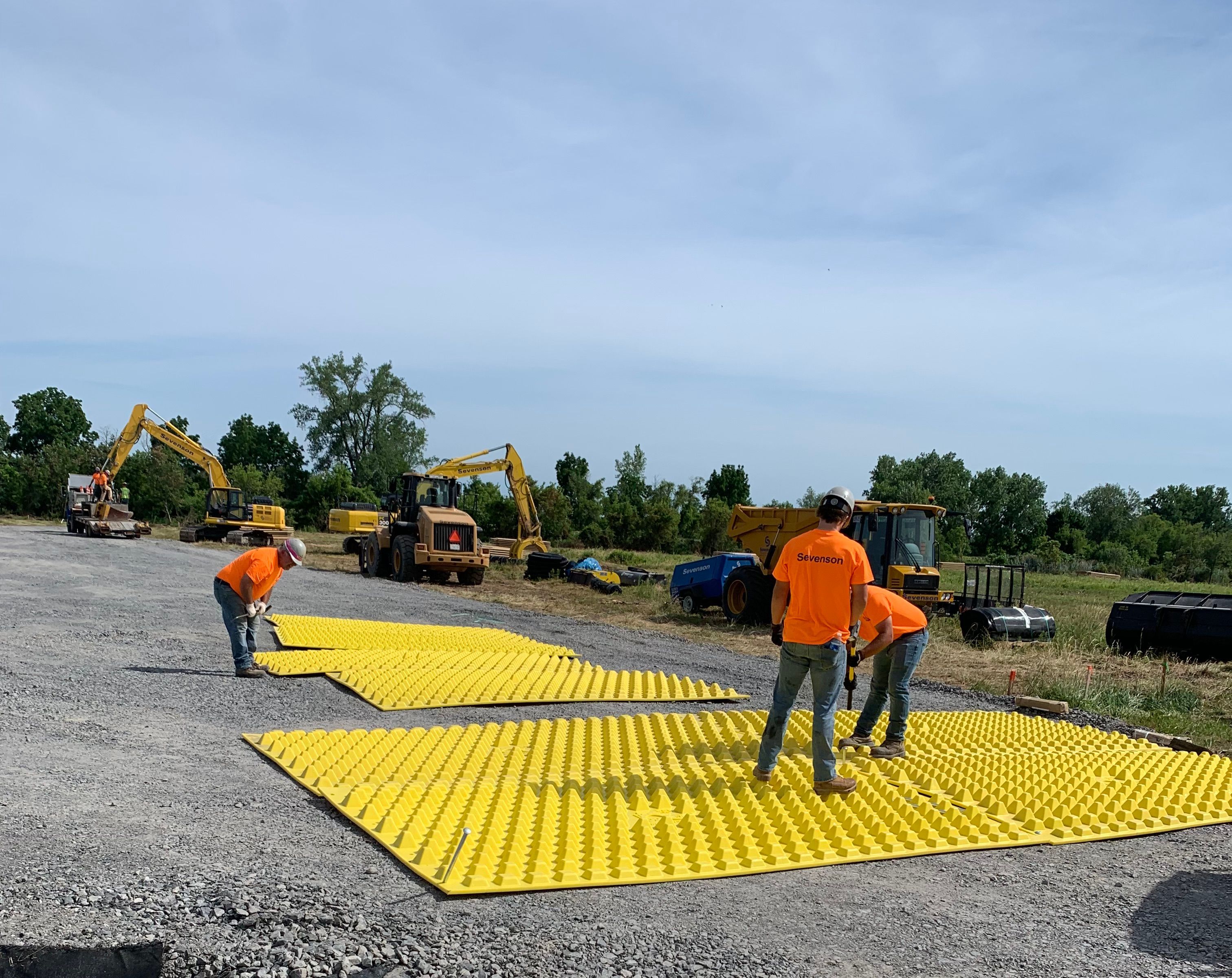
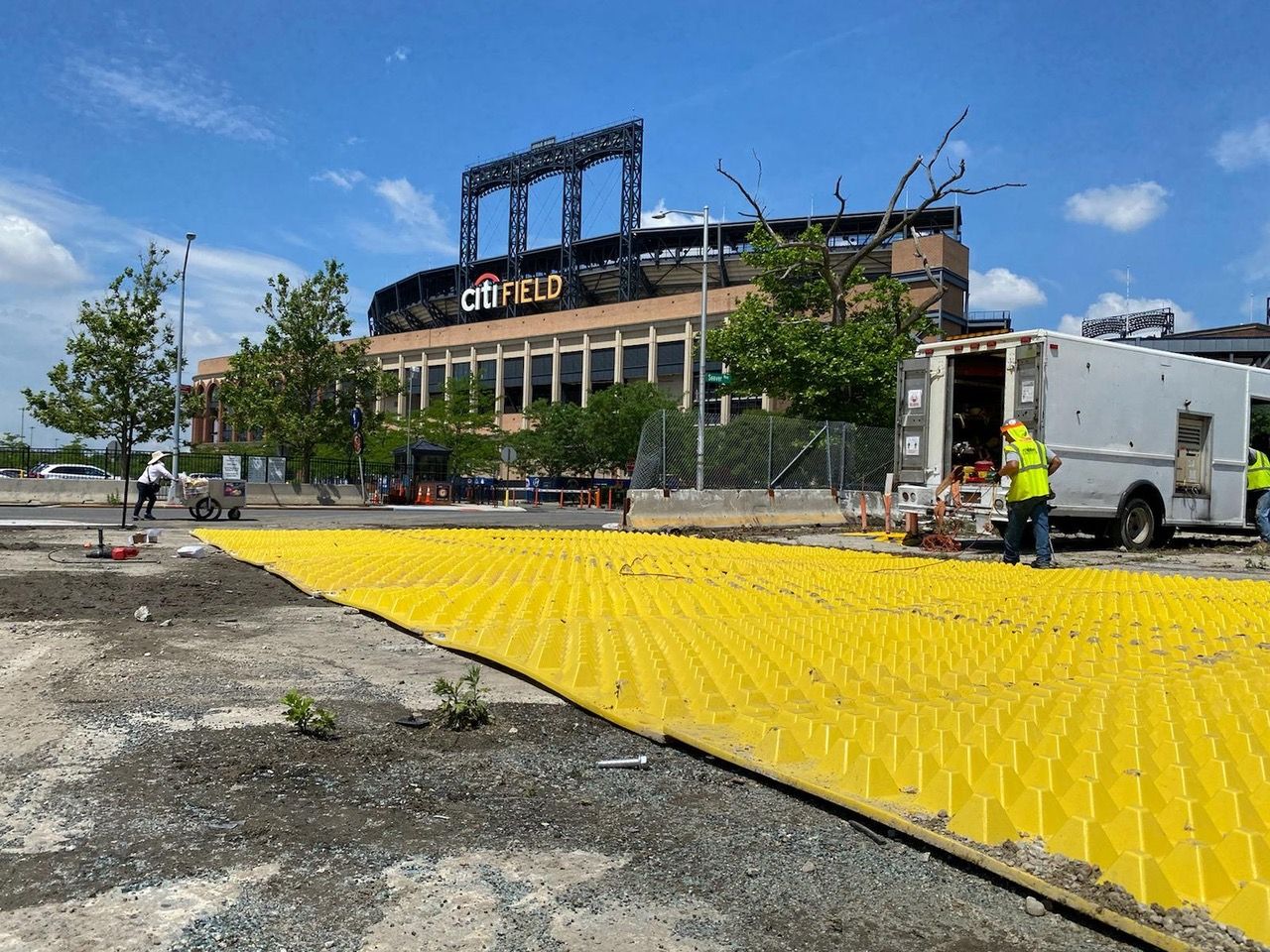
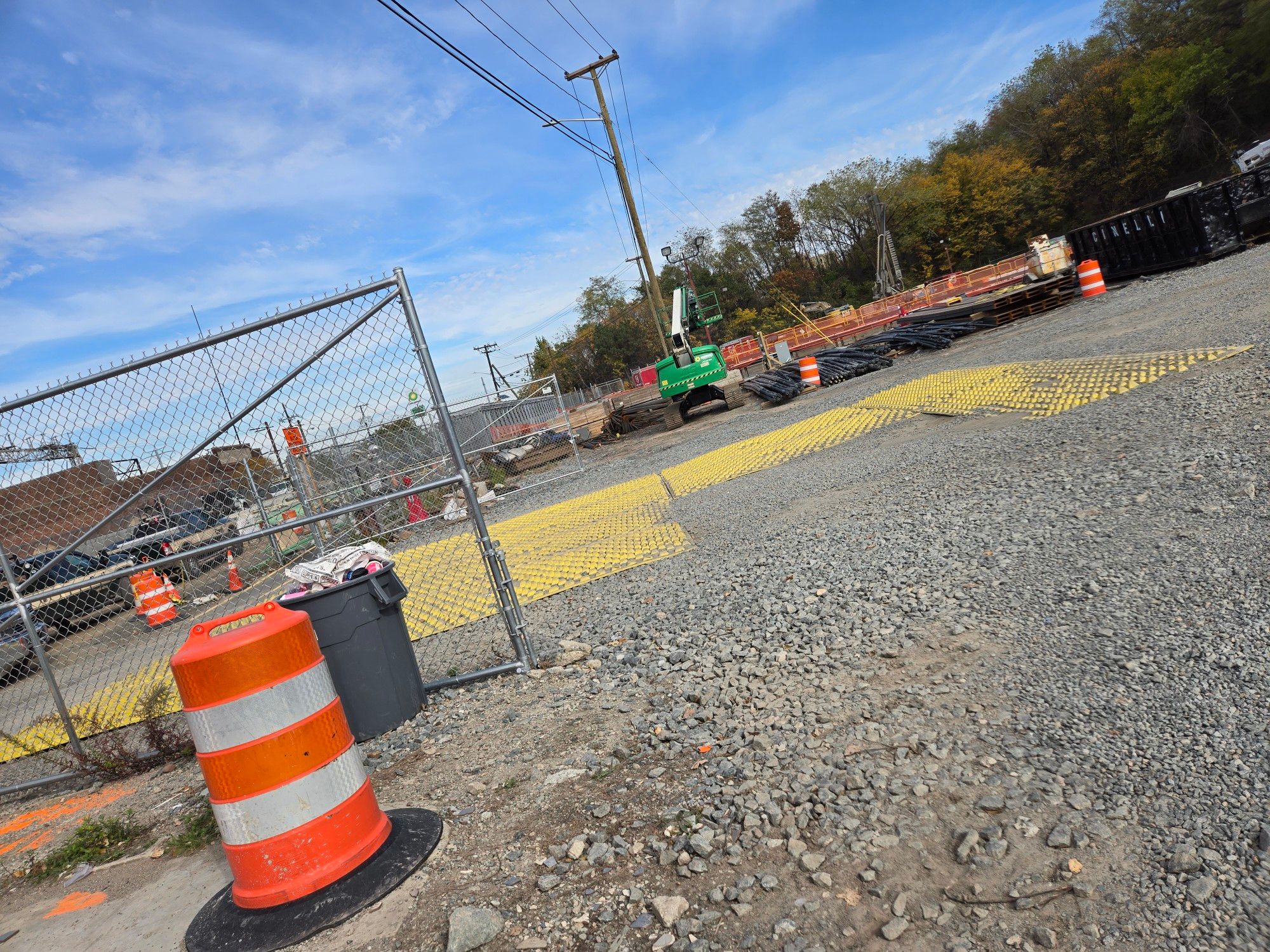
The FODS Trackout Control System is a reusable, manufactured construction access made of high-density composite mats molded into pyramid shapes. As vehicles pass over the mats, the pyramids flex the tires so dirt and debris fall out of the tread lugs and collect at the base of the pyramids, where they can be cleaned out after rain events or heavy traffic. The mats install over any substrate, including dirt, concrete, and asphalt, and introduce no loose aggregate to the site, so there is no rock to be carried onto active roadways.
The system has a low operating cost and is both durable and portable. Contractors reuse the same entrance across multiple projects and phases over a service life of more than ten years, and the mats can be relocated in under an hour as access points move through a project. By replacing multiple truckloads of rock with a single pallet of FODS, a contractor reduces hauling and its carbon footprint while saving time and money, and each mat is non-toxic and fully recyclable.
New York Project: Faztec Industries, Staten Island
FODS has proven out on a demanding New York site. Faztec Industries operates a construction debris transfer station and recycling plant on the west side of Staten Island, handling daily loads that exceed five hundred trucks. For years the north entrance relied on a diesel-powered wheel wash to clean tires, but standing water pooled near the access point and operating costs ran high. Working with Essco Truck and Equipment, Faztec replaced the wheel wash entirely with the FODS Trackout Control System on the concrete access road.
Because FODS is a passive mechanical system, it works without water or power, and the crew can move it when trucks need an alternate route through the lot. Faztec reported an immediate improvement in sediment containment and NPDES compliance. In the first month, the switch eliminated roughly 1,000 gallons of diesel and 300,000 gallons of water and saved more than $4,500. Over the mats' ten year service life, that single entrance is projected to save the plant more than $500,000 in operating costs.
Risks of Vehicle Trackout on Roadways
Safety is a primary concern wherever construction traffic meets a public road. Aggregate exits deposit rock and debris onto pavement, creating hazards for drivers and workers, and loose stone can lodge between dual tires. Wheel washes add a cold-weather risk, since dripping vehicles can build ice on New York roadways. FODS uses a rockless, water-free technique to clean tires and does not carry the same risk of injury or liability as aggregate entrances. The mats are durable and reusable across many projects, which reduces the environmental impact tied to aggregate production, hauling, and disposal. On sites that drain to the Hudson, the Finger Lakes, Long Island Sound, or the Great Lakes, keeping rock and sediment off the road also helps keep it out of the water.
Additional Resources
NYSDEC Stormwater Permit for Construction Activity
SPDES Construction General Permit GP-0-25-001
New York Standards and Specifications for Erosion and Sediment Control (Blue Book)
NYSDEC Construction Stormwater Toolbox
NYSDOT Highway Design Manual - Chapter 8
NYSDOT Standard Specifications