
Nebraska Stabilized Construction Exit BMP
Nebraska Stabilized Construction Exit Requirements
Nebraska construction projects require effective trackout control to meet NDEE stormwater regulations. Known for its open prairie, agricultural land, and landmarks like Chimney Rock and the Platte River, Nebraska’s landscape depends heavily on clean and well-managed water systems. With thousands of miles of rivers, streams, and drainage pathways across the state, preventing sediment from leaving construction sites is critical to protecting both infrastructure and natural resources.
Sites that disturb one acre or more must obtain NPDES permit coverage under General Permit No. NER210000, which includes implementing best management practices to prevent sediment from leaving the site. A stabilized construction exit is a critical part of maintaining compliance, reducing trackout, and protecting nearby roads and waterways.
Without proper control, sediment leaving the site can lead to failed inspections, required cleanup, and potential enforcement action.
Nebraska NPDES Stormwater Permit Requirements
The Nebraska Department of Environment and Energy administers the state’s NPDES stormwater permitting program. Construction stormwater permit coverage is required for sites that disturb one acre or more, or that are part of a larger common plan of development.
Most projects are covered under General NPDES Construction Permit No. NER210000. To obtain coverage, operators must submit a Notice of Intent and prepare a Stormwater Pollution Prevention Plan before construction begins. Nebraska guidance indicates that the NOI must be submitted at least seven days prior to land clearing and grading.
The SWPPP identifies potential sources of sediment and pollution and outlines the best management practices used to minimize impacts. It serves as the primary compliance document throughout the duration of the project.
Stabilized Construction Exit Requirements in Nebraska
A stabilized construction exit is required wherever construction vehicles leave the site and enter a public road. Its purpose is to remove mud, sediment, and debris from tires before that material is tracked off site.
Under Nebraska permit requirements, operators must prevent mud, dirt, rocks, and other debris from being tracked onto public roads. If sediment reaches the roadway, it must be removed immediately or by the end of the work day.
The traditional approach is a gravel tracking pad constructed with coarse aggregate over a geotextile fabric. The aggregate must be large enough to remove debris from tire treads while minimizing the risk of rocks becoming lodged in dual tires and being thrown into traffic. These entrances are typically designed to accommodate the largest vehicles on site and are built to provide multiple tire rotations across the surface.
Because aggregate entrances break down over time, they require regular inspection and maintenance. Rain, soft soils, and heavy traffic can reduce effectiveness, requiring additional stone and ongoing rework. Street sweeping is often needed to maintain compliance when sediment reaches the roadway.
FODS Approvals in Nebraska
FODS Trackout Control Mats are approved for use as a stabilized construction exit through the Nebraska Department of Transportation. This provides contractors with a clearly recognized, compliant alternative to traditional rock entrances on Nebraska projects.
The listing appears on NDOT’s Approved Products List under the Erosion Control category:

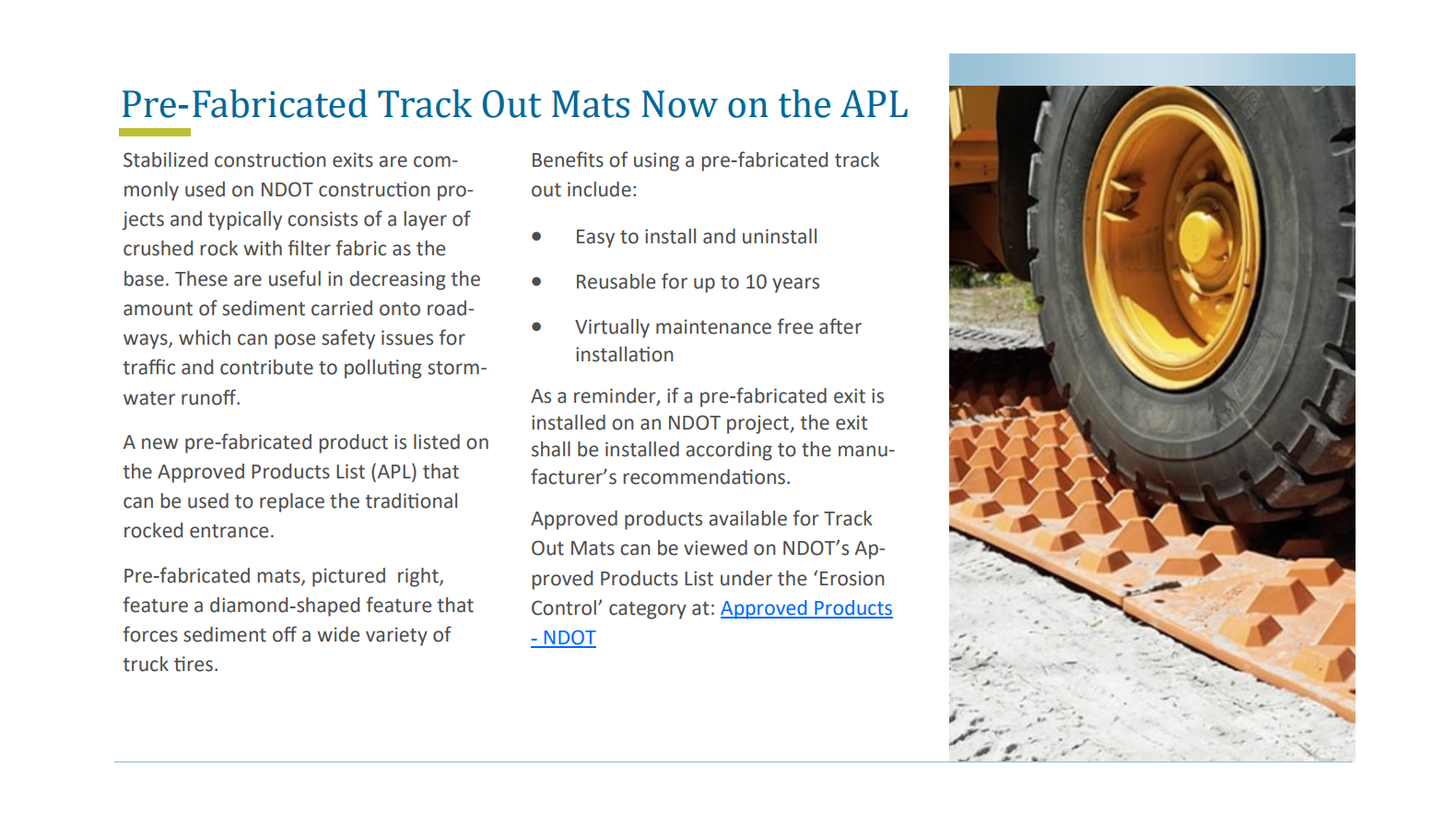
In its Fall 2025 Environmental Bulletin, NDOT formally announced that pre-fabricated trackout control mats have been added to the Approved Products List as an alternative to traditional aggregate construction entrances. FODS is listed by name under the erosion control category.
The bulletin explains that pre-fabricated mats feature a surface designed to force sediment off a wide variety of truck tires and confirms that installations must follow manufacturer recommendations.
NDOT’s Environmental Bulletin provides additional context on how pre-fabricated trackout mats are used in place of traditional rock entrances:
This approval allows FODS to be specified in place of traditional aggregate entrances on NDOT projects without requiring alternative BMP justification.
FODS Trackout Control Mats
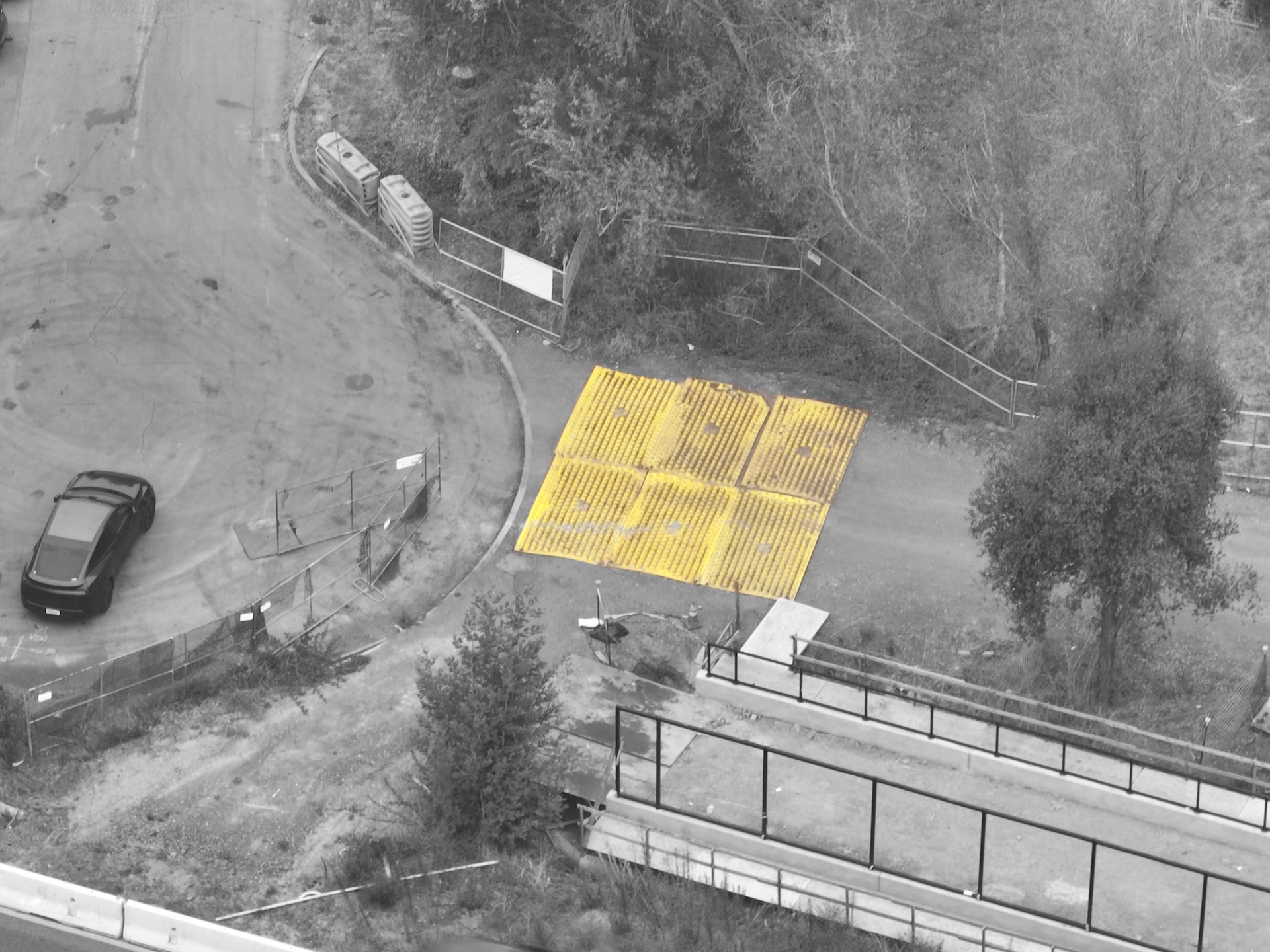
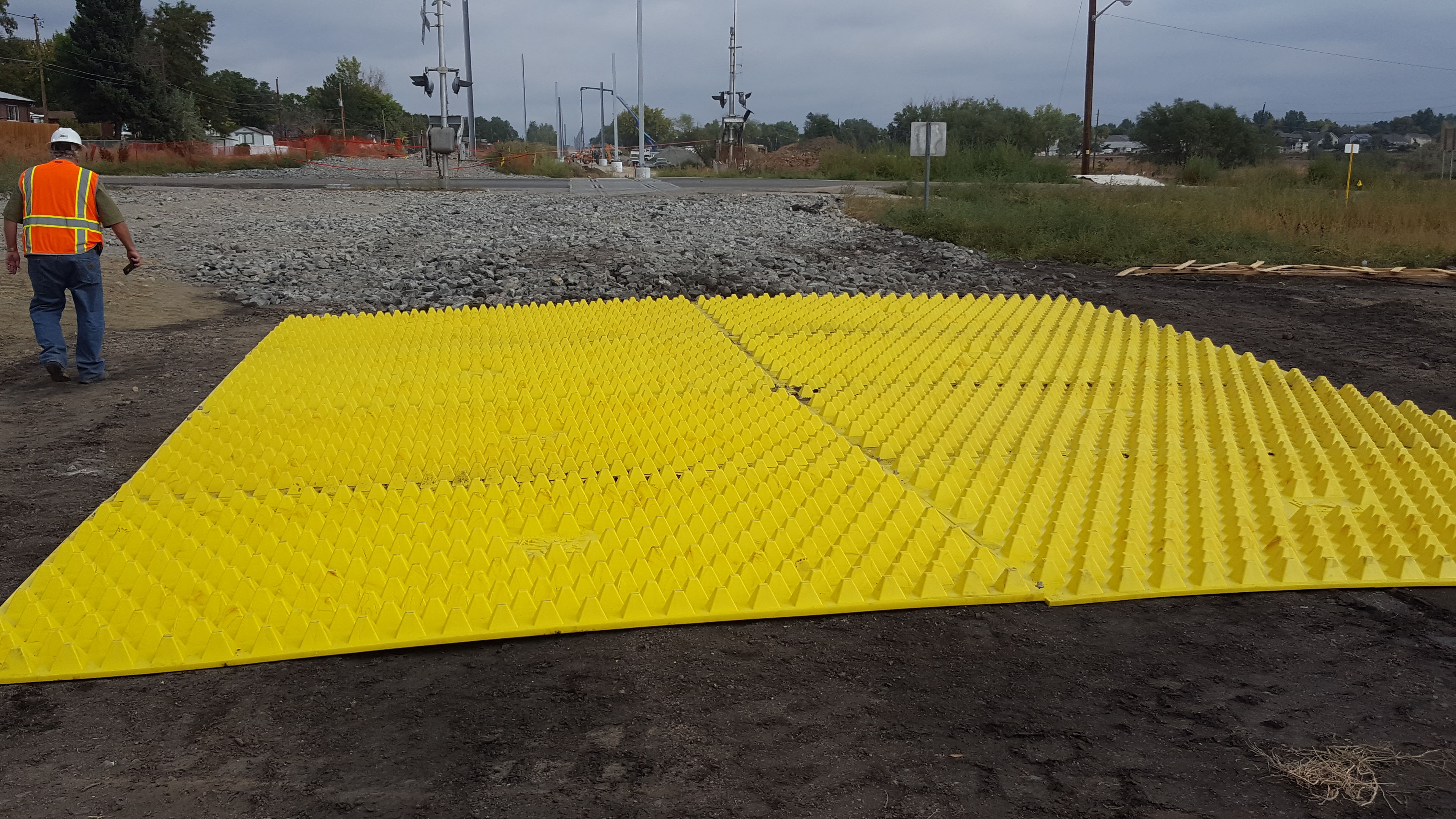
FODS replaces traditional aggregate construction exits with a reusable, rockless system designed to remove sediment before it reaches the road.
The system uses modular HDPE mats with raised pyramid surfaces that flex tire treads and release embedded mud and debris. This material falls between the pyramids and remains contained below the tire path, reducing re-tracking and improving overall performance.

Unlike aggregate entrances, FODS does not compact, wash out, or lose effectiveness over time. The mats can retain approximately 2.5 inches of sediment before maintenance is required and can be quickly cleaned using a sweeper or skid steer broom.
FODS systems are designed for long-term use, with a service life of over 10 years. The mats can be installed in under 30 minutes and relocated as needed, making them well suited for phased construction and infrastructure projects.
Because the system does not introduce loose rock, it eliminates the risk of aggregate being carried into active traffic lanes, improving safety on Nebraska roadways.
Nebraska Highway and Infrastructure Applications
Large, phased infrastructure projects across Nebraska require consistent and reliable trackout control as access points shift throughout construction.
Projects such as the I-80 corridor expansion between Pleasant Dale and NW 56th Street involve multiple phases of roadway and bridge work. On projects of this scale, construction entrances often need to be relocated as work progresses.
Reusable systems like FODS allow contractors to maintain compliance across each phase without rebuilding entrances, supporting both operational efficiency and environmental performance.
Risks of Vehicle Trackout on Nebraska Roadways
Vehicle trackout creates both compliance and safety risks. Mud and sediment tracked onto public roads can enter storm drains and waterways, while loose aggregate from traditional entrances can create hazards for passing vehicles.
Contractors relying on gravel entrances also face ongoing costs for material replacement, maintenance, and street cleaning. On high-speed corridors and active transportation projects, reducing loose debris and maintaining clean roadways is critical.
FODS provides a rockless approach to trackout control that reduces maintenance, improves safety, and supports long-term compliance across Nebraska construction projects.
For Nebraska contractors working under NPDES permit requirements, selecting a stabilized construction exit that reduces maintenance while maintaining compliance can have a measurable impact on both project efficiency and long-term cost.
Additional Resources
NDEE NPDES Permit for Storm Water Discharges from Construction Sites (Construction Storm Water)