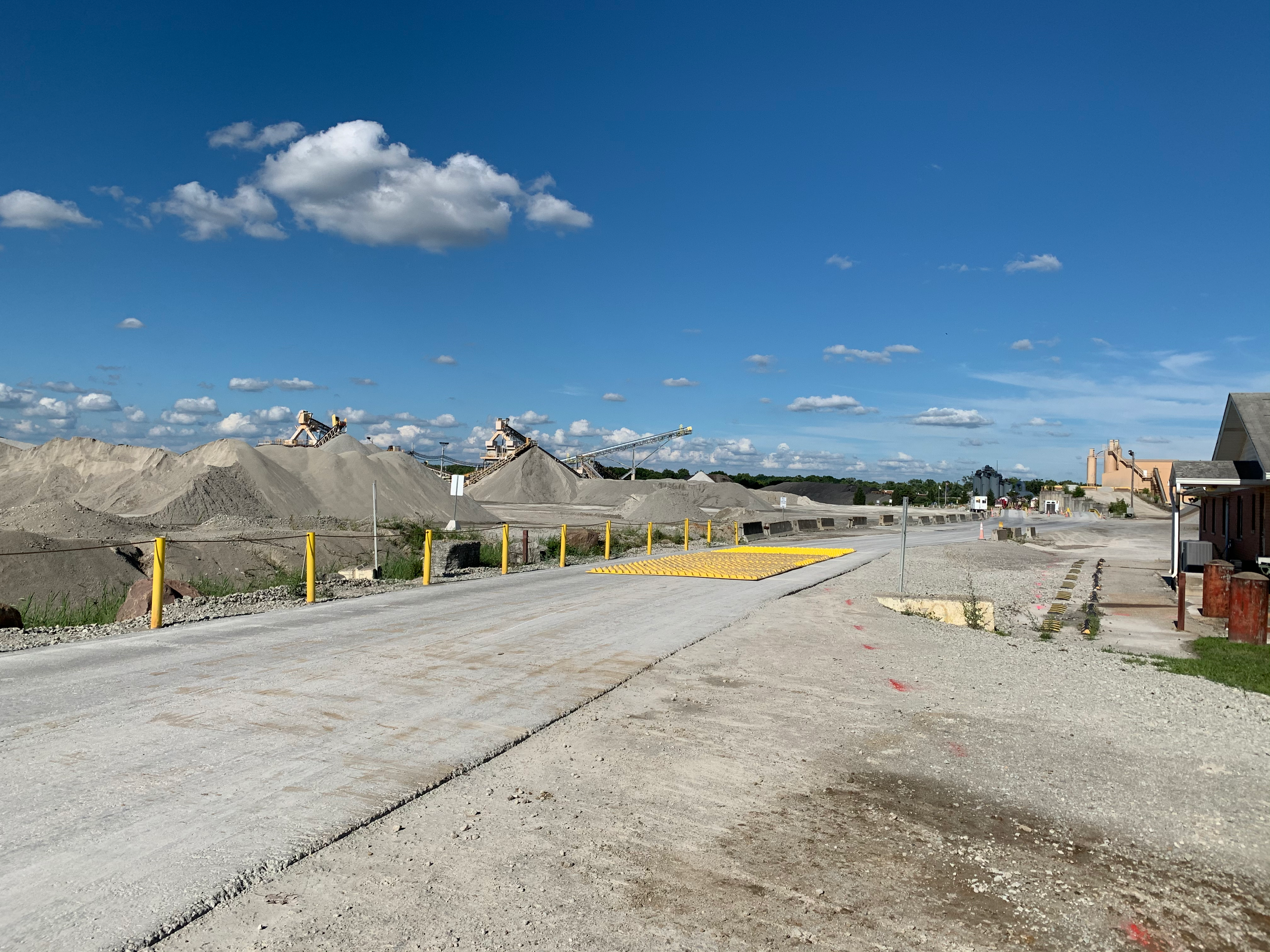

Indiana Stabilized Construction Site Access
Compliant BMP Solutions for IDEM and INDOT Requirements
Indiana construction projects that disturb one acre or more of land are required to obtain a stormwater permit and implement approved Best Management Practices (BMPs) to prevent sediment and pollutants from leaving the site. These requirements are administered by the Indiana Department of Environmental Management (IDEM) and apply to all projects covered under the Construction Stormwater General Permit (CSGP).
FODS Trackout Control Mats are a recognized BMP solution that meets IDEM and Indiana Department of Transportation (INDOT) requirements for stabilized construction site access. FODS provides a rockless, reusable alternative to traditional aggregate entrances and can be specified on any Indiana project requiring a compliant stabilized construction entrance.
Regulatory Update: HEA 1037 (Effective May 1, 2025)
Indiana House Enrolled Act 1037 became effective on May 1, 2025. The law prevents local governments from adopting stormwater requirements for construction sites that exceed IDEM's Construction Stormwater General Permit (CSGP) standards. Local ordinances that are more stringent than the CSGP are now void. Contractors operating under IDEM's CSGP have a consistent, statewide standard for construction stormwater compliance, without additional local requirements layered on top.
Indiana's Water Resources
The surface waters of Indiana form a defining feature of the state's geography and provide critical support for its economy, agriculture, and public health. The freshwater shores of Lake Michigan create Indiana's northwestern boundary, while the confluence of the Wabash and Ohio Rivers shapes the state's southern tip. Indiana is home to an estimated 24,000 miles of flowing waterways, including the Wabash River, which contains the longest stretch of free-flowing river east of the Mississippi River at approximately 411 miles.
These waterways supply drinking water, support agriculture and industry, and sustain aquatic ecosystems across the state. Because stormwater discharge from construction sites can introduce sediment and pollutants into these water sources, Indiana has established a permit and BMP framework to protect water quality.
Indiana NPDES Stormwater Permits
The Clean Water Act established the National Pollutant Discharge Elimination System (NPDES) permit program to regulate the discharge of sediment and pollutants into surface waters across the United States. In Indiana, the program is administered by the Office of Water Quality (OWQ) within IDEM.
Construction permit coverage is required for any project that disturbs one acre or more of land, including smaller sites that are part of a larger common plan of development or sale. Most construction projects obtain coverage through IDEM's Construction Stormwater General Permit (CSGP), permit number INRA00000.
Permit Coverage and the SWP3
To obtain coverage under the CSGP, project operators must submit a Notice of Intent (NOI) to IDEM before land-disturbing activities begin. The NOI describes the scope of the project and confirms that the operator will comply with permit conditions.
Operators must also develop a Stormwater Pollution Prevention Plan (SWP3), sometimes referred to as a Construction Plan. The SWP3 identifies the primary sources of pollution on the site and describes the BMPs that will be used to control them during both the construction phase and the post-construction phase. The plan must meet CSGP requirements and, where applicable, local MS4 requirements.
IDEM maintains the Indiana Storm Water Quality Manual to assist engineers and operators in preparing the SWP3 and selecting appropriate BMPs.
What is a Stabilized Construction Entrance?
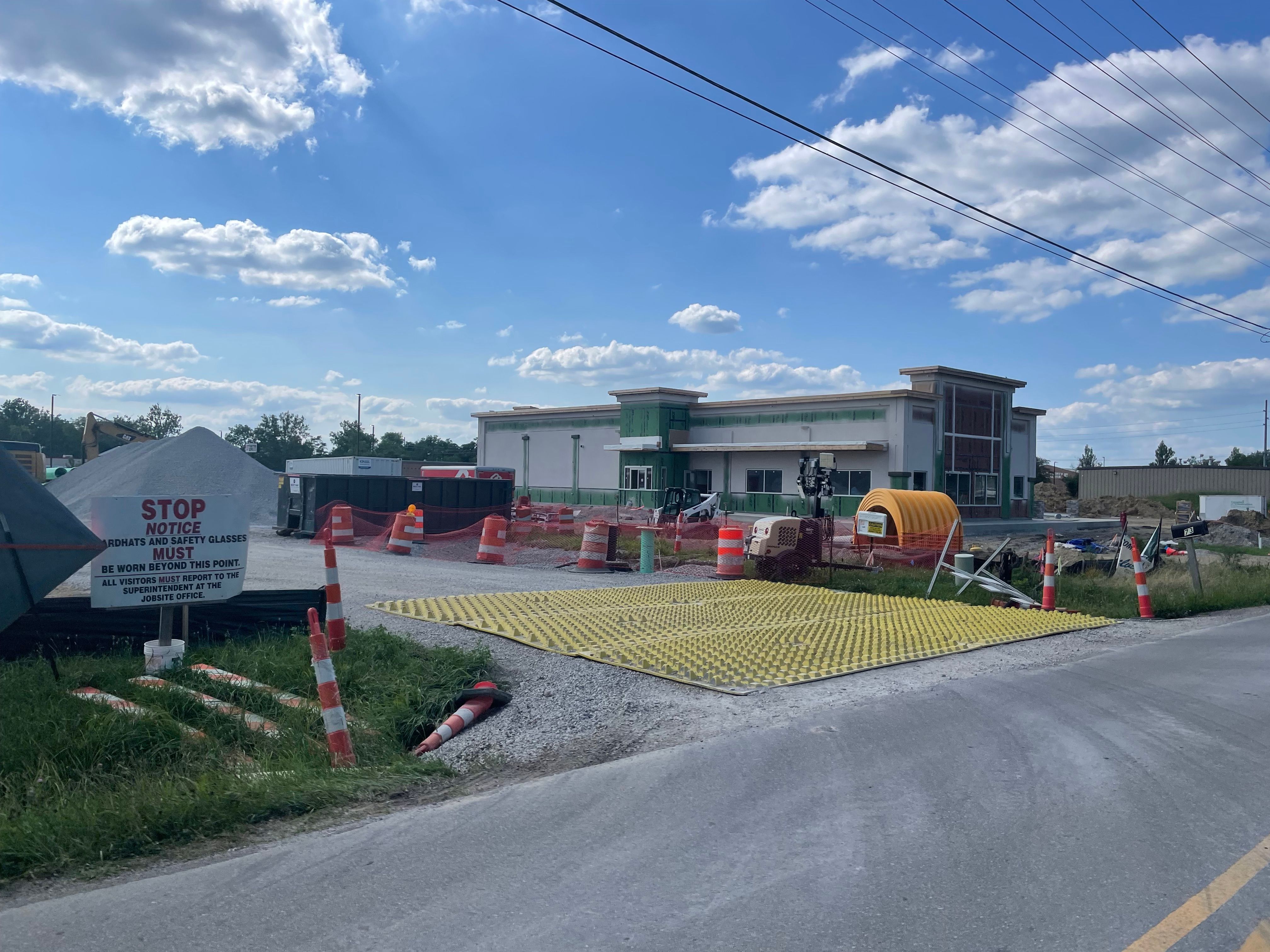
A Stabilized Construction Entrance, also called a Construction Access or Vehicle Tracking Control, is a BMP installed at all entry and exit points of a construction site. Its purpose is to prevent soil and debris from being tracked onto public or private roads by vehicles leaving the site.
Without a properly maintained entrance, vehicle tires carry loose sediment from unpaved construction areas onto paved roads. Rain events can then wash this material into storm drains, which connect to surface waters and lakes. Sediment runoff degrades water quality and can harm aquatic ecosystems.
A Stabilized Construction Entrance is one of the first BMPs listed on the construction schedule in the IDEM Stormwater Quality Manual. It must be installed before construction traffic begins and must cover all active access points into the site. The entrance must be inspected regularly and maintained to remain effective as site conditions change with traffic volume and weather.
Aggregate Stabilized Construction Entrance
A stone pad construction entrance is the traditional method for controlling vehicle trackout on construction sites. The INDOT Construction Stormwater Management Field Guide, updated in April 2025, includes specifications for aggregate-based entrances and provides guidance for contractors working on INDOT projects.
The INDOT Field Guide requires that aggregate pads be a minimum of 12 feet wide and 50 feet long, though extending the length to 150 feet is considered best practice. The aggregate should be rough stone, typically No. 2 stone, which is large enough to dislodge debris from vehicle tires without becoming wedged in dual-tire trucks or heavy equipment. A geotextile fabric is placed beneath the aggregate pad to protect the underlying soil.
Aggregate entrances require ongoing maintenance as the stone becomes compacted and saturated with sediment over the course of a project. Operators must redress the pad with additional aggregate and repair any areas where the filter fabric has been damaged. The roadway must also be swept as needed to remove any rocks or sediment tracked onto it by exiting vehicles.
On sites where a standard aggregate entrance is not sufficient to control trackout, operators may use wheel wash systems, wet pits, wash rack stations, or mechanical tire cleaning methods. When water is used to clean vehicle tires, the runoff must be captured in a sediment trap or basin to prevent it from entering the stormwater drainage system.
FODS Vehicle Trackout Control Mats
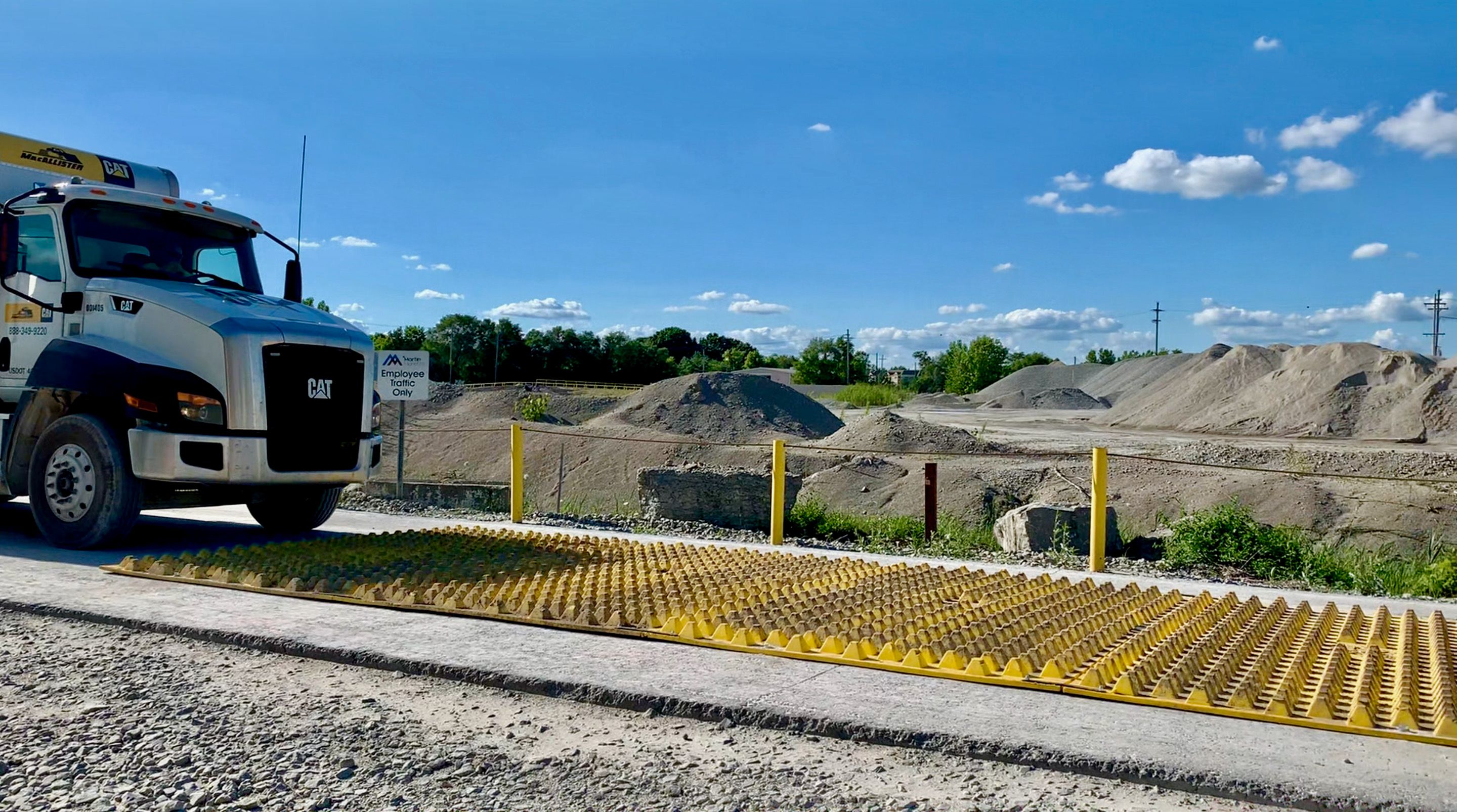
A modern BMP for minimizing vehicle sediment tracking is the FODS Trackout Control System. The system consists of a single layer of HDPE matting, which is formed into pyramid-shaped structures across the surface. The pyramids deform vehicle tires and open treads, allowing trapped debris to break loose. The debris is collected at the base of the pyramids, where it is periodically swept away using a shovel or power broom.
The FODS Trackout Control Mats are designed for high-use applications and have been demonstrated to reduce required street sweeping by 59% compared to traditional gravel pads. The 12 panels are 7 feet long and are designed to be installed in series to construct a single lane for exiting traffic. The system can be installed to accommodate expected traffic and reconfigured during each phase of the project or across multiple projects throughout the product's 10+ service life.
As a reusable, portable system, the FODS Construction Entrance BMP enables contractors to construct an effective entrance on every project easily. Since no water or aggregate is required, the system can be deployed in nearly any environment. When the project is finished, the mats can be transported to the following site using a standard utility trailer while the entrance begins final stabilization. Contractors using this modern BMP can maintain compliance and reduce costs on every project.
Additional Resources:
Indiana National Pollutant Discharge Elimination System (NPDES) Program
IDEM Stormwater Quality Manual