
Illinois Stabilized Construction Entrance
SWPPP-Compliant Trackout Control Under IEPA General Permit ILR10
Illinois anchors the agricultural and industrial heartland of the Midwest, stretching from the shores of Lake Michigan and the Chicago metropolitan region in the northeast to the Mississippi River along its western border. The state's nickname, "The Prairie State," reflects its vast interior farmland, though Illinois is equally defined by its infrastructure: a dense network of interstate highways including I-90, I-94, I-88, I-55, I-57, and I-80 connects Chicago to downstate cities such as Rockford, Peoria, Springfield, Champaign, and Carbondale. Major public works projects, highway expansions, transit improvements, and commercial and industrial development across this corridor make stormwater compliance a routine concern for contractors operating anywhere in the state.
IEPA Stormwater Construction Permits (NPDES)
The Illinois Environmental Protection Agency (IEPA) administers the stormwater program under authority delegated by the federal Clean Water Act. The IEPA issues stormwater permits under the National Pollutant Discharge Elimination System (NPDES) program, which regulates discharges to surface waters including the rivers, lakes, and wetlands that define much of Illinois's natural geography.
Construction activities disturbing one acre or more must obtain permit coverage under the NPDES program unless a waiver is granted. Operators may apply for an individual permit or, more commonly, seek coverage under the Construction General Permit (CGP), designated General NPDES Permit No. ILR10. The current permit was renewed on September 22, 2023, and carries an expiration date of August 31, 2028. Operators seeking coverage must submit a Notice of Intent (NOI) through the federal Central Data Exchange (CDX) platform, which replaced earlier submission methods following the IEPA's compliance with the Federal Electronic Reporting Rule.
Coverage under the ILR10 requires the development, implementation, and maintenance of a Stormwater Pollution Prevention Plan (SWPPP). The SWPPP documents land-disturbing activities, identifies potential pollution sources, and establishes the Best Management Practices (BMPs) that will be used to prevent or minimize sediment and pollutant discharge. BMPs applicable to Illinois construction projects are compiled in the Illinois Urban Manual.
The Illinois Urban Manual (IUM)
The Illinois EPA funds the development and ongoing maintenance of the Illinois Urban Manual, a technical reference cooperatively managed for the use of developers, contractors, planners, and engineers. The Manual is vetted through the Urban Manual Technical Review and Steering Committees and is maintained through contributions from the Association of Illinois Soil and Water Conservation Districts (AISWCD), individual Soil and Water Conservation Districts (SWCDs), the Illinois Department of Transportation (IDOT), and the Illinois Department of Agriculture, Bureau of Land and Water Resources (IDA-BLWR).
The Illinois Urban Manual catalogs Best Management Practices with detailed guidance on their application, design criteria, and maintenance requirements. The full practice standards library, covering BMPs from bioretention facilities and diversion dikes to silt fences and stabilized construction entrances, was comprehensively updated in February 2025. A Quick Reference Guide for Common BMPs was also published in January 2026, providing a condensed field reference for frequently used standards.
Illinois Stabilized Construction Entrance Detail (Code 930)
The Stabilized Construction Entrance is identified in the Illinois Urban Manual under Practice Standard Code 930. It is typically the first BMP established on a construction site, installed before land-disturbing activities begin. Its purpose is to reduce or eliminate the tracking of sediment and debris from construction vehicles onto public roadways and right-of-ways.
The Code 930 standard specifies a stone entrance pad constructed using IDOT coarse aggregate (gradations CA-1 through CA-4) placed to a minimum depth of 6 inches over a geotextile fabric (Class I, II, or IV). Guidance in the standard recommends a pad approximately 70 feet in length and 14 feet in width, adjusted for site conditions and vehicle traffic. Single-lot residential projects may reduce the minimum rock length from 70 feet to 30 feet. Site grading must be configured to prevent runoff from the construction entrance from leaving the site, with provisions for directing drainage to an appropriate sediment trap. Any sediment tracked onto public roadways must be removed immediately to prevent it from washing into storm drains.
The aggregate layer works by agitating tire treads as vehicles pass across the pad, dislodging debris that accumulates at the base of the entrance. The pad requires regular maintenance including top dressing with additional aggregate after rain events and periodic inspection to confirm adequate sediment containment.
Where a stone-stabilized entrance is insufficient to control sediment, a wheel wash system may be used in combination. Wheel wash installations include a wash rack and a pressurized tire-cleaning station; drained water must be contained and directed to a sediment basin and may not leave the construction site.
The updated February 2025 Code 930 document and the associated Standard Drawing IL-630A are available through the Illinois Urban Manual practice standards library.
What is a Stabilized Construction Entrance?
A stabilized construction entrance is a temporary BMP installed at the point where construction vehicles enter and exit a site onto a public road. Its function is to clean vehicle tires of mud, sediment, and debris before that material reaches the pavement. Without effective trackout control, sediment deposited on roadways can wash into storm drains, degrading surface water quality and creating liability for the responsible contractor.
Traditional stone entrances rely on the mechanical agitation of loose aggregate to dislodge debris from tire treads. They require ongoing replenishment, can deposit rocks onto active roadways, and may be impractical in confined urban environments. Manufactured trackout control systems, including the FODS Reusable Construction Entrance System, offer a performance-equivalent alternative that does not introduce aggregate to the roadway.
FODS Reusable Stabilized Construction Entrance System
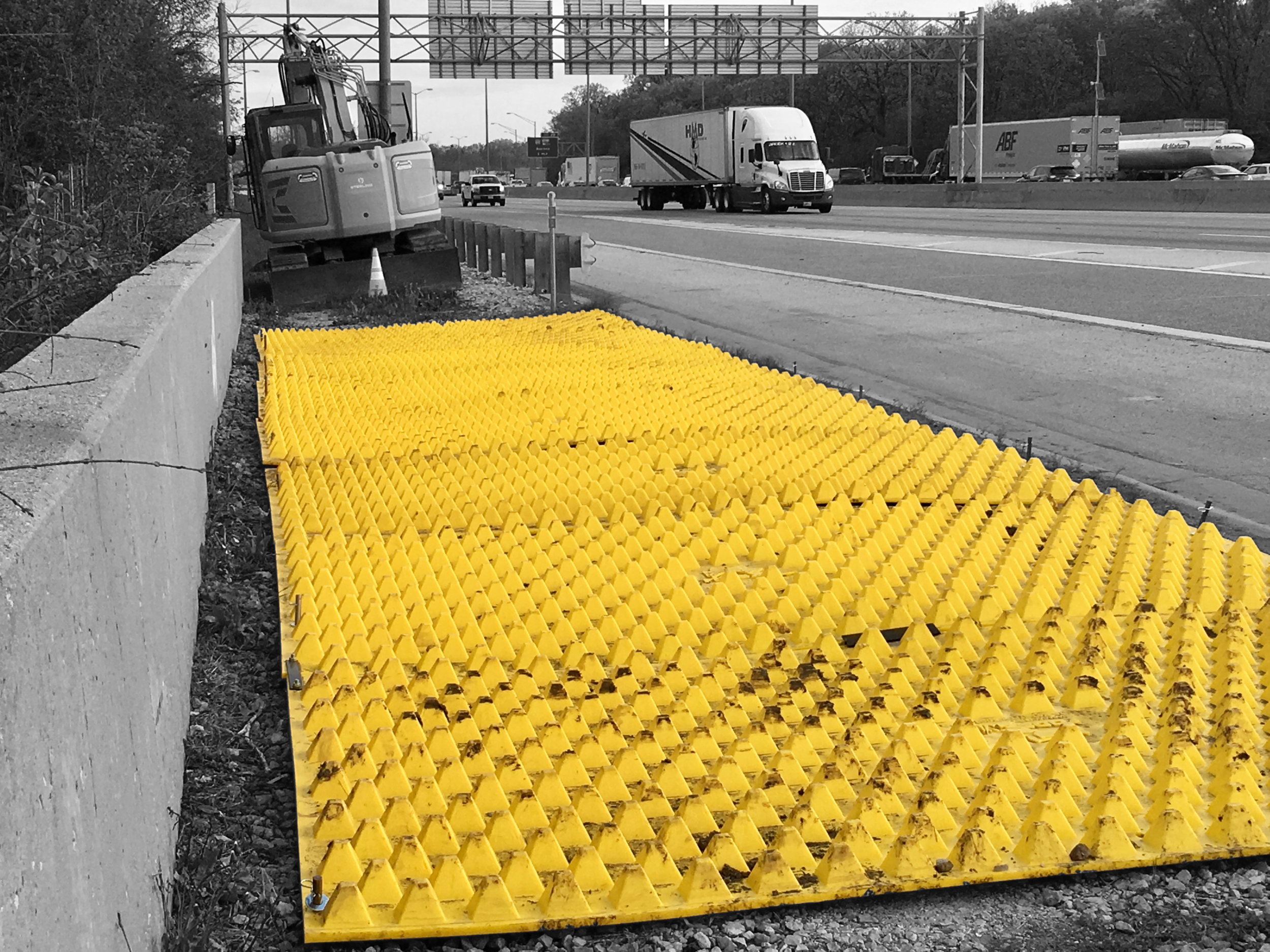
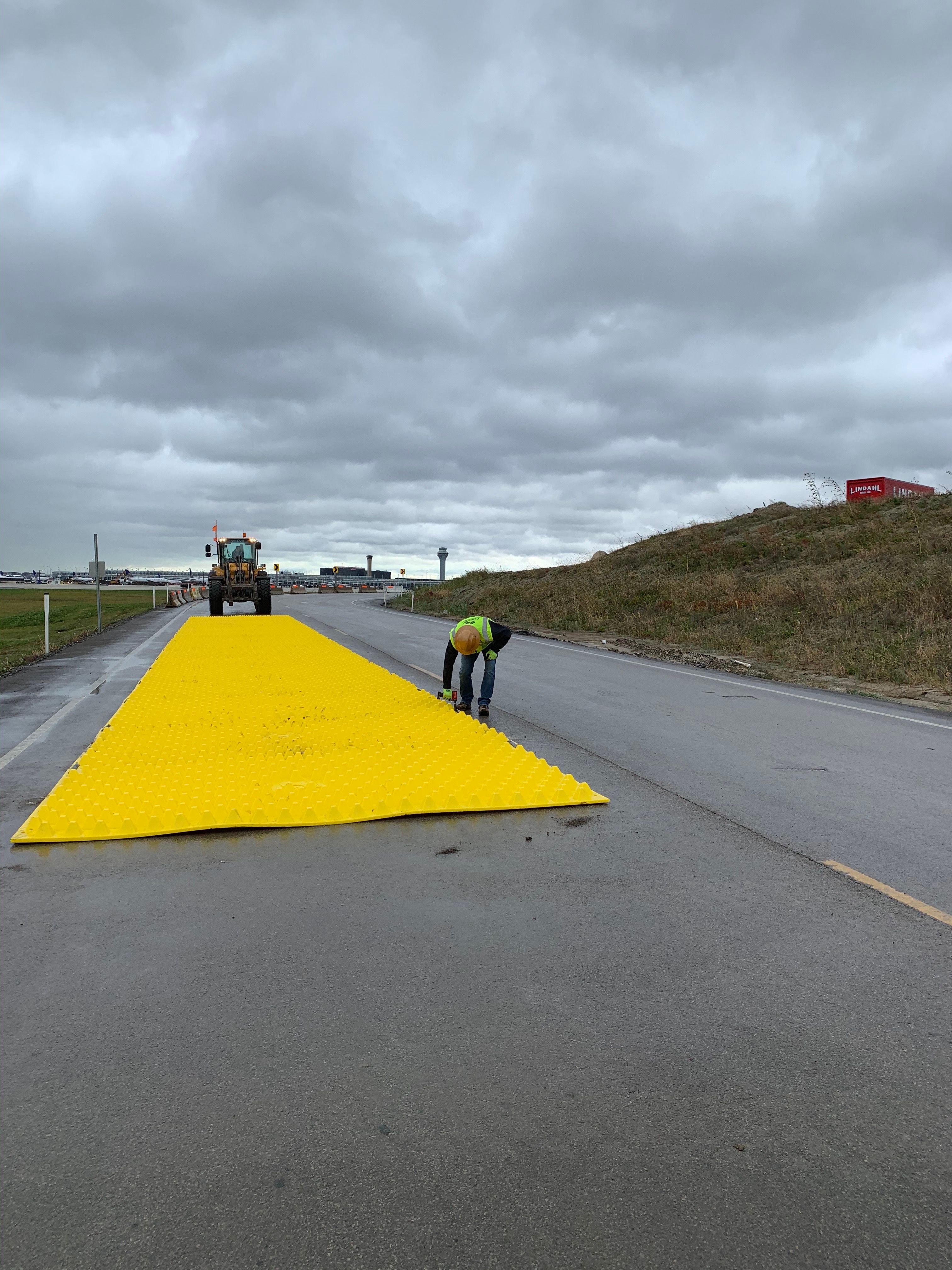
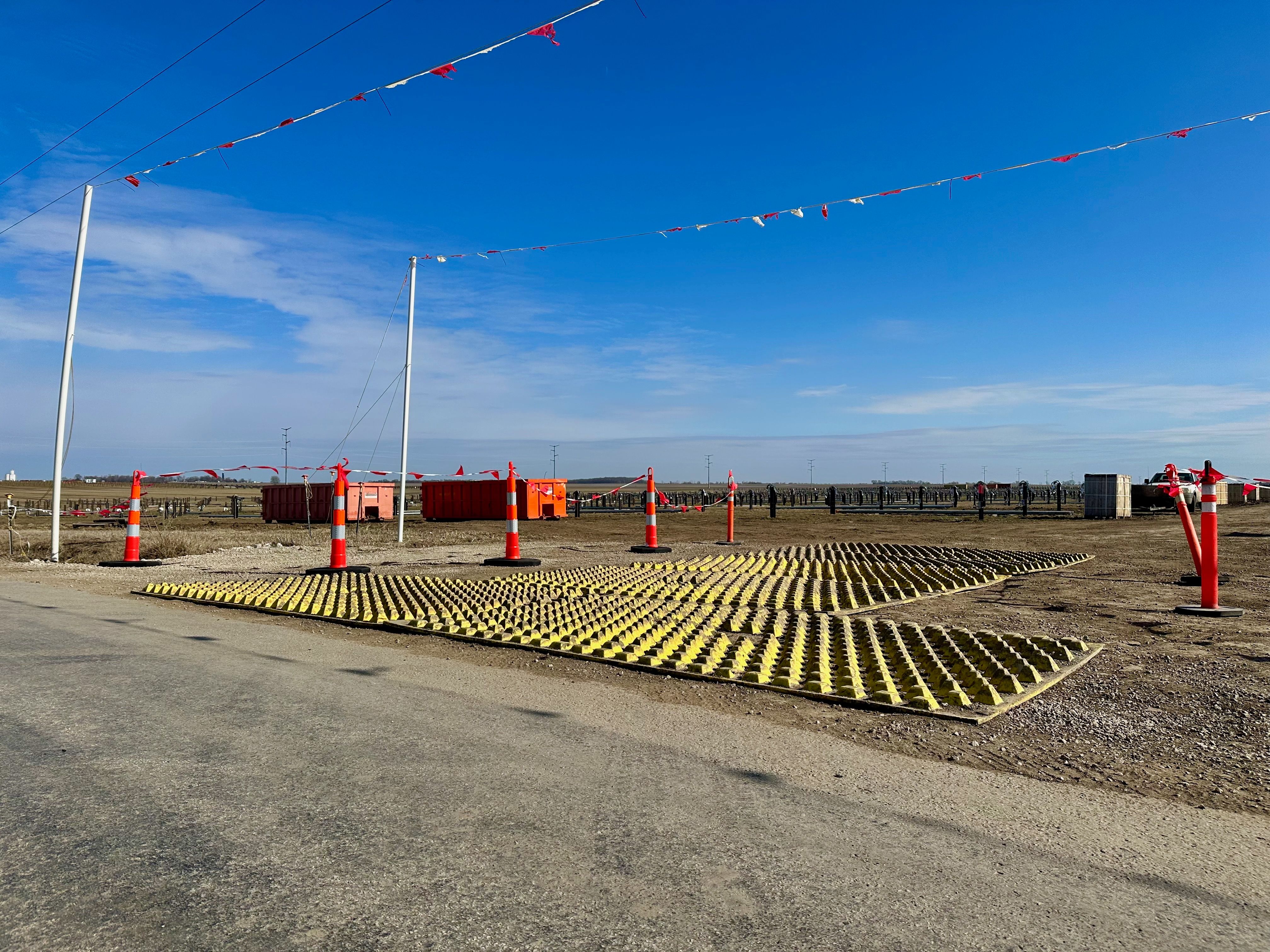
FODS Trackout Control Mats are a reusable, manufactured alternative to traditional aggregate construction entrances, fully compliant with the Illinois Urban Manual's Code 930 performance criteria and SWPPP requirements under ILR10. The system is composed of HDPE matting formed into a pyramid-textured surface that deforms vehicle tires as they pass across. The tire treads spread open under the load, releasing trapped mud and debris into the recesses between pyramids, away from contact with subsequent vehicle tires.
Because the system introduces no aggregate to the site, contractors eliminate the risk of rocks becoming dislodged onto active roadways, a recognized safety concern on Illinois DOT projects and urban work zones. After rain events, the mats can be quickly inspected and cleared without the need to source and deliver additional material.
A 1x5T mat configuration is commonly used to replace a traditional 70-foot rock entrance. Mats can be installed over asphalt, concrete, or compacted earth without excavation, in as little as 30 minutes, and can be repositioned or reused across multiple project phases. The system is rated for more than 10 years of service life, providing significant long-term cost advantages over single-use aggregate installations.
Independent testing has shown FODS to be 59% more effective at reducing sediment trackout than equivalent rock entrances. The FODS system has been deployed on major Illinois infrastructure projects including the I-294 Tri-State Tollway widening and the O'Hare International Airport Modernization Program.
IDOT Construction Manual and BDE Manual
The Illinois Department of Transportation maintains SWPPP requirements for all highway projects in the state. The IDOT Construction Manual references construction entrance standards from the Bureau of Design and Environment (BDE) Manual, Chapter 41-3.06.
The BDE Manual draws upon the IEPA's Illinois Urban Manual specifications and adds IDOT-specific guidance on the pay structure and project-level recommendations applicable to DOT work. Among its provisions, the BDE Manual recommends limiting the number of stabilized construction exits per site and specifies that wheel wash stations be configured in a two-lane arrangement to prevent incoming traffic from depositing sediment into the wash bay, or that a designated turn-out area serve the equivalent function.
Projects operating under IDOT contracts should confirm BMP specifications against the current BDE Manual version in addition to the Illinois Urban Manual Code 930 standard.
IDOT Tri-State Tollway I-294 Project
The I-294 Central Tri-State Tollway widening presented the operational challenge common to many Illinois highway projects: maintaining effective sediment control adjacent to high-volume active traffic. FODS Reusable Construction Entrance Mats were deployed as the primary stabilized entrance solution, providing portable, phase-adaptable trackout control without the need to repeatedly establish and remove aggregate pads as work progressed through each construction zone. The elimination of loose aggregate also reduced the risk of rocks being projected by dual-tire vehicles onto the adjacent live lanes of one of the Chicago area's most traveled toll routes.
O'Hare International Airport
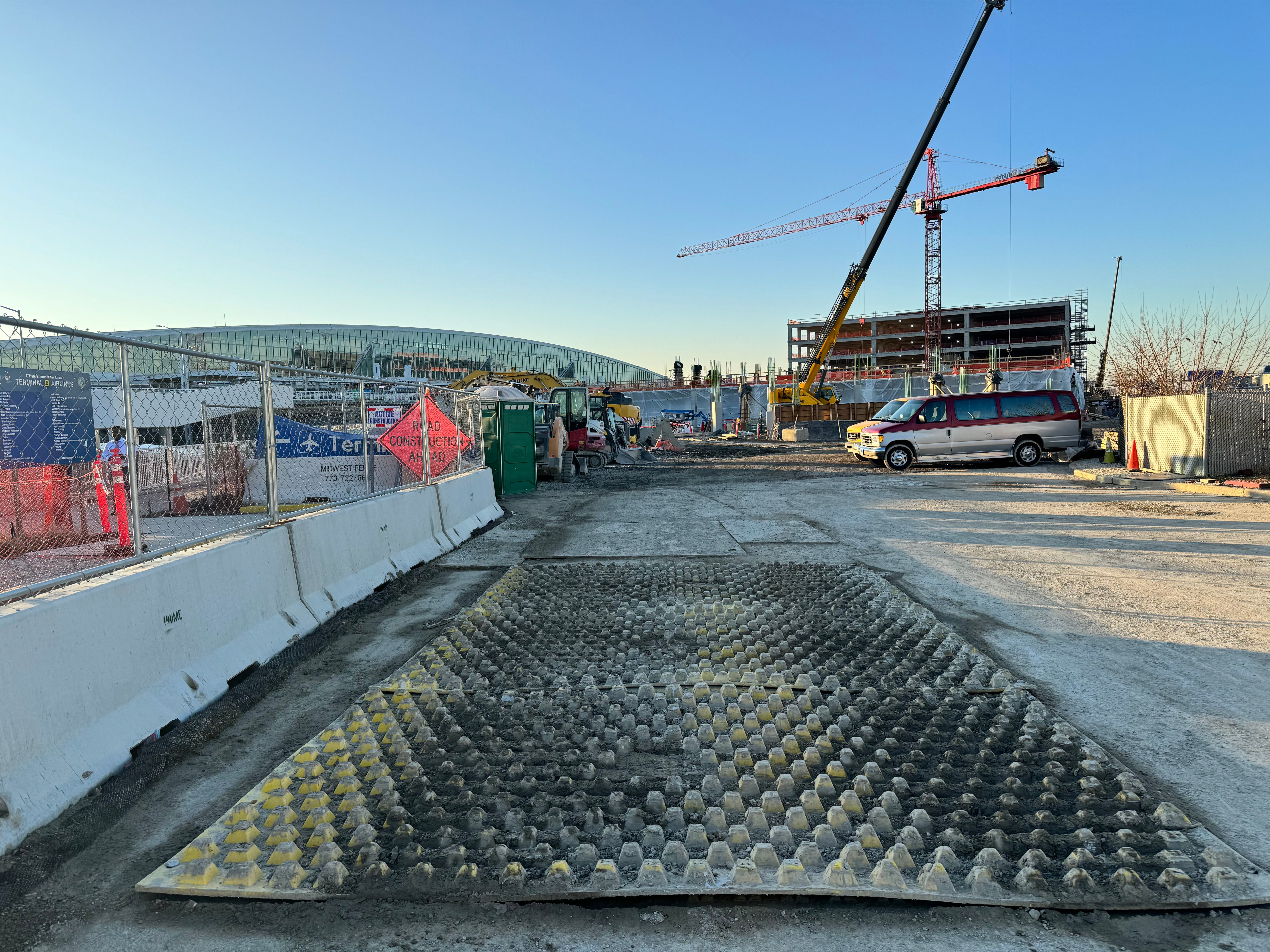
The $8.5 billion O'Hare Modernization Program has involved large-scale demolition, pavement recycling, and airfield reconfiguration at Chicago's primary international airport. During the Runway 9C-27C renovation phase, approximately 180,000 tons of pavement was demolished and recycled, and the Ground Runup Enclosure (GRE) was relocated. In this environment, where any debris escaping onto active runways or taxiways constitutes a foreign object debris (FOD) hazard to aircraft, the FODS Reusable Construction Entrance System was selected as the trackout control solution of record. The system provided superior FOD containment relative to traditional aggregate methods and was maintained consistently across a complex, multi-phase construction schedule.
Additional Resources
IDOT Tri-State Tollway I-294 Project
Chicago O’Hare International Airport
Illinois Urban Manual - Practice Standards (Stabilized Construction Entrance - 930)
IDOT Bureau of Design and Environment (BDE) Manual