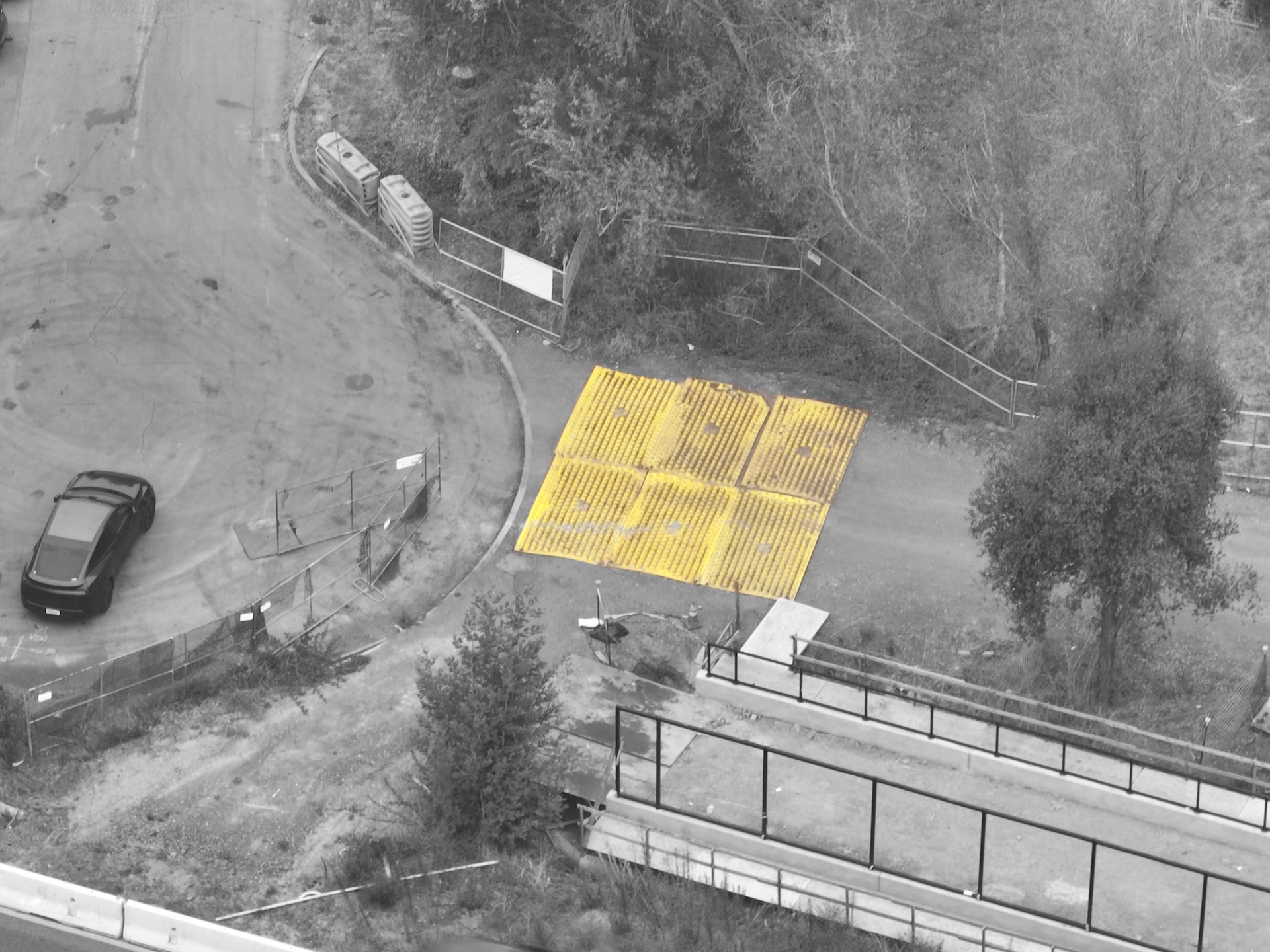
Arkansas Stabilized Construction Entrance
Arkansas spans diverse terrain, from the delta farmland and rice fields of the Arkansas River Valley and the Mississippi Alluvial Plain in the east, to the Ozark Plateau in the northwest and the Ouachita Mountains in the southwest. Construction activity is active across the state, from highway expansion along I-40 and I-30 to residential and commercial development in the Little Rock metro, Fayetteville-Springdale-Rogers corridor, and Fort Smith. Across all of this geography, construction site stormwater discharges are regulated under an NPDES permit program administered by the Arkansas Division of Environmental Quality (DEQ), part of the Department of Energy and Environment.
Arkansas ARR150000 NPDES Construction Stormwater Permit
Construction sites that disturb one acre or more of land are required to obtain NPDES stormwater permit coverage under the Construction General Permit (CGP) ARR150000. The permit also applies to sites disturbing less than one acre when that disturbance is part of a larger common plan of development ultimately exceeding one acre. Operators submit a Notice of Intent (NOI), a Stormwater Pollution Prevention Plan (SWPPP), and the required permit fee to DEQ before construction begins.
The current ARR150000 CGP expires October 31, 2026. DEQ has already finalized the renewal permit, which takes effect November 1, 2026, and runs through October 31, 2031. Operators of active construction projects that will not achieve final stabilization before the expiration date must renew coverage under the 2026 CGP and submit a Renewal NOI to DEQ no later than 30 days before the October 31, 2026 expiration. The 2026 CGP introduces a new turbidity benchmark monitoring requirement for dewatering discharges into impaired or sensitive waters, setting a 50 NTU benchmark consistent with the EPA 2022 Construction General Permit. It also formalizes the concept of a "Stormwater Team" responsible for SWPPP implementation and adds electronic inspection report options.
NOI and permit applications for ARR150000 are submitted through the DEQ SEEK system at seek.ee.arkansas.gov. Large sites (five acres or more) submit a full NOI, SWPPP, and permit fee. Sites disturbing more than one acre but less than five acres receive automatic coverage and are not required to submit an NOI, but must complete a SWPPP, post a Notice of Coverage on site, and comply with all permit conditions.
ArDOT Stabilized Construction Exit Standards
The Arkansas Department of Transportation (ArDOT) administers its own construction stormwater program for highway and transportation projects. The ArDOT Erosion and Sediment Control Design and Construction Manual (December 2016) provides design criteria for stabilized construction exits at active work sites. Appendix A.11 of the manual describes the standard aggregate construction entrance: a 12-foot-wide, 50-foot-long pad of coarse aggregate (3-inch or larger stone) placed over filter cloth at site access points where vehicles will be entering public roads. Section 110 of the ArDOT Standard Specifications for Highway Construction requires minimizing off-site sediment tracking. When soil tracked from a construction site reaches a public road, contractors are responsible for sweeping, collecting, and removing it before it can enter storm drains and reach the streams, wetlands, and water bodies that Arkansas stormwater regulations are designed to protect.
Traditional aggregate pads have well-documented maintenance demands. Stone becomes embedded with sediment and compacted over time, requiring periodic removal, mixing, or replacement of the rock layer. Rain events accelerate this degradation. On phased or long-duration projects, the cost of maintaining and replacing gravel tracking pads across multiple site access points adds up considerably.
FODS Trackout Control System
FODS is a modular trackout control system consisting of reusable composite mats designed to clean vehicle tires as equipment exits a construction site. Each mat uses a raised-pyramid surface profile to dislodge and capture soil and sediment before it reaches the road. The system qualifies as a stabilized construction exit under the BMP framework of both the ADEQ ARR150000 CGP and the ArDOT ESC Manual, and is documented in project SWPPPs as a performance-equivalent alternative to aggregate tracking pads.
A standard installation uses the 1x5T layout: a configuration that provides 35 feet of cleaning length with a wide turning radius, replacing a traditional 70-foot aggregate pad. The mats install directly over existing substrate, including dirt, gravel, and asphalt, without excavation. Installation requires no heavy equipment and can be completed quickly, which matters on projects with multiple active access points or phased work areas.
Maintenance is straightforward. When sediment accumulates to approximately 2.5 inches between the mat pyramids, the mats are cleaned with a street sweeper or FODS shovel, restoring full functionality without adding new material. The mats are engineered for over 10 years of service life and are relocatable within and across projects, making them well suited to contractors managing multiple sites in Arkansas.
Additional Resources:
ADOT Erosion & Sediment Control Design & Construction Manual