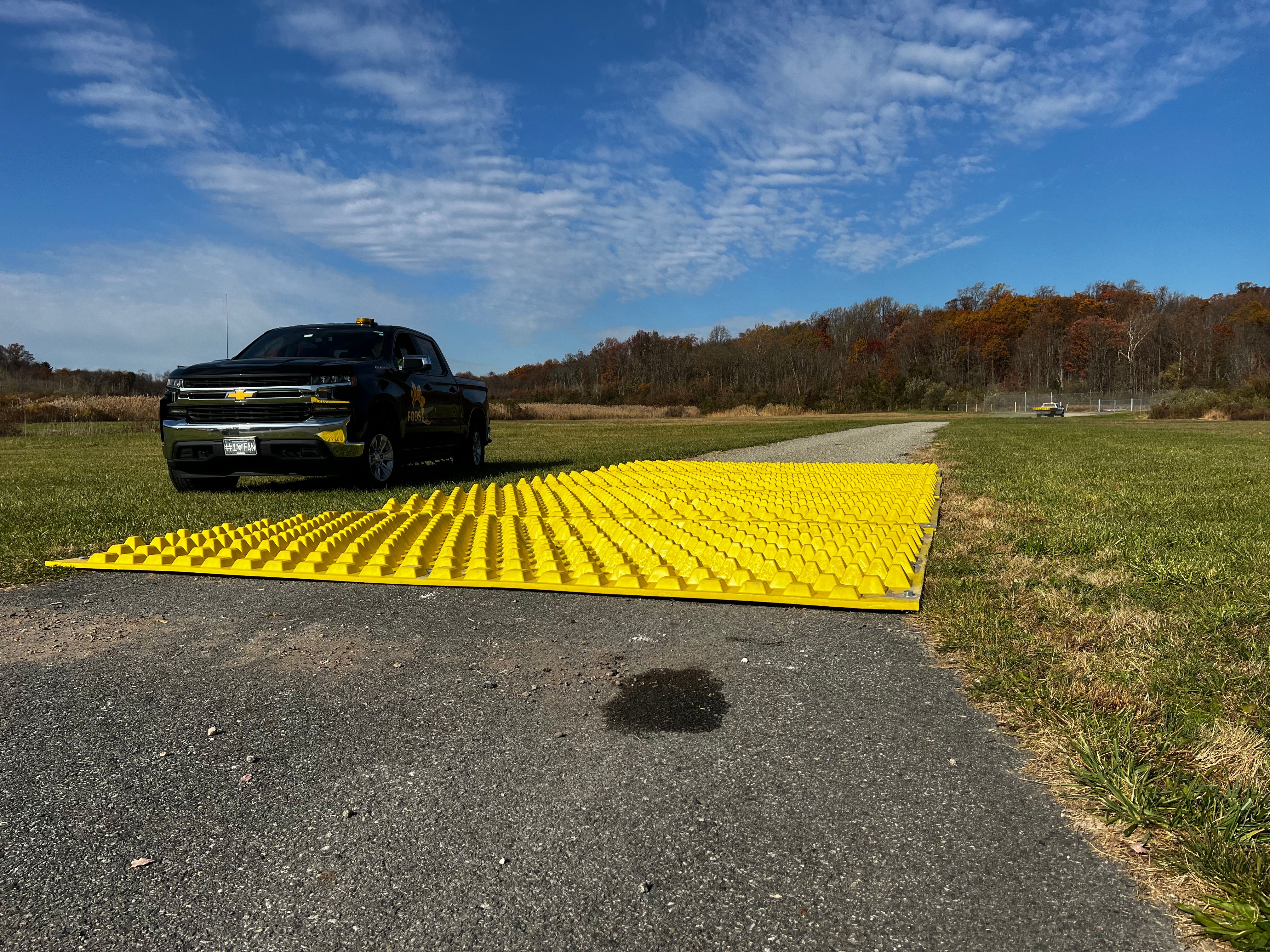

New Jersey Stabilized Construction Access Detail
The State of New Jersey contains extensive coastal waters, rivers, lakes, and reservoirs that support diverse ecosystems, agricultural activity, and drinking water supplies for nearly nine million residents. Protecting these water resources is a priority for both state and federal agencies, particularly as development and infrastructure projects continue throughout the state.
New Jersey Pollutant Discharge Elimination System (NJPDES)
The New Jersey Department of Environmental Protection administers the Federal Clean Water Act to protect surface waters and maintain water quality throughout the state. The primary regulatory program governing discharges to surface waters is the New Jersey Pollutant Discharge Elimination System (NJPDES). This program regulates stormwater discharges associated with industrial, construction, and municipal activities to ensure that pollutants are adequately controlled before entering rivers, lakes, and coastal waters.
Stormwater runoff is typically not treated before discharge, making source control and on-site containment critical. Regulated activities must obtain appropriate stormwater permit coverage and implement measures to reduce sediment, debris, and other pollutants from leaving the site.
Construction Stormwater Permitting and Planning
Many construction projects in New Jersey obtain coverage under the General Construction Activities Permit, commonly referred to as the 5G3 General Permit. NJDEP administers this permit in coordination with Local Soil Conservation Districts. To obtain coverage, contractors must prepare and implement a Soil Erosion and Sediment Control Plan that identifies potential sources of erosion and specifies the Best Management Practices used to minimize sediment-laden runoff from leaving the site.
The NJDEP maintains an online stormwater permitting portal, known as the Stormwater Construction E-Permitting System, which is used for permit submissions and compliance tracking.
The development of the Soil Erosion and Sediment Control Plan involves identifying potential pollution sources and selecting appropriate Best Management Practices to control erosion, stabilize disturbed areas, and manage runoff effectively. These practices are designed to meet minimum regulatory standards and maintain compliance with required performance criteria. The Standards for Soil Erosion and Sediment Control in New Jersey provide detailed guidance on approved practices. At the same time, the Stormwater Best Management Practices Guide offers additional information on site stabilization and runoff control methods.
Stabilized Construction Access
One of the first Best Management Practices installed on a construction site is the Stabilized Construction Access. This practice is designed to minimize off-site sediment tracking resulting from construction vehicles leaving disturbed areas. Stabilized access points are installed at all locations where vehicles exit the site onto paved or other impermeable surfaces. All other access points should be blocked to prevent use by construction traffic.
Stabilized Construction Accesses are effective at reducing sediment track out and can also help limit pollutants such as oils, fuels, and grease that adhere to soil particles. Proper placement and maintenance are crucial to ensure the continued effectiveness of the project.
Stone Stabilized Construction Entrance and Exit
A standard method for stabilizing construction access is the use of a stone access drive. This consists of a pad of crushed stone or approved aggregate placed over a geotextile filter fabric. The rough surface created by the aggregate helps dislodge sediment from vehicle tires.
The Standards for Soil Erosion and Sediment Control in New Jersey specify that the gravel depth must be at least six inches and use ASTM C 33 stone, including Number 2 or Number 3 aggregate. Crushed stone is preferred due to its angular characteristics; however, crushed concrete may be used, with the understanding that it may require more frequent maintenance.
Each stabilized access must be as broad as the ingress and egress area. The Standards recommend a minimum length of fifty feet for coarse-grained soils such as sand and gravel. Where fine-grained soils such as silt and clay are present, longer lengths up to one hundred feet may be necessary. Drainage from surrounding areas should be diverted away from the stabilized entrance to prevent sediment accumulation. On steeper slopes, additional stabilization measures may be required beneath the entrance to maintain effectiveness and avoid the displacement of aggregate. Geotextile fabric can be installed in areas with poor drainage conditions.
As construction progresses and internal roads are paved or permanently stabilized, shorter stabilized entrances may be permitted for individual lots, typically with a minimum length of ten feet.
Maintenance and Supplemental Measures
Stabilized Construction Accesses require ongoing maintenance to remain effective. As sediment accumulates and becomes compacted within the stone pad, the entrance may require top dressing with additional aggregate or an increase in pad length. Any sediment tracked or spilled onto paved surfaces must be removed immediately using a power broom or street sweeper to prevent it from entering storm drains.
If a stone access drive alone does not sufficiently contain sediment, supplemental measures may be required. One commonly used supplemental practice is a tire wash system, which uses pressurized water to remove sediment from vehicle tires. When tire wash systems are installed, runoff must be adequately contained and managed to prevent sediment from leaving the site and contaminating surrounding areas.
Two risks associated with aggregate entrances must also be taken into consideration. Loose aggregate may be tracked onto active roadways, which can be mitigated by installing a paved transition area between the stone pad and the roadway. Additionally, aggregate may become lodged in dual-tire vehicles or large-tread tires and expelled at high speeds. Selecting an appropriate aggregate size can reduce this risk.
FODS Reusable Stabilized Construction Entrance System
A modern alternative to traditional stone access drives is the FODS Trackout Control System. This system consists of high-density polyethylene mats featuring a pyramid-shaped surface designed to flex vehicle tires and release sediment trapped within tire treads. The voids between the pyramids allow sediment to collect away from the tire surface, reducing re-tracking.
The mats can be installed over soil, concrete, or asphalt and do not introduce loose aggregate to the site egress points, reducing the risk of rock entering active roadways. Maintenance is simple and typically performed using a power broom, street sweeper, or manual cleaning tools.
The FODS Trackout Control System is manufactured in the United States, is recyclable at the end of its service life, and is designed for reuse across multiple projects and construction phases. The system, as reported by the manufacturer, is designed to reduce the need for street sweeping on high-traffic sites. Its durability and portability make it suitable for phased projects, urban environments, and long-term applications while maintaining compliance with erosion and sediment control requirements.
Additional Resources
Construction Activities (5G3) Permit
NJ Standards for Soil Erosion and Sediment Control
Stormwater Best Management Practices Guide
Green Infrastructure (GI) Resources
NJ Stormwater Best Management Practices Manual