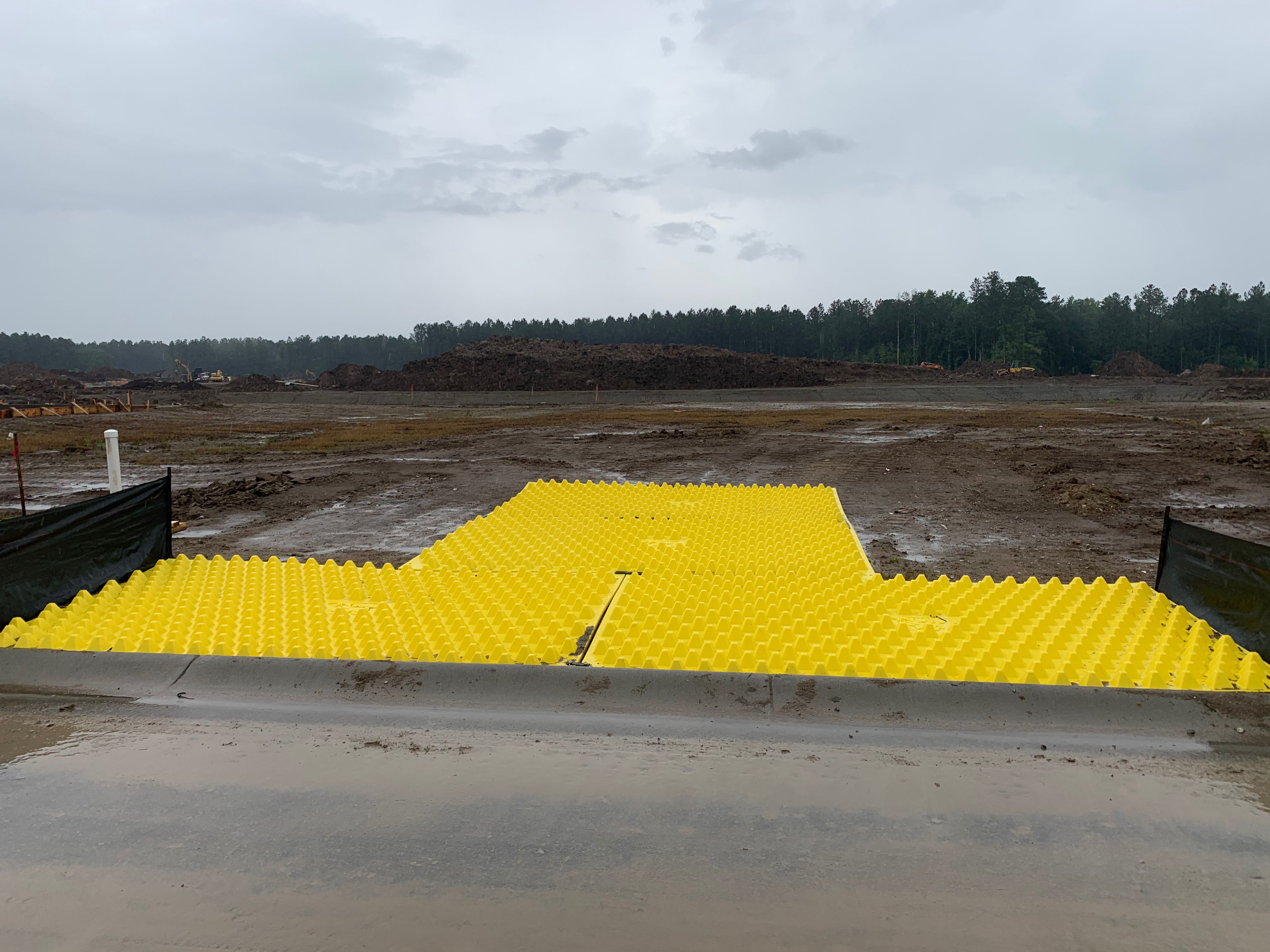

Massachusetts Stabilized Construction Entrance
Massachusetts pairs one of the most active construction markets in the Northeast with some of the most protective water resource laws in the country. From the dense innovation corridors of Boston and Cambridge to the highway and bridge programs reshaping the I-90 Massachusetts Turnpike, the I-95 and Route 128 belt, and the Cape Cod canal crossings, work across the Commonwealth moves earth close to water. The state holds more than 3,000 lakes and ponds, the Charles, Merrimack, and Connecticut rivers, the Quabbin Reservoir drinking water supply, and hundreds of miles of coastline along Massachusetts Bay and Cape Cod. Protecting those resources means controlling erosion, sediment, and stormwater at every active site, and a stabilized construction entrance is the first line of defense against mud and debris reaching public roads and storm drains.
Massachusetts Stormwater and NPDES Framework
Stormwater discharge in Massachusetts is regulated under the federal Clean Water Act through the National Pollutant Discharge Elimination System (NPDES) program. Massachusetts is one of the few states where NPDES authority has not been delegated to the state, so the U.S. Environmental Protection Agency (EPA) Region 1 (New England) issues and administers construction stormwater permits, working alongside the Massachusetts Department of Environmental Protection (MassDEP) on state water quality certification.
At the state level, MassDEP regulates stormwater primarily through the Wetlands Protection Act regulations (310 CMR 10.00) and the Water Quality Certification regulations (314 CMR 9.00). The Massachusetts Stormwater Management Standards, set out in Volume 1 of the Massachusetts Stormwater Handbook, require projects to control runoff volume and velocity, remove sediment, and keep pollutants out of wetlands and waterways. Standard 8 specifically requires erosion and sediment controls during construction and land disturbance. Local Conservation Commissions hold jurisdiction over most projects through the Wetlands Protection Act, which means site access and trackout controls are reviewed at both the federal permit level and the municipal level.
EPA 2022 Construction General Permit
Construction projects that disturb one acre or more, or that are part of a larger common plan of development that disturbs one acre or more, must obtain coverage under the EPA Construction General Permit (CGP) before earth disturbance begins. The current permit is the 2022 CGP, issued on February 17, 2022 and effective for a five year term that runs through February 17, 2027, with a successor permit anticipated as that date approaches. EPA modified the 2022 CGP in December 2024 to expand eligibility on lands of exclusive federal jurisdiction. Operators obtain coverage by filing a Notice of Intent (NOI) through EPA's NPDES eReporting Tool (NeT).
Coverage under the CGP requires a Stormwater Pollution Prevention Plan (SWPPP) that identifies pollutant sources, specifies the Best Management Practices (BMPs) that will control them, and documents inspection and maintenance procedures. The SWPPP functions as a living document throughout the life of the project. Stabilized construction entrances are typically installed before excavation begins and remain in place until final stabilization is complete, because preventing soil from adhering to tires and being carried onto paved surfaces is one of the most visible and most frequently cited elements of construction stormwater compliance.
MassDEP Stabilized Construction Entrance Standard
The Massachusetts Erosion and Sediment Control Guidelines for Urban and Suburban Areas, a guide for planners, designers, and municipal officials, describes the standard stabilized construction entrance used across the Commonwealth. The Guidelines call for a temporary stone stabilized pad at each point of vehicular ingress and egress, installed at a positive grade so that runoff drains back toward the site rather than onto the paved road. The conventional pad consists of a geotextile fabric topped with six inches of aggregate ranging from one to three inches in size, with a minimum length of 50 feet, or 30 feet for residential lots, extended further where containment proves inadequate. Where vehicle action on the stone is not enough to remove most of the mud, the Guidelines call for tire washing, with a sediment trap to capture the wash water before it leaves the site.
The conventional stone entrance carries ongoing maintenance obligations. After the aggregate becomes compacted or clogged with fines, or after a significant rain event, the pad must be redressed with fresh stone to restore function. When the project is complete, the stone must be removed and the area prepared for final stabilization. Inadequate runoff control around stone pads is one of the most common reasons that sediment is washed onto public roads.

2026 Stormwater Regulation Update
Massachusetts is in the middle of the most significant update to its stormwater framework in more than a decade. The Massachusetts Stormwater Handbook was last revised in February 2008. In February 2020, MassDEP convened a stormwater advisory committee to update the Handbook and the Wetlands Protection Act stormwater regulations at 310 CMR 10.05(6), with two main goals: aligning the state Stormwater Management Standards with the federal Municipal Separate Storm Sewer System (MS4) permit, and replacing older precipitation data with modern projections that account for the increased intensity of storm events. MassDEP has carried this work forward through its Wetlands resiliency rulemaking, with final regulations and an updated Stormwater Handbook expected to be promulgated in 2026, followed by statewide training on the revised standards and checklist.
For contractors and design firms, the direction of these updates reinforces the value of durable, reliable trackout control. As precipitation design standards become more demanding and inspection expectations tighten, construction entrances that perform consistently through repeated wet weather events, without constant re-rocking, reduce both compliance risk and rework.
FODS Trackout Control Mat System
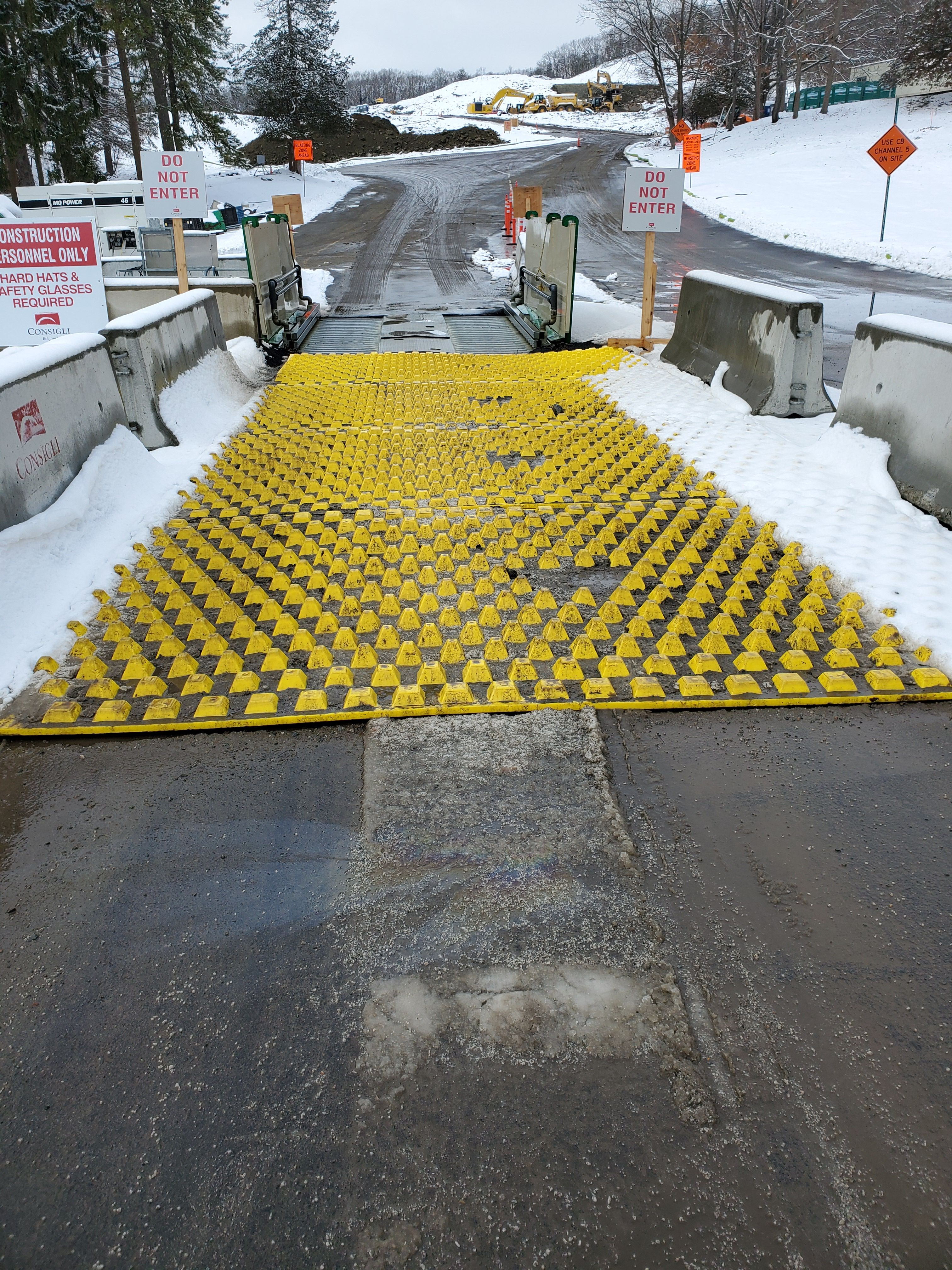
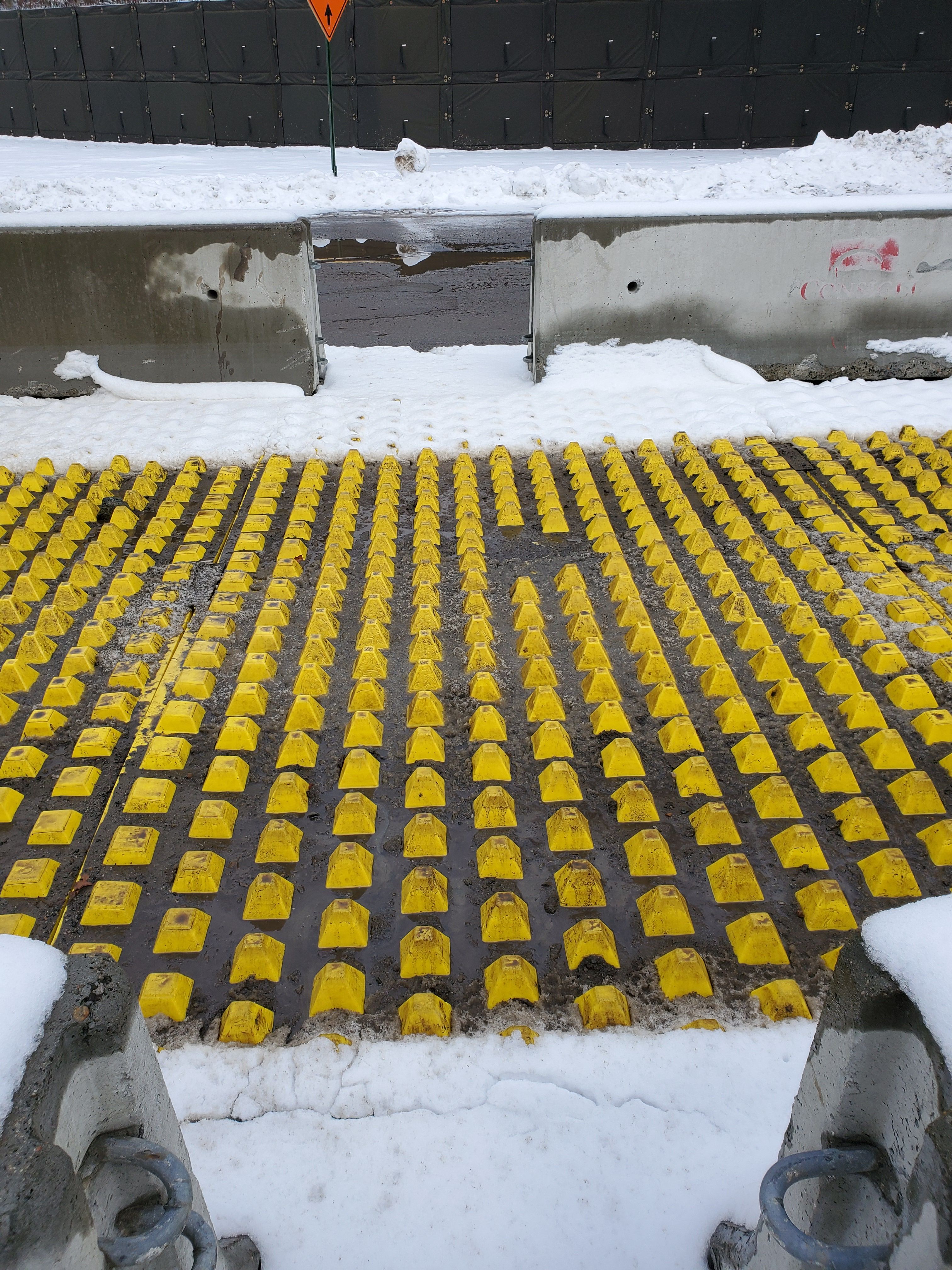
The FODS Trackout Control Mat System provides a durable, reusable alternative to the conventional stone stabilized entrance. FODS mats are manufactured from high density polyethylene (HDPE) and feature a patented pyramid pattern surface that flexes vehicle tire treads to dislodge compacted soil, mud, and gravel. This mechanical cleaning action removes sediment at the point of exit and keeps it on the site, without introducing loose aggregate onto the roadway.
Because the mats are modular and portable, they can be deployed over soil, gravel, asphalt, or concrete without excavation or extensive site preparation, and reused across multiple phases and projects. Installation requires only basic anchoring hardware, and maintenance involves sweeping the mats with a skid steer broom attachment or clearing them by hand with the FODS Cleanout Shovel. No refreshing, re-rocking, or aggregate replacement is required. The bright safety yellow surface also marks the designated entry and exit point clearly for drivers, which supports both site safety and inspection clarity.
How FODS Aligns With Massachusetts Requirements
Massachusetts does not maintain a brand name product approval list for construction entrances, and neither MassDEP nor MassDOT publishes a proprietary BMP approval letter for trackout control devices. Compliance in the Commonwealth is performance based: the EPA Construction General Permit and the Massachusetts Stormwater Management Standards require an effective stabilized construction entrance, and the SWPPP documents how that requirement is met.
FODS meets the functional intent of the stabilized construction entrance standard. It is a structural BMP designed to prevent the discharge of sediment and debris from vehicle tires, which is exactly the outcome the EPA CGP and MassDEP Standard 8 are written to achieve. Because the system is a manufactured, performance equivalent alternative to the stone pad described in the MassDEP Erosion and Sediment Control Guidelines, it is specified directly in the project SWPPP as the stabilized entrance BMP, with the manufacturer technical data and installation detail attached as supporting documentation.
This rockless approach also simplifies inspection. Stone pads often raise questions during a site visit about whether the aggregate is adequately maintained or has become clogged with fines. A FODS entrance presents a clearly defined, consistently performing surface that an inspector can verify in a single visit, which reduces the likelihood of enforcement findings, change orders, or rework tied to failed BMP performance.
Widespread Adoption Across Massachusetts
The nationwide success of FODS has encouraged its use on other projects throughout the state, including municipal public works and private industrial developments. In densely populated areas, FODS mats have proven especially valuable where limited space makes traditional aggregate pads impractical or disruptive. Their clean, reusable design also complements Massachusetts' broader push toward low-impact development (LID) and green infrastructure principles.
Engineering firms, general contractors, and environmental compliance managers across Massachusetts are increasingly specifying the FODS Track Out Mat System in their project SWPPPs. Many now view FODS as a standard component of site access planning, particularly where project schedules, cost efficiency, and sustainability goals intersect.
Massachusetts has long been a leader in stormwater management, from its early wetlands protection laws to today's advanced construction permitting framework. As infrastructure and urban redevelopment continue to expand, the tools used to achieve compliance are also evolving.
The FODS Track Out Mat System represents innovation and the next generation of stabilized construction entrance technology, offering superior sediment removal performance, reusability, and environmental sustainability. Proven on high-profile projects worldwide, FODS provides contractors with a cleaner, safer, and more cost-effective method of managing trackout, while fully meeting EPA Region 1 and MassDEP requirements.
By replacing disposable stone entrances with reusable FODS mats, contractors reduce waste, streamline maintenance, and uphold the Commonwealth's commitment to protecting its most valuable resource, clean water. The result is a practical, forward-looking solution that supports both regulatory compliance and the environmental legacy that defines Massachusetts.
Additional Resources:
Construction Entrance Resource
EPA Construction General Permit (2017)
Massachusetts Stormwater Handbook and Stormwater Standards
Massachusetts Stormwater Handbook Vol 2, Ch 2, Stormwater Best Management Practices
Stormwater Management - MassDOT Environmental Services
EPA Stormwater Discharges from Construction Activities