
Maine Stabilized Construction Entrance / Exit Detail
Maine boasts 3,478 miles of tidal coastline, making it the fourth-longest shoreline of any state, even larger states like California and Texas. The coast's jagged character is responsible for this feat, but it is not a unique feature of Maine. Nicknamed the Pine Tree State, Maine's inland area consists of over 80% forest, and with most of this land uninhabited and unclaimed, the state has the lowest population density of any state east of the Mississippi. This open, free land supports a wide array of wildlife native to New England, including moose, bald eagles, and the Canadian Lynx.
Stretching into Maine, the White Mountains are the northernmost reaches of the Appalachian Mountains. This mountainous region is responsible for most of the fresh water that fills the state's river and stream system and eventually flows into the sea. Most notable of these rivers is the Kennebec River, which drains approximately 5,870 square miles of central Maine. The river discharges an average of about 5.9 billion gallons of water per day into Merrymeeting Bay before flowing into the Gulf of Maine. Several hydroelectric facilities are located along the Kennebec River, including Harris Station, which is considered the largest hydroelectric dam in the state.
Unfortunately, during the early years and through the middle of the 20th century, Maine's rivers were also used as dumping grounds for the state's growing industries. Consequently, the quality of surface water and, subsequently, groundwater was negatively affected. The health of people, wildlife, and the economy is directly affected by the purity of the water supply. Therefore, the federal and local governments have taken initiatives to address pollution in Maine's stormwater system. It is the responsibility of residents, industries, and the government alike to continue working together to rehabilitate this natural and valuable resource.
Maine DEP NPDES Stormwater Construction Permits
The federal government began the Federal Water Pollution Control Act in 1948, which was amended in 1972 and became the Clean Water Act (CWA). These initiatives spurred the development of laws and guidelines for industries and construction projects to mitigate pollutants introduced into the watershed. The most notable of these requirements is the National Pollutant Discharge Elimination System (NPDES) Permit issued by the EPA. This permit requires industries and construction operators to develop plans to reduce or eliminate the negative impacts of their activities.
In Maine, the EPA has delegated responsibility for the NPDES permit process to the Maine Department of Environmental Protection (DEP). For specifically construction-related activities, the proper permit is the Maine Construction General Permit (MCGP). Any operator of a construction project that disturbs more than one acre of land is required to apply for an MCGP before performing any construction activity. To receive an MCGP, several forms must be submitted, including the Notice of Intent (NOI) and the Notice of Termination (NOT). Operators are required to develop and implement a Stormwater Pollution Prevention Plan (SWPPP) that includes erosion and sedimentation control measures consistent with Maine DEP requirements. The ESC Plan outlines the specific actions the operator will take to prevent construction activity from introducing pollutants into the surrounding public stormwater system. Common issues addressed in an Erosion and Sediment Control Plan include dust control, stabilization of high-erosion areas, seeding, and construction entrance anti-tracking pads.
The Maine DEP provides resources to help contractors and engineers prepare their ESCs and SWPPPs. DEP Resources include a Field Guide for Contractors, a Manual for Designers and Engineers, the Maine Erosion and Sedimentation Control BMPs, and the Stormwater Best Management Practices Manual.
Construction Entrance / Exit Detail
One of the first BMPs to be installed on any construction site is a Construction Entrance/Exit. The high-traffic areas at the ingress/egress points of a construction site are concerning zones for safety and sediment control. Excessive erosion can create unstable ground for vehicles as they enter the site; therefore, it is essential to stabilize and regularly maintain these areas. As cars move around the construction site, sediment and other possible pollutants cling to the tires. The vehicles that leave the site and enter the public road system are a major contributor to the spread of contaminated soil into the watershed. To mitigate this pollution source, construction entrances/exits are installed to remove sediment from vehicle tires. Stabilized construction entrances are installed at all site exit points that lead to paved or other impermeable roadways to ensure that construction track-out is contained from all exit routes.
Construction Entrance BMPs work in parallel with other BMPs to mitigate trackout pollution, including street sweeping, sediment basins, and storm drain protection.
All BMPs for construction entrances must be regularly inspected and maintained to ensure effective sediment containment. Construction entrance BMPs must be inspected at least weekly, before and within 24 hours after a storm event, and before final site stabilization to ensure continued effectiveness. In addition to regular inspections and repairs of the construction entrance, operators are required to sweep the street whenever sediment is deposited on the paved roadway to prevent it from entering storm drains.
Aggregate Sediment Control Options
The Manual for Designers and Engineers includes examples for developing a stabilized construction exit using a traditional aggregate-based design. This type of entrance consists of a pad of coarse aggregate, which creates a rough surface that forces sediment from tire treads.
This technique uses a 2" – 3" diameter angular stone to remove and trap sediment as the tires contact the pad. The manual indicates minimum dimensions for a construction entrance are 50' in length and 12' in width. This method requires a depth of at least 6" of stone placed over a geotextile filter fabric used to prevent the pollutants from entering the native soil under the entrance area. The angular stone should be sized to accommodate the largest vehicles using the entrance to avoid stones from becoming lodged between dual-tire vehicles or from tracking onto the active roadways.
The aggregate at the construction entrances helps trap sediment and will eventually become saturated with mud and debris. In addition, repeated vehicle passes over the rock will cause the pad to flatten. In either case, performance is reduced, so the entrance will require maintenance to restore the rough surface. Maintenance includes delivering additional aggregate to top dress the entrance and restore the bumpy surface.
At the end of the project, the rock must be removed and disposed of to allow final remediation of the area.
Wheel Wash
In addition to these two construction entrance methods, you can add a wheel wash station to either. This BMP can be used as a standalone solution or in conjunction with other construction entrance/exit techniques. A wash station is commonly installed on construction sites with excessive vehicle traffic or sediment tracking. Wheel wash stations can use automated or manual methods to clean vehicle tires, but will always use pressurized water to remove pollutants.
Wheel wash stations must direct any wastewater into a sediment basin, as it will contain excessive sediment and contaminants. The wheel wash station will also require power and water.
FODS Reusable Stabilized Construction Entrance System
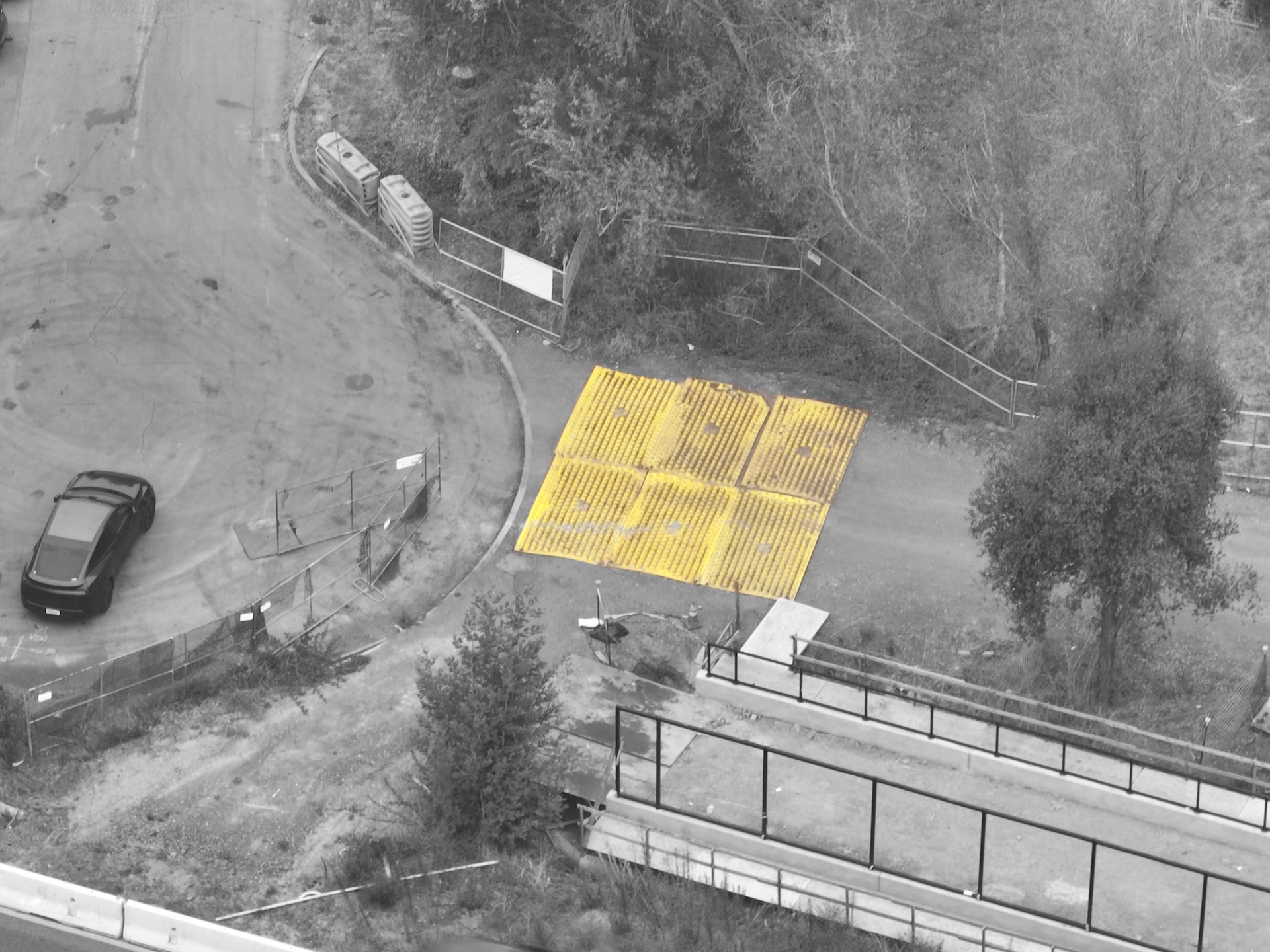
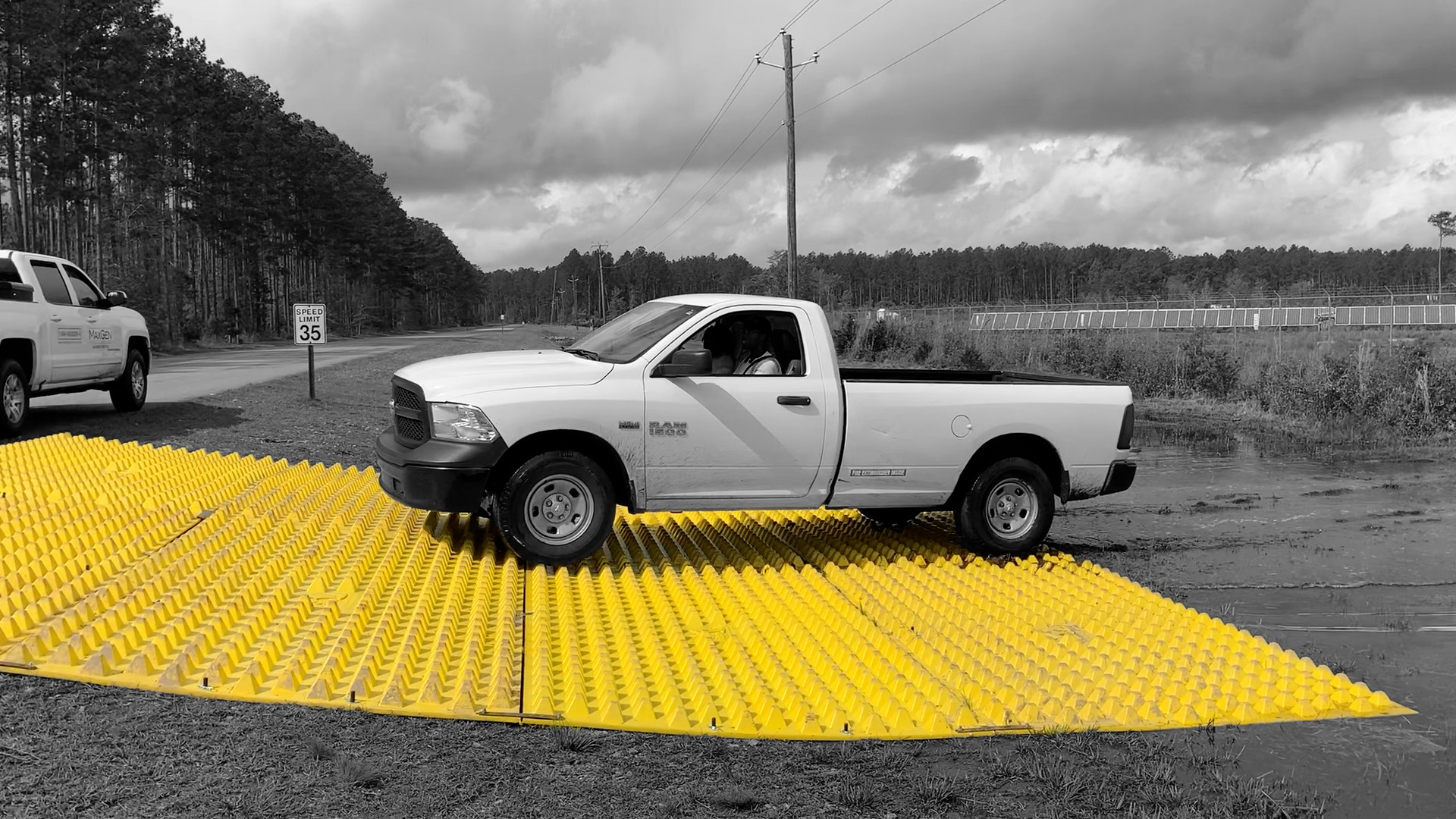
The FODS Stabilized Construction Entrance System is a practical, reusable solution for construction site track-out. The system has been demonstrated to reduce street sweeping by 59% on high-volume job sites. The system comprises HDPE matting formed into pyramids, creating a permanent rough surface that deforms tires. As construction vehicles pass over the mats, tire treads are spread open to release trapped debris. The system does not introduce aggregate to the job site. It provides a safer solution than traditional methods, as there is a reduced risk of aggregate tracking onto an active roadway. Sediment collects in the voids between pyramids and can be swept free during regular maintenance.
Because the system is more effective than rock, the mats are well-suited for tight work environments. A 1x5T mat configuration is commonly used as an alternative BMP to a 70' rock entrance, providing a wide turning radius for exiting traffic. The mats offer significant savings to contractors as they can be reused for 10+ years, eliminating the cost of construction entrance materials. FODS can be installed in as little as 30 minutes and can be anchored to nearly any substrate, including dirt, concrete, and asphalt.
Additional Resources
Manual for Designers and Engineers
Maine Erosion and Sedimentation Control BMPs