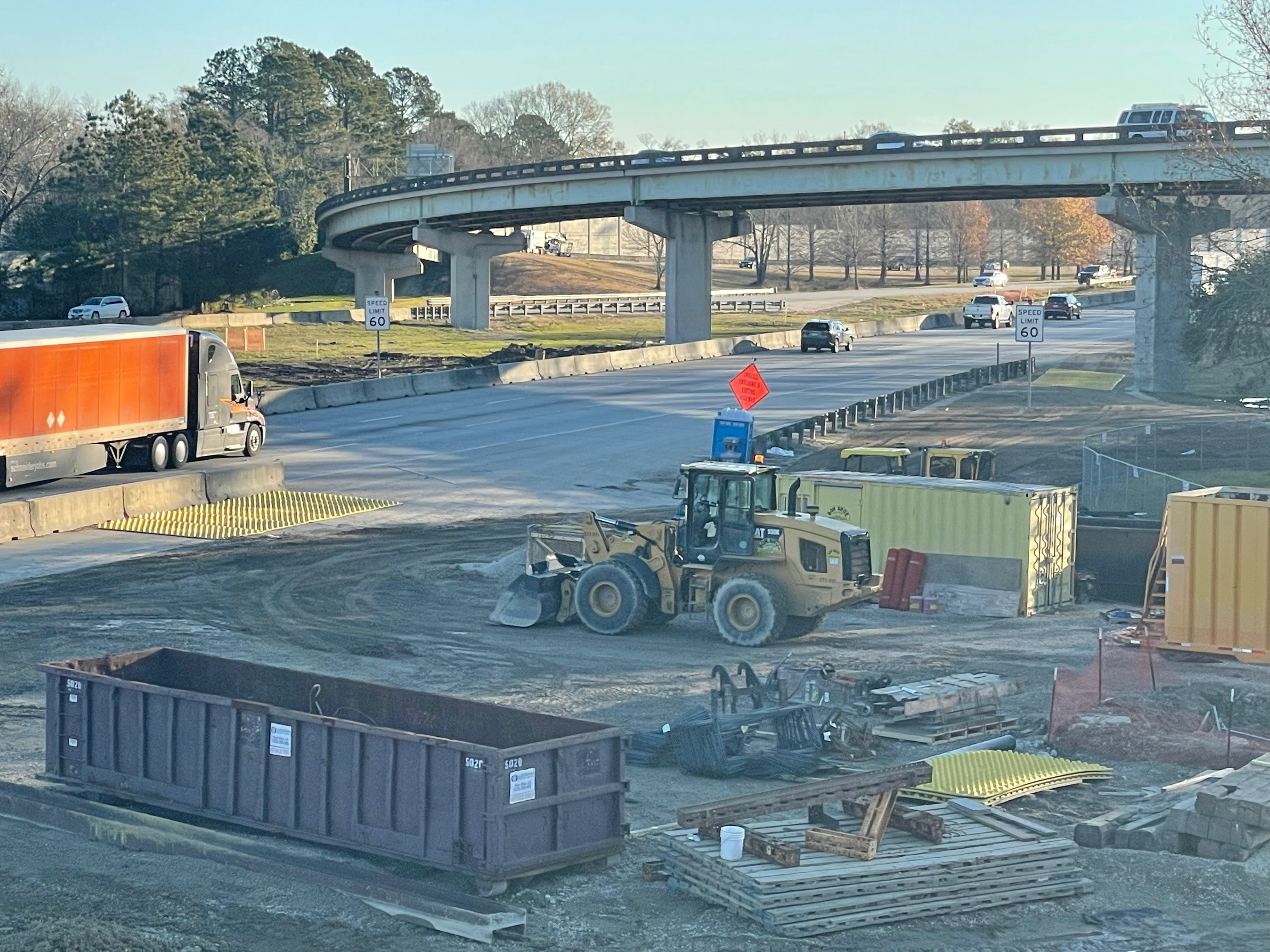

Louisiana Stabilized Construction Entrance BMP
Reusable Trackout Control for Louisiana Construction Sites
In Louisiana, stabilized construction entrances keep sediment and debris from being tracked off the job site and onto public roads. From the I-10 and I-12 corridors around Baton Rouge to coastal restoration work along the Gulf and petrochemical projects in the River Parishes, contractors are required to implement approved Best Management Practices (BMPs) to control trackout and remain compliant with their stormwater permit.
FODS Trackout Control Mats give Louisiana contractors a reusable, rockless way to meet that requirement. The mats clean vehicle tires at the point of exit without loose gravel, so the same equipment can move from one project phase to the next instead of being dug out and replaced.
Louisiana Department of Environmental Quality and the LPDES Program
Bordering the Mississippi River to the east and the Gulf of Mexico to the south, Louisiana depends on clean surface water for its seafood industry, its coastal wetlands, and the communities along its waterways. To protect those waters, the Louisiana Department of Environmental Quality (LDEQ) administers the federal Clean Water Act through the Louisiana Pollutant Discharge Elimination System (LPDES) permit program. The program oversees construction, industrial, and municipal discharges that could carry pollutants into the state's rivers, lakes, and estuaries.
Construction stormwater coverage falls into two general permits. Activities that disturb one acre or more but less than five acres are covered under the Small Construction Activities General Permit (LAR200000). Activities that disturb five acres or more are covered under the Large Construction Activities General Permit (LAR100000), which LDEQ reissued effective October 1, 2024. The reissued LAR100000 carries a five-year term and added several updates, including technology-based and water quality-based effluent limits, a requirement to address off-site material storage areas in the plan, and a vegetated riparian buffer for waters designated as Outstanding Natural Resource Waters.
Both permits require the operator to prepare and follow a Stormwater Pollution Prevention Plan (SWPPP). The SWPPP maps the disturbed area, identifies likely sources of sediment and pollution, and lists the BMPs the contractor will use to control them. One BMP needed on nearly every site is the stabilized construction entrance.

What Louisiana Requires for Trackout Control
The LAR100000 permit is direct about trackout. Part IV.D.2.a(2) states that off-site vehicle tracking of sediments and the generation of dust shall be minimized. The permit also requires that any sediment which escapes the site, such as soil washed or carried onto a public street, be removed often enough to keep it out of storm sewers and away from drivers. A stabilized construction entrance is the standard way for contractors to meet both requirements simultaneously.
On state transportation work, the entrance is defined by the Louisiana Department of Transportation and Development (DOTD). The 2026 Louisiana Standard Specifications for Roads and Bridges (LSSRB), effective January 1, 2026, and now published in an electronic-only format, sets the requirement in Section 204, Temporary Erosion Control. Section 204.2.070, Temporary Construction Entrance, calls for a stone or recycled portland cement concrete entrance built on Class D geotextile fabric, and the construction provisions require the entrance to be maintained so that mud is removed from tires as vehicles leave the site.
How the Traditional Stone Entrance Works
A traditional stabilized construction entrance is built by placing a geotextile fabric underliner and then a pad of coarse aggregate over it. The rough surface knocks mud and debris loose from tires, while the fabric keeps the stone from sinking into the soil and helps prevent rutting. Typical guidance calls for a pad several inches deep, roughly 50 feet long, and wide enough to give the largest site vehicles a clear exit lane and turning room where the entrance meets an active roadway.
These entrances work, but they need ongoing attention. As traffic drives over the pad, the stone fills with sediment and compacts, which reduces how well it cleans tires. When trackout starts to show on the road, the contractor has to add aggregate or replace the saturated stone, and any material that reaches the pavement has to be swept before the next rain carries it into a storm drain. Where a stone entrance cannot keep up, a wash rack may be added, though that approach requires a water source, power, and a sediment basin to contain the wash water.
FODS as a Stabilized Construction Entrance in Louisiana
The FODS Trackout Control Mat System is a reusable, manufactured construction entrance that helps contractors meet LPDES and DOTD trackout requirements without loose rock. Each mat is a single layer of HDPE molded into pyramid-shaped structures across its surface. As a vehicle drives across, the pyramids flex against the tire and work debris out of the tread, then hold that mud and sediment at the base of the pyramids and away from the tire. Each mat is 12 feet wide and 7 feet long and is typically set in series to form a single exit lane, though the system is modular and can be arranged to fit the entrance geometry of almost any site.
The system is effective at pulling sediment from tires and has been shown to reduce the need for street sweeping by 59 percent compared with traditional rock entrances. Because the mats are built to be lifted, relocated, and reused across a service life of 10 years or more, contractors avoid the repeated cost of hauling in and replacing aggregate. FODS can be installed on grade or directly over concrete and asphalt, which is a real advantage on tight urban sites in New Orleans, Baton Rouge, Lafayette, and Shreveport. It requires no water source or power, so it performs in the same wet, low-lying conditions where a wash rack would be difficult to support.
Maintenance is straightforward. Once about 2.5 inches of sediment collects between the pyramids, the mats are swept clean, usually with a skid steer and broom attachment or by hand with a FODS shovel, and put right back into service.
Specifying FODS in a Louisiana SWPPP
Louisiana does not maintain a brand-name approval list for trackout control products. LDEQ and DOTD instead set the performance the entrance has to deliver and leave the selection of an equivalent practice to the design professional and the SWPPP. That means FODS is specified as a performance-equivalent stabilized construction entrance: the contractor documents it in the SWPPP as the BMP used to minimize off-site vehicle tracking, the same role the permit and the DOTD specification assign to the traditional stone entrance.
To simplify that documentation, we provide a Louisiana State Submittal Package with product specifications, recommended layouts, and supporting details that can be referenced directly in SWPPP paperwork and inspection records.
Why Trackout Control Matters on Louisiana Roads
Trackout is both a water quality issue and a safety issue. Sediment left on a roadway washes into storm drains and on toward the bayous, rivers, and coastal waters that Louisiana works hard to protect. Loose gravel carried out of a traditional entrance also poses a hazard to passing drivers and to the workers managing site access. FODS uses a rockless surface to clean tires, so it does not deposit aggregate onto the road. Each mat is recyclable at the end of its long service life, reducing the material, hauling, and disposal footprint associated with stone entrances.
Contact us to learn more about FODS reusable construction entrances in Louisiana, or download the Louisiana State Submittal Package for SWPPP documentation support.
Additional Resources:
LDEQ Storm Water Permit Resources
LA DOTD Standard Specifications (Part II - Earthwork)