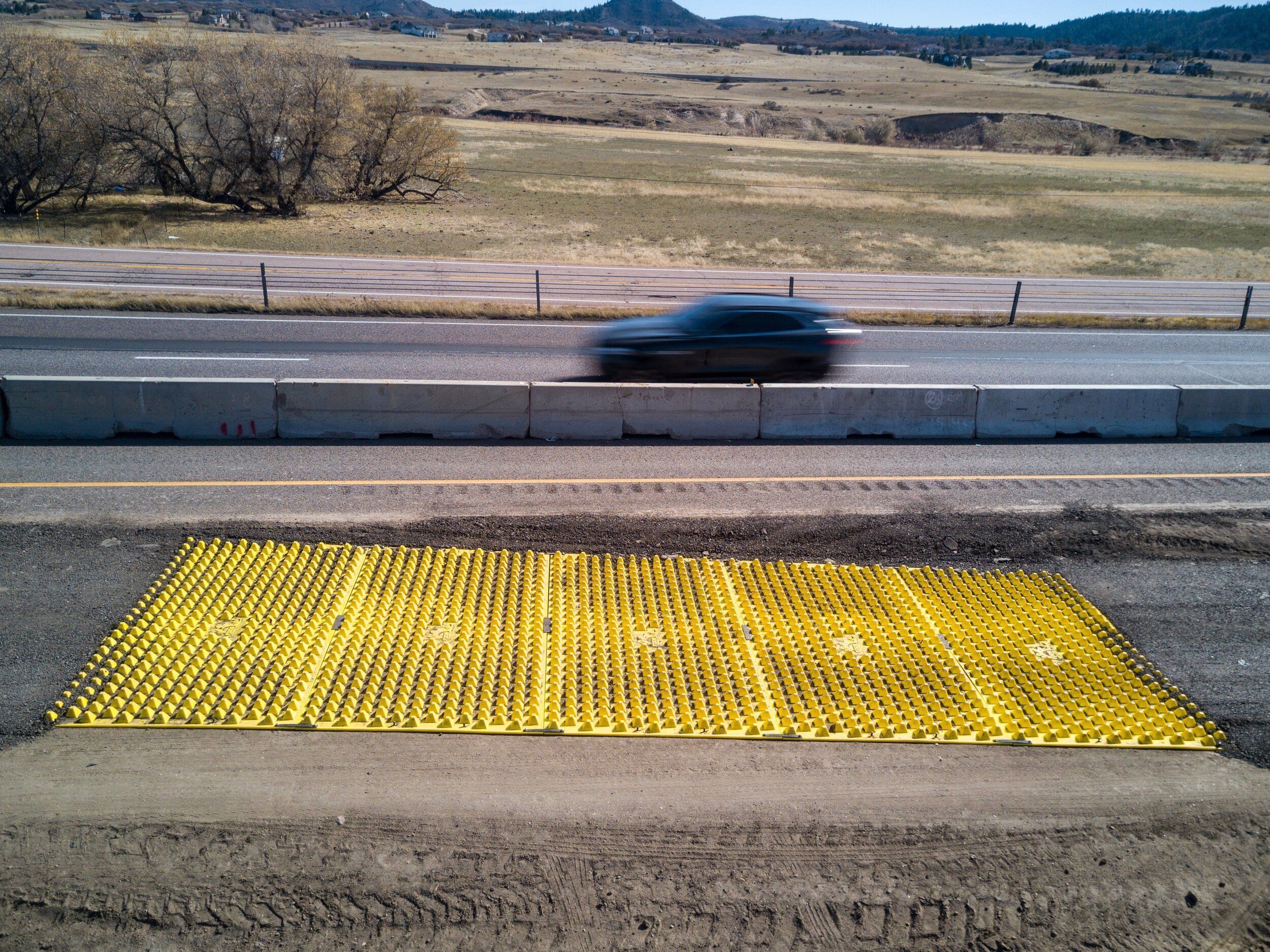

Alaska Stabilized Construction Exit and Vehicle Track-Out BMPs
Alaska presents some of the most demanding construction conditions in North America. From the Chugach Mountains above Anchorage and the Parks Highway corridor stretching north toward Fairbanks, to the North Slope industrial haul roads along the Dalton Highway and the coastal projects along the Kenai Peninsula and Southeast Alaska, construction operations across the state contend with extreme weather cycles, sensitive waterways, and a regulatory framework designed to protect Alaska's rivers, wetlands, and coastal zones. The Alaska Department of Environmental Conservation (ADEC) administers the state's construction stormwater program through the Alaska Pollutant Discharge Elimination System (APDES), the state-authorized equivalent of the federal NPDES program. FODS Trackout Control Mats provide construction operators in Alaska with a compliant, reusable stabilized construction entrance/exit BMP that meets SWPPP requirements without the recurring cost of gravel tracking pads.
Alaska APDES Construction General Permit (AKR100000)
Construction stormwater discharges in Alaska are regulated under the APDES Construction General Permit, permit number AKR100000, administered by the Alaska Department of Environmental Conservation Division of Water. The 2026 CGP became effective on February 1, 2026 and will remain in effect through January 31, 2031. All construction operators disturbing one or more acres of land — or disturbing less than one acre as part of a larger common plan of development totaling one or more acres — are required to file a Notice of Intent (NOI) and obtain APDES permit coverage before breaking ground.
EPA delegated NPDES stormwater authority to Alaska in 2009, making ADEC the primary permitting authority for construction stormwater across the state. Operators working on projects that disturb five or more acres and discharge to waters outside an MS4 area are additionally required to submit their Stormwater Pollution Prevention Plan (SWPPP) directly to ADEC for review. All other permitted projects must develop a SWPPP and maintain it on site.
SWPPP Requirements and BMP Selection
The Stormwater Pollution Prevention Plan is the central compliance document for construction stormwater management in Alaska. Every APDES-covered project must identify and implement Best Management Practices (BMPs) appropriate to site conditions, and the SWPPP must document how those BMPs will be installed, maintained, and inspected throughout construction. ADEC provides a 2026 CGP SWPPP Template to assist operators in meeting the permit's documentation requirements.
Among the BMPs required at every permitted construction site is a stabilized construction entrance and vehicle trackout control measure. The permit requires that all vehicle exit points from active construction areas be equipped with an approved BMP designed to remove sediment from tires and undercarriages before vehicles reach paved public roadways. Failure to control trackout is one of the most commonly cited APDES violations in Alaska, where loose soils, construction traffic on gravel access roads, and proximity to salmon-bearing streams and wetlands make sediment transport a significant compliance concern.
Alaska DOT&PF Projects and the DOT&PF SWPPP Guide
The Alaska Department of Transportation and Public Facilities (DOT&PF) maintains its own SWPPP Guide for use on state highway and infrastructure projects. The guide, developed by DOT&PF's Statewide Environmental Office, includes Appendix B — a catalog of approved BMPs for erosion and sediment control that covers stabilized construction entrance and exit requirements in detail. All DOT&PF-administered construction projects, from highway rehabilitation on the Glenn Highway and Seward Highway to bridge replacements along the Mat-Su Valley road network and capital improvement projects in the Fairbanks North Star Borough, are subject to both the APDES CGP and the DOT&PF SWPPP Guide.
The DOT&PF guide describes the stabilized construction entrance as a performance-based BMP: the installed measure must demonstrably remove sediment from tires and prevent trackout onto the adjacent roadway. The guide references aggregate rock tracking pads as the baseline design standard while allowing for equivalent alternatives where operators can demonstrate performance equivalency through the SWPPP documentation process. FODS Trackout Control Mats have been deployed on DOT&PF projects in Alaska as an approved alternative to the conventional rock pad, documented in project-specific SWPPPs.
FODS as the Alaska Stabilized Construction Entrance BMP
FODS Trackout Control Mats are specified as the stabilized construction entrance/exit BMP on construction projects throughout Alaska under the APDES CGP framework. Because Alaska's APDES program is performance-based rather than product-prescriptive, FODS mats are incorporated into the project SWPPP as a trackout control measure meeting the permit's BMP requirements.
Each FODS mat unit is fabricated from high-density polyethylene (HDPE) and interlocks with adjacent units to form a continuous vehicle exit surface. The mat's raised cleats and open-grid design agitate tires as vehicles pass over the surface, dislodging sediment before vehicles reach the paved roadway. Units can be configured to any width or length required by the project layout, making them adaptable to the varied access point geometries common on Alaska construction sites — from the wide staging areas of North Slope infrastructure projects to the constrained site entrances found on urban Anchorage and Juneau projects.
The reusable design of FODS mats delivers significant cost and logistical advantages on Alaska projects, where mobilization costs are high and material supply chains for aggregate can be limited in remote regions. FODS mats can be cleaned, disassembled, and redeployed across multiple site access points or mobilized to subsequent project phases, eliminating the need to source, install, maintain, and remove gravel tracking pads at each construction entrance.
Additional Resources
Alaska DEC Storm Water Program
Alaska DOT BMP Guide: BMP 23 & 24 Stabilized Construction Exit