
Alabama construction projects require effective trackout control to meet ADEM stormwater regulations. Sites that disturb one acre or more must obtain NPDES permit coverage under ALR100000, which includes installing a stabilized construction entrance.
Without proper control, sediment leaving the site can lead to failed inspections, required daily cleanup, and potential fines. A properly designed construction entrance is a critical part of staying compliant.
Sediment leaving the site is one of the most common causes of failed inspections and enforcement actions on Alabama construction projects.
Alabama NPDES Stormwater Permits
The Alabama Department of Environmental Management (ADEM) requires construction sites to implement best management practices (BMPs) to prevent sediment from leaving the site. These requirements are enforced under the Alabama NPDES Construction General Permit.
NPDES permit coverage is required for construction, industrial, and municipal operations that discharge stormwater. ADEM manages permitting through the Alabama Environmental Permitting and Compliance System (AEPACS), which allows operators to submit Notices of Intent (NOIs), applications, supporting documentation, and reports electronically.
ALR100000 NPDES Construction Permit Requirements: CBMPP Plan and NOI
Contractors conducting land-disturbing activities of one acre or more must obtain NPDES permit coverage before beginning construction. Many projects are eligible for coverage under General NPDES Construction Permit No. ALR100000. To obtain coverage, operators must submit a Notice of Intent (NOI) along with a Construction Best Management Practices Plan (CBMPP).
The CBMPP identifies anticipated sources of sedimentation and pollution and outlines Best Management Practices (BMPs) to minimize impacts on receiving waters. Individual permits may be required when coverage under the General Permit is not applicable.
ADEM provides supporting resources for compliance, including a Field Guide of Best Management Practices for contractors, standard CAD drawings for engineers developing erosion and sediment control plans, and inspection tools used by ADEM staff to verify permit compliance during construction.

What Is a Stabilized Construction Entrance in Alabama?
The ADEM Handbook includes Site Preparation BMPs implemented at the start of construction. One of these BMPs is the Construction Exit Pad (CEP-1 Gravel Construction Exit), which is designed to remove sediment and debris from construction vehicle tires before vehicles exit onto public roadways. Without an effective entrance, sediment is tracked onto public roads, increasing the risk of violations, cleanup costs, and safety hazards. Preventing sediment from reaching paved roads reduces the risk of sediment entering storm drains and surface waters.
ADEM defines a Construction Exit Pad as a stone base pad or manufactured product that provides a buffer area to remove mud and caked soil from vehicle tires at ingress and egress points connecting to public roads. When aggregate is used, the handbook specifies ALDOT coarse aggregate gradation No. 1. Construction Exit Pads must be installed at all locations where construction traffic exits onto active public roadways.
The handbook provides recommended entrance dimensions that may be adjusted based on site conditions and traffic volume. Typical dimensions are approximately 50 feet in length, 20 feet in width, and a minimum depth of 6 inches. Where soils are weak or become unstable when saturated, a nonwoven geotextile fabric is recommended beneath the entrance to support vehicle loads. Runoff from the stabilized entrance must be directed back onto the site or conveyed to a sediment basin or trap.
If sediment reaches the roadway, contractors are required to remove it, often requiring daily street sweeping to remain compliant. Following rainfall or extended use, entrances require ongoing maintenance. Aggregate entrances are maintained by adding clean stone and reworking the surface to restore roughness and effectiveness.

FODS Approvals in Alabama
FODS Trackout Control Mats are approved for use as a stabilized construction entrance through the Alabama Department of Transportation. This recognition gives contractors clear regulatory authority to specify FODS on Alabama projects requiring a compliant construction entrance.
ALDOT List X-2 Approval
In February 2020, the Alabama Department of Transportation formally approved FODS Trackout Control Mats through inclusion on ALDOT List X-2, the Miscellaneous Approved Products List for General and Roadway applications. FODS is listed under PEB Number 4608 as a compliant trackout control solution.
List X-2 is the ALDOT-maintained product approval list used by contractors, project engineers, and inspectors across Alabama. Products on the list have been reviewed and confirmed to meet state performance standards. For contractors, the approval means FODS can be specified directly in project documentation without the need for additional justification or equivalency review.
- List: ALDOT List X-2, Miscellaneous Approved Products List: General and Roadway
- PEB Number: 4608
- Product: FODS Trackout Control Mats / 1100TCM
- Manufacturer: FODS, LLC
- BABA Compliant: Y4 (Exempt)
- Date Approved: February 3, 2020
- List Last Revised: October 1, 2025
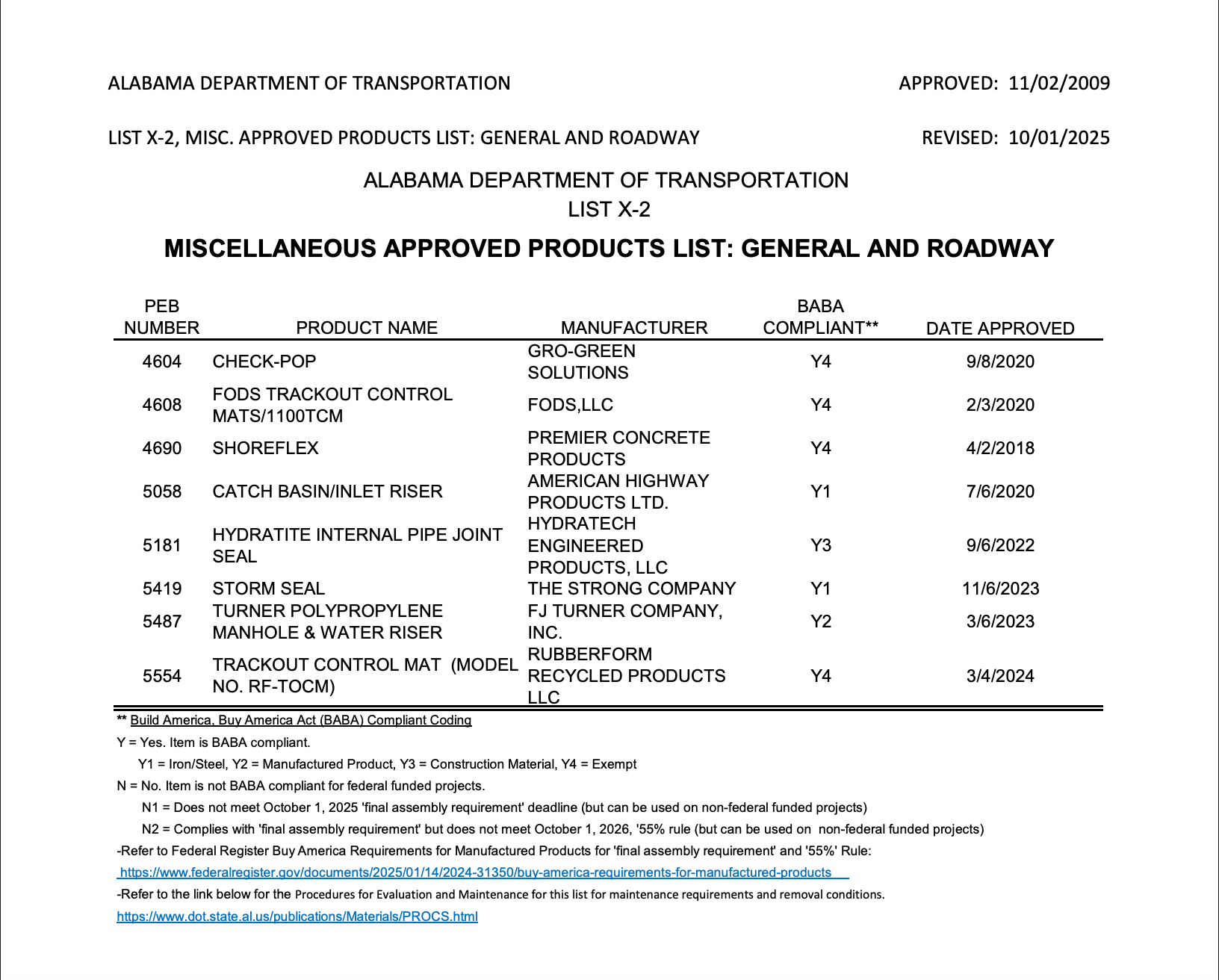
Contractors and inspectors can verify this listing directly on the ALDOT Materials and Tests publications page at dot.state.al.us/publications/Materials/PROCS.html.
FODS Trackout Control Mats
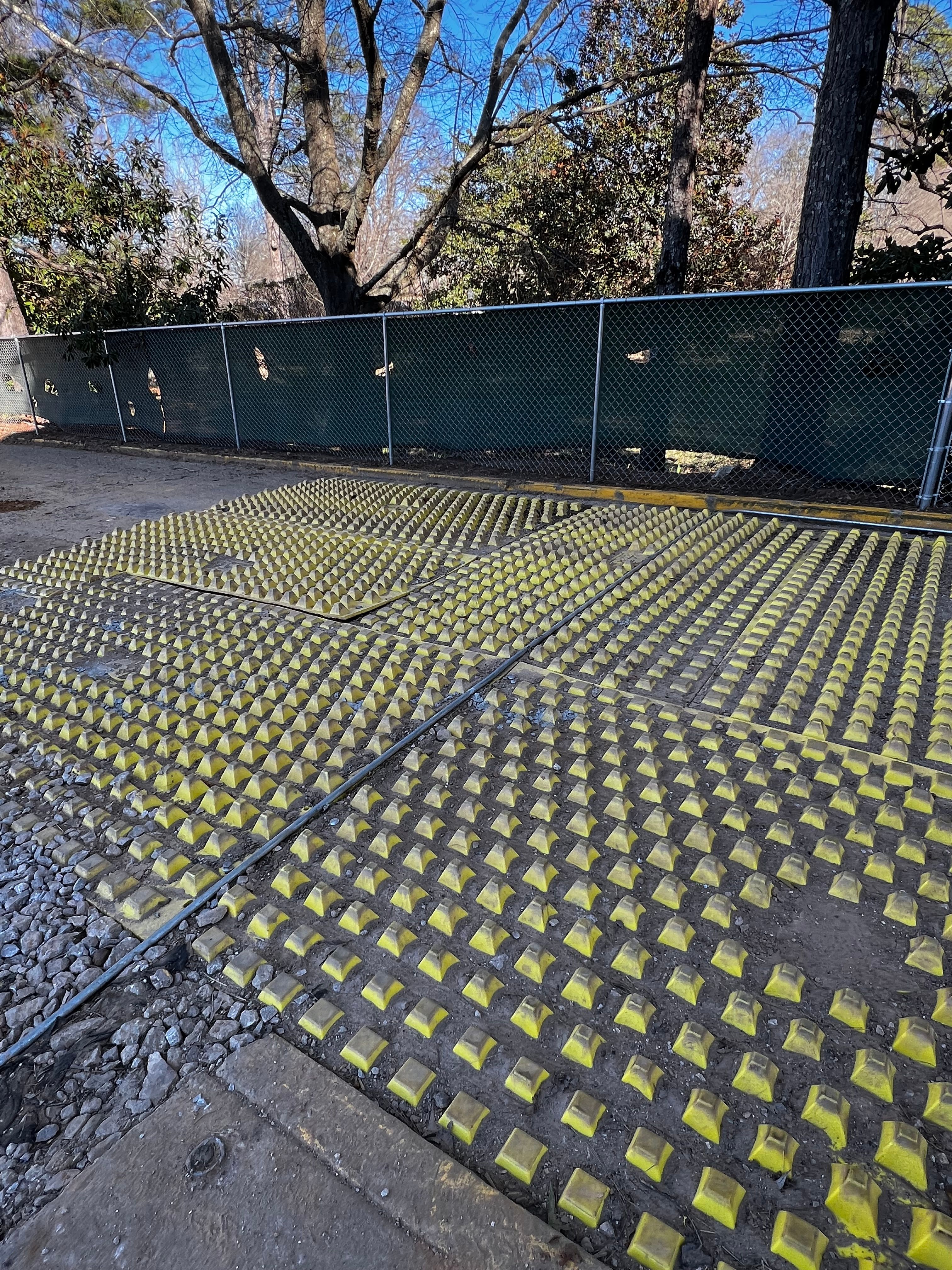
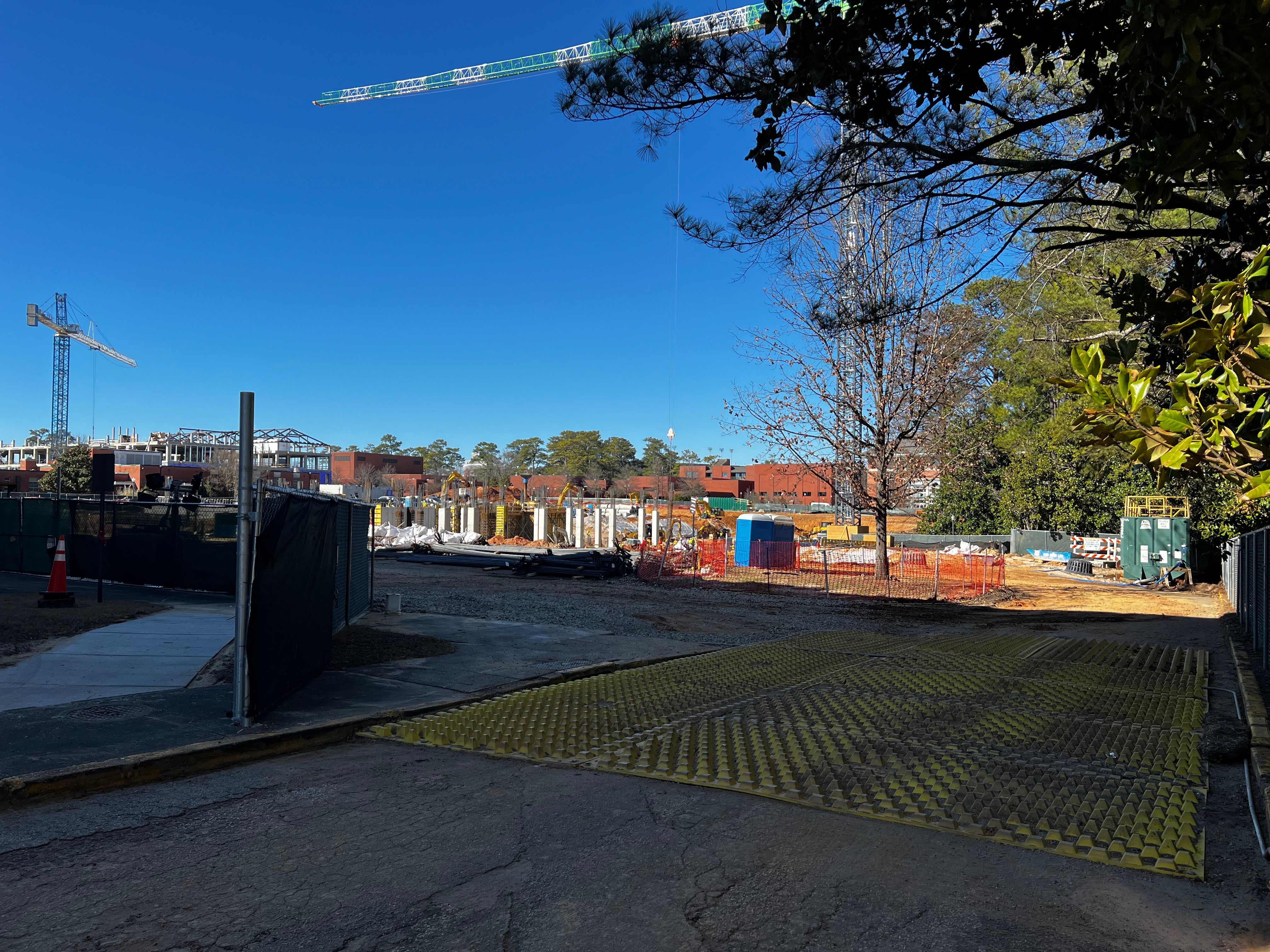
FODS replaces traditional aggregate construction entrances with a reusable system designed to remove sediment before it leaves the site. The system consists of modular HDPE mats formed into pyramid-shaped surfaces that promote tire deformation and dislodge mud and sediment from tire treads. Dislodged material collects between the pyramids, away from contact with subsequent vehicles. Unlike aggregate entrances, FODS does not compact or lose effectiveness over time, reducing the need for ongoing maintenance and material replacement.
The mats can retain approximately 2.5 inches of sediment before maintenance is required and can be cleaned quickly to restore performance. FODS systems have demonstrated reductions in street sweeping requirements and can be reused for 10 years or more, thereby reducing long-term construction entrance costs.
FODS Trackout Control Mats have been added to the Alabama Department of Transportation Approved Products List as an acceptable alternative to traditional rock-stabilized construction entrances. Their portability and reusability make them particularly well-suited for phased highway projects, where entrances may need to be relocated multiple times. Because the system does not introduce aggregate, it reduces the risk of loose rock entering active traffic lanes.
Nearby Projects
ALDOT I-59/20 (5920) Bridge Project
The I-59/20 (commonly referred to as the "5920 Project") in Birmingham is one of the largest highway reconstruction projects undertaken in Alabama. The project included adding travel lanes, widening shoulders, and improving interchange access to enhance safety and reduce congestion along a corridor carrying tens of thousands of vehicles daily.
Phased highway and bridge projects benefit from the FODS system's portability. Construction entrances can be relocated as work progresses and reinstalled in as little as 30 minutes, supporting efficient site operations while maintaining stormwater compliance.
Risks of Vehicle Trackout on Alabama Roadways
Traditional aggregate construction entrances can deposit rocks and debris onto public roads, creating hazards for drivers and increasing liability for contractors. Alabama contractors relying on gravel pads also face ongoing replenishment costs as aggregate is displaced by traffic and weather. Loose stone entering active traffic lanes is a particular risk on high-speed ALDOT highway projects.
FODS uses a rockless approach to clean vehicle tires and does not pose the same risk of injury or liability as aggregate-based entrances. Each FODS mat is fully recyclable and reduces the environmental impact from aggregate production, transportation, and disposal.
Alabama SWPPP and BMP Resources
Key resources for Alabama trackout control and stormwater compliance:
- ADEM NPDES Stormwater Permitting Program
- ADEM Construction General Permit No. ALR100000
- ADEM Field Guide of Best Management Practices
- ALDOT List X-2 Approved Products
- Alabama Environmental Permitting and Compliance System (AEPACS)
- EPA NPDES Construction General Permit
For Alabama projects requiring CEP-1 construction entrances, FODS provides a compliant, low-maintenance alternative that supports consistent performance throughout the duration of the project. Contact us to find out more about FODS Reusable Construction Entrances in Alabama, or download the Alabama State Submittal Package for SWPPP and CBMPP documentation support.